Table of Contents
Let’s be honest…
Most of us have been taught one thing since childhood — “Don’t show weakness.”
Don’t cry. Don’t share too much. Don’t let people see your struggles.
But here’s the truth…
The more you hide, the heavier life becomes.
And the moment you start opening up — even a little — something powerful happens.
You feel lighter. More real. More connected.
But then another fear hits you…
👉 “What if people think I’m weak?”
If you’ve ever felt this confusion, this article is for you.
Let’s break it down in a simple, practical, and real way.
🤔 What Does It Mean to Be Vulnerable?
Vulnerability is not about oversharing your life with everyone.
It simply means:
👉 Being honest about your thoughts, emotions, and experiences — without pretending to be perfect.
According to researcher Brené Brown, vulnerability is actually the birthplace of courage, connection, and creativity.
Let that sink in.
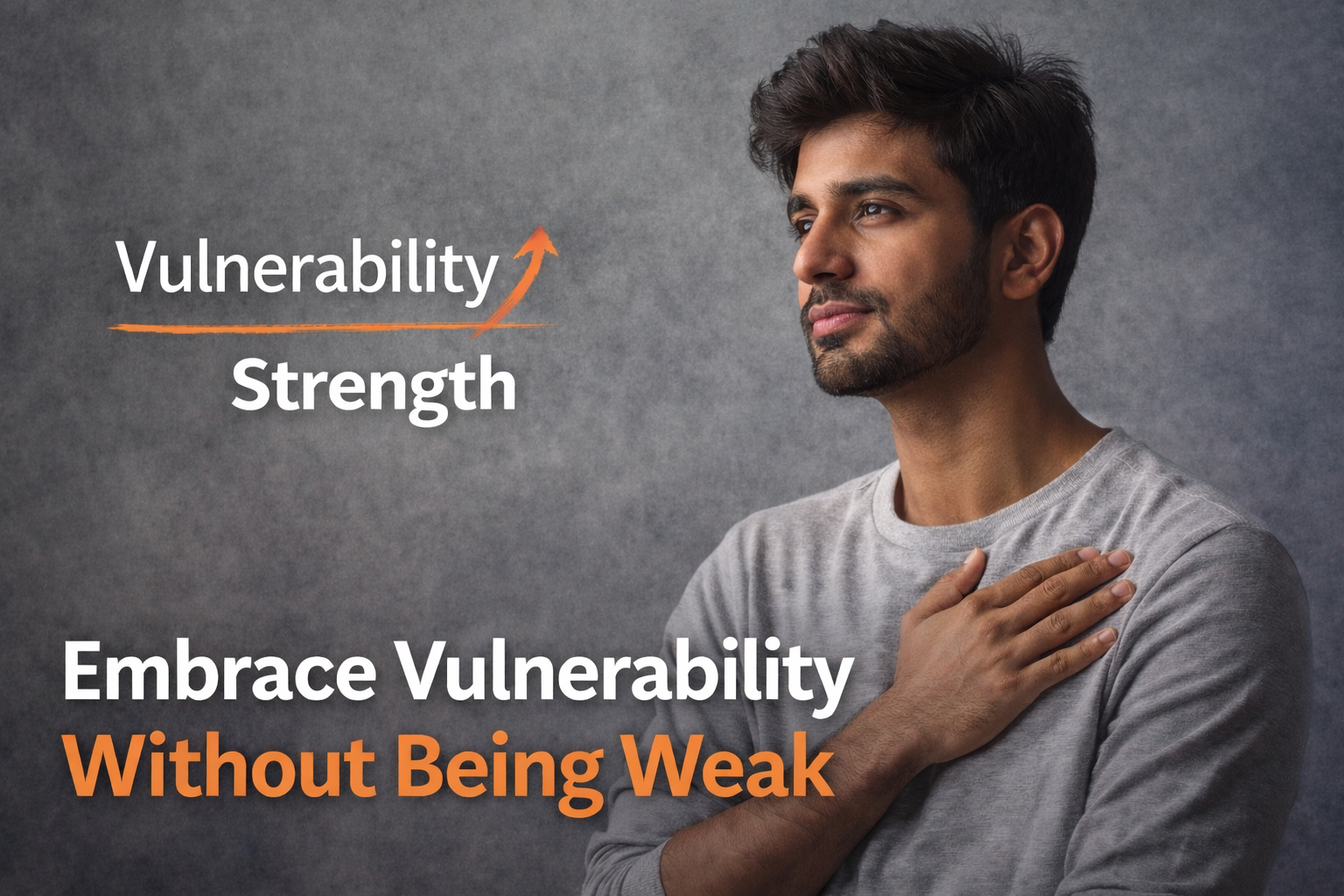
So vulnerability is not weakness…
It’s raw honesty with strength behind it.
❓ Is Vulnerability a Sign of Weakness?
Short answer: No. Not at all.
But I get why you might feel that way.
We often confuse vulnerability with:
- Emotional breakdown
- Lack of control
- Dependence on others
But here’s the reality:
👉 Weakness is hiding behind a fake image.
👉 Strength is standing in your truth — even when it’s uncomfortable.
Even leaders and top performers are now encouraged to be open.
A study from Harvard Business Review shows that leaders who show vulnerability build stronger, more trusting teams.
So no — vulnerability doesn’t reduce respect.
It increases authenticity.
🤔 Why Do People Fear Being Vulnerable?
Have you ever stopped yourself from saying how you feel?
Maybe you thought:
- “What will they think?”
- “What if they judge me?”
- “What if they use this against me?”
That fear is very real.
Here’s why it happens:
1. Past experiences
If you’ve been judged or hurt before, your mind tries to protect you.
2. Social conditioning
We’re taught to “stay strong” — especially men.
3. Fear of rejection
Humans naturally want acceptance.
But here’s something most people don’t realize…
👉 Avoiding vulnerability doesn’t protect you — it isolates you.
❓ How Can You Be Vulnerable Without Being Weak?
This is the most important part.
Let’s make it practical.
💡 1. Choose the Right People
You don’t need to open up to everyone.
Start with:
- A trusted friend
- A mentor
- A supportive colleague
👉 Vulnerability is not about exposure. It’s about safe expression.
💡 2. Share Gradually (Not All at Once)
You don’t have to reveal your entire life story.
Start small:
- “I’ve been feeling a bit stressed lately.”
- “I’m not sure about this decision.”
Small steps build confidence.
💡 3. Set Emotional Boundaries
Being vulnerable doesn’t mean:
- Letting people disrespect you
- Accepting negativity
👉 You can be open and strong at the same time.
💡 4. Express, Don’t Overshare
There’s a difference between:
- Sharing with purpose ✔️
- Dumping emotions randomly ❌
Ask yourself:
👉 “Is this helpful to share in this moment?”
💡 5. Accept Imperfection
Let’s be real…
Nobody has everything figured out.
Even successful people struggle.
As Daniel Goleman explains in emotional intelligence, self-awareness and emotional honesty are key to personal growth.
👉 You don’t need to be perfect to be respected.
❓ What Are the Benefits of Being Vulnerable?
You might be wondering…
“Okay, but what do I really gain from this?”
Let’s talk honestly.
🌱 1. Stronger Relationships
People connect with real people — not perfect masks.
🌱 2. Emotional Freedom
You stop carrying everything alone.
🌱 3. Increased Confidence
Ironically, being open makes you feel stronger.
🌱 4. Better Communication
You express clearly instead of bottling things up.
❓ Can Vulnerability Make You More Confident?
Yes — and here’s how.
Confidence is not about:
- Always being right
- Never feeling fear
👉 It’s about being okay with who you are.
When you accept your flaws:
- You stop seeking validation
- You stop pretending
And that’s where real confidence begins.
❓ How Do You Practice Vulnerability in Daily Life?
Let’s make this practical.
🛠️ Everyday Examples:
- Admit when you don’t know something
- Say “I need help” without guilt
- Share your ideas in meetings
- Talk honestly in relationships
Start small. Stay consistent.
🚀 Practical Action Steps (Start Today)
Here’s a simple plan you can follow:
✅ Step 1: Identify one safe person
Talk to someone you trust.
✅ Step 2: Share one honest feeling
Keep it simple.
✅ Step 3: Observe the response
Most of the time, you’ll feel accepted.
✅ Step 4: Repeat regularly
Build emotional strength gradually.
⚠️ Common Mistakes to Avoid
Let’s clear some confusion.
❌ Mistake 1: Oversharing with everyone
Not everyone deserves your story.
❌ Mistake 2: Expecting instant understanding
People may take time.
❌ Mistake 3: Confusing vulnerability with weakness
They are completely different.
❌ Mistake 4: Ignoring boundaries
You can be open and protected.
💬 A Real-Life Perspective
In my training sessions, I’ve seen this again and again…
People who finally open up:
- Feel relief instantly
- Build deeper trust
- Perform better in teams
One participant once said:
👉 “I thought hiding my struggles made me strong. But sharing them made me free.”
And that’s the shift.
🔥 Final Thoughts: Your Strength Lies in Being Real
Let me leave you with this…
You don’t become strong by hiding your emotions.
You become strong by understanding them.
You don’t lose respect by being vulnerable.
You gain respect by being authentic.
So next time you feel like opening up…
Don’t stop yourself.
Because maybe — just maybe —
👉 That’s not your weakness… that’s your real strength showing.
Here’s everything you need to strengthen your blog post for SEO, internal linking, and user engagement:
FAQs on How to Embrace Vulnerability Without Being Weak
1. What is vulnerability in simple words?
Vulnerability means being honest about your feelings, thoughts, and struggles without pretending to be perfect.
2. Is being vulnerable a weakness?
No, vulnerability is a strength. It shows courage, emotional awareness, and authenticity.
3. How can I be vulnerable without getting hurt?
Choose trusted people, set boundaries, and share gradually instead of opening up to everyone.
4. Why is vulnerability important in relationships?
It builds trust, deepens emotional connection, and helps both people understand each other better.
5. Can vulnerability improve mental health?
Yes, expressing emotions reduces stress, anxiety, and emotional burden.
6. How do I start being vulnerable?
Start small by sharing simple feelings with someone you trust and build from there.
7. What are examples of vulnerability in daily life?
Admitting mistakes, asking for help, expressing feelings, and sharing honest opinions.
8. How do I stop fearing judgment when being vulnerable?
Focus on self-acceptance and remind yourself that not everyone’s opinion matters.
9. What is the difference between vulnerability and oversharing?
Vulnerability is intentional and meaningful, while oversharing is uncontrolled and often inappropriate.
10. Can vulnerability make me more confident?
Yes, accepting your true self increases self-confidence and reduces fear of judgment.