It’s Not Too Late: How to Find Your Life Purpose in Your 40s

how to find your life purpose in your 40s

(and why feeling lost right now… might actually mean you’re waking up)

I had a participant once — mid 40s, stable job, good family, everything “sorted” from outside.

He said something quietly during a session… almost like he didn’t want others to hear:

“Sir… I don’t know why I’m doing all this anymore.”

No drama. No breakdown.
Just… emptiness.

And honestly… I’ve heard versions of this so many times.

People don’t always call it a “purpose crisis.”
They just say… something feels missing.


Why do people start questioning life purpose in their 40s?

Because this is the stage where noise reduces.

In your 20s — you’re chasing.
In your 30s — you’re building.
But somewhere in your 40s…

you pause.

And questions start showing up:

  • Is this all?
  • Did I choose right?
  • What actually matters to me?

This might sound uncomfortable… but it’s actually a good sign.

It means you’re not on autopilot anymore.

I’ve seen people ignore this phase — they stay busy, distract themselves…
But the ones who sit with it? They grow differently.


Is it too late to find your purpose after 40?

Short answer? No.

Real answer… it’s actually one of the best times.

Because now you have:

  • experience
  • failures
  • clarity about what you don’t want

I’ve worked with people who discovered their real direction at 45, 50… even later.

One woman I trained shifted from a routine admin job to community work in her late 40s.
She told me, “For the first time… I feel useful.”

Not successful.
Useful.

There’s a difference.


What does “life purpose” really mean at this stage?

This is where people get confused.

Purpose doesn’t always mean quitting your job and doing something dramatic.

Sometimes… it’s quieter.

It’s about alignment.

  • What gives you meaning
  • What uses your strengths
  • What feels worth your time

Brené Brown talks about living a wholehearted life — where your actions match your values.

And in your 40s… you finally start seeing that gap clearly.


How do you actually start finding your life purpose?

Not by overthinking.

I’ve seen this mistake a lot — people sit and think about purpose like it’s a puzzle to solve.

It’s not.

It’s something you discover by doing.

Let me walk you through what I usually suggest in my sessions…


Start with what drains you (not what excites you)

This might sound strange, but it works.

Instead of asking: “What is my passion?”
Ask: “What is slowly exhausting me?”

Because clarity often comes from contrast.

I had one participant who realized… it wasn’t his job he hated —
it was the lack of interaction.

That small realization changed everything.


Notice what you keep coming back to

You know those things you ignore… but they keep returning?

  • an interest
  • an idea
  • a desire to help in a certain way

Pay attention to that.

Your purpose is rarely something completely new.
It’s usually something you’ve been avoiding.


Try small experiments (not big decisions)

This is where most people get stuck.

They think: “If I choose something, I have to commit fully.”

No.

Start small.

  • volunteer
  • take a short course
  • try something on weekends

I’ve seen people gain more clarity from 3 small actions than 6 months of thinking.

Ref: How to Find Your Purpose in Midlife


Use your past… don’t reject it

Some people feel like they “wasted years.”

But honestly… nothing is wasted.

Your past experience is your advantage.

Even if you change direction — you carry your skills, your understanding, your maturity.

That matters more than you think.


Why fear increases in your 40s (and how to deal with it)

This part is real.

In your 20s, you risk easily.
In your 40s… you think about responsibilities.

Family. Stability. Financial pressure.

So the fear becomes louder.

And I’ve seen this — people don’t move forward not because they lack clarity…
but because they’re scared to disturb what they’ve built.

And honestly… that fear is valid.

But here’s a small shift:

You don’t need to destroy your current life to find purpose.
You can build it alongside.

Slowly.


Can purpose change over time?

Yes. And it will.

Purpose is not one fixed destination.

It evolves.

What mattered to you at 25… won’t feel the same at 45.

And that’s okay.

Actually… that’s growth.

Daniel Goleman talks about self-awareness — and this stage of life increases it naturally.

You start understanding yourself better.

And that changes direction.


What if you still feel stuck?

Then don’t chase purpose.

Focus on meaning.

There’s a difference.

Purpose can feel big, heavy, overwhelming.
Meaning is smaller, immediate.

  • helping someone
  • doing work that feels useful
  • learning something new

Start there.

I’ve seen people find purpose only after they stopped chasing it directly.


A small reflection (you can try this)

Not a complicated exercise.

Just sit quietly and ask yourself:

“When do I feel most like myself?”

Not happiest. Not most successful.
Just… most like yourself.

That answer… is a clue.


Final thoughts… (just something I’ve noticed)

People think finding purpose is about adding something new to life.

Sometimes… it’s about removing what doesn’t belong anymore.

The noise. The expectations. The roles you’ve been playing for years.

And what remains…
is usually closer to your real direction.


FAQs on How to Find Your Life Purpose in Your 40s?

What is the best way to find your life purpose in your 40s?

Start with self-reflection and small actions. Notice what interests you, what drains you, and try small experiments. Purpose becomes clear through action, not just thinking.

Is it normal to feel lost in your 40s?

Yes, it’s completely normal. Many people start questioning their life direction at this stage. It often means you’re becoming more self-aware.

Can you change your life purpose after 40?

Yes, absolutely. Purpose is not fixed. Many people discover new meaning and direction later in life using their past experience.

How do I know what I’m truly passionate about?

Look at what keeps coming back to your mind. Your interests often repeat themselves. Pay attention to those patterns.

Do I need to quit my job to find my purpose?

No. You can explore your purpose alongside your current job. Start small and grow gradually without taking big risks immediately.

Why do I feel stuck even when everything is stable?

Stability doesn’t always mean fulfillment. Feeling stuck often comes from lack of meaning, not lack of success.

How long does it take to find your purpose?

There’s no fixed timeline. It’s a gradual process. Some clarity can come in weeks, deeper clarity may take months or years.

What if I have too many interests and feel confused?

Start with one small action. You don’t need to figure everything out at once. Clarity comes step by step.

Can life purpose change over time?

Yes. Your purpose evolves as you grow. What matters to you changes with experience and self-awareness.

What should I do if I feel afraid to change my life?

Start small. You don’t need drastic changes. Take small steps while maintaining stability. That reduces fear and builds confidence.

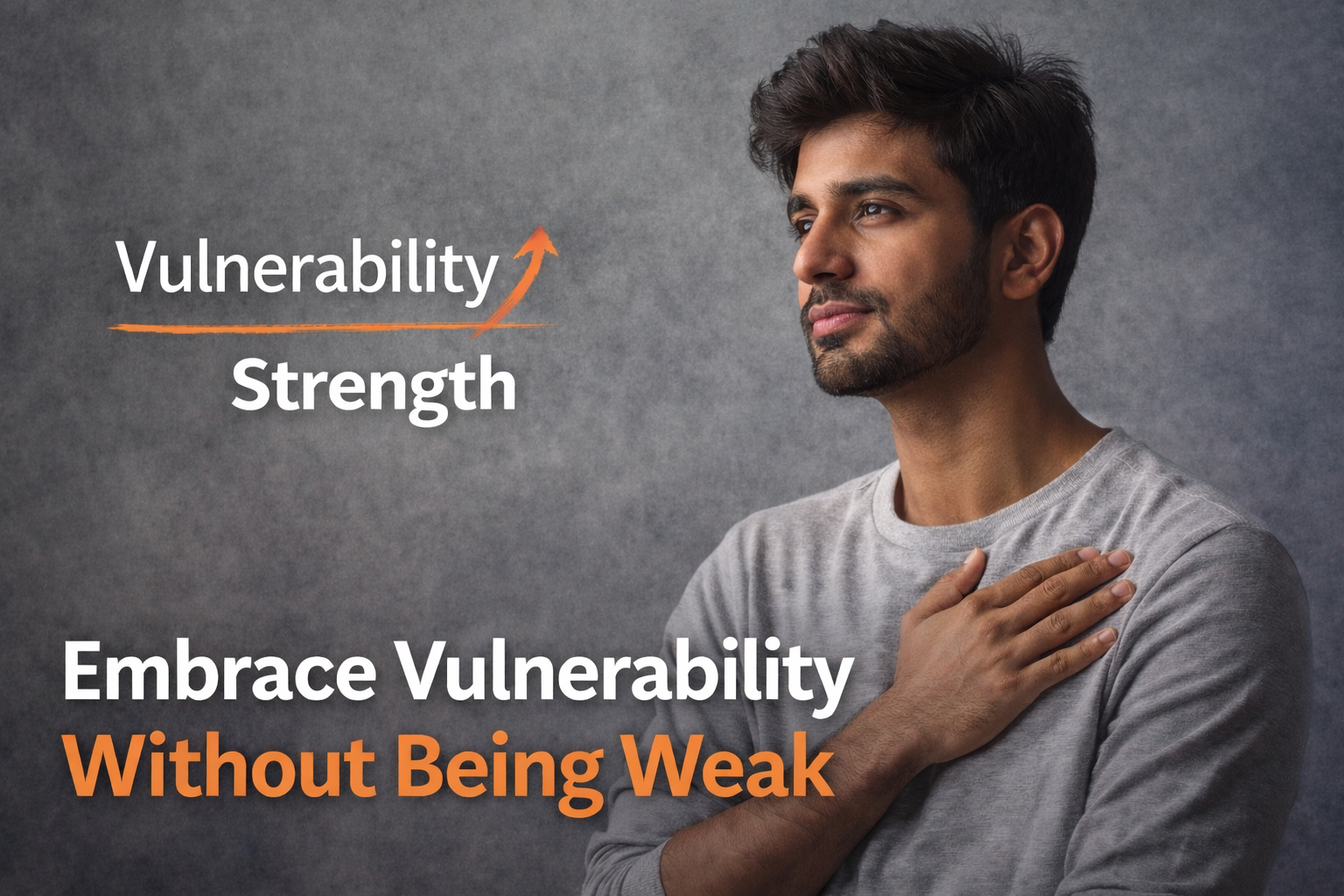
Mastering the Art of How to Embrace Vulnerability Without Being Weak

Table of Contents

Let’s be honest…

Most of us have been taught one thing since childhood — “Don’t show weakness.”
Don’t cry. Don’t share too much. Don’t let people see your struggles.

But here’s the truth…

The more you hide, the heavier life becomes.

And the moment you start opening up — even a little — something powerful happens.

You feel lighter. More real. More connected.

But then another fear hits you…

👉 “What if people think I’m weak?”

If you’ve ever felt this confusion, this article is for you.

Let’s break it down in a simple, practical, and real way.


🤔 What Does It Mean to Be Vulnerable?

Vulnerability is not about oversharing your life with everyone.

It simply means:

👉 Being honest about your thoughts, emotions, and experiences — without pretending to be perfect.

According to researcher Brené Brown, vulnerability is actually the birthplace of courage, connection, and creativity.

Let that sink in.

So vulnerability is not weakness…

It’s raw honesty with strength behind it.


❓ Is Vulnerability a Sign of Weakness?

Short answer: No. Not at all.

But I get why you might feel that way.

We often confuse vulnerability with:

  • Emotional breakdown
  • Lack of control
  • Dependence on others

But here’s the reality:

👉 Weakness is hiding behind a fake image.
👉 Strength is standing in your truth — even when it’s uncomfortable.

Even leaders and top performers are now encouraged to be open.

A study from Harvard Business Review shows that leaders who show vulnerability build stronger, more trusting teams.

So no — vulnerability doesn’t reduce respect.
It increases authenticity.


🤔 Why Do People Fear Being Vulnerable?

Have you ever stopped yourself from saying how you feel?

Maybe you thought:

  • “What will they think?”
  • “What if they judge me?”
  • “What if they use this against me?”

That fear is very real.

Here’s why it happens:

1. Past experiences

If you’ve been judged or hurt before, your mind tries to protect you.

2. Social conditioning

We’re taught to “stay strong” — especially men.

3. Fear of rejection

Humans naturally want acceptance.

But here’s something most people don’t realize…

👉 Avoiding vulnerability doesn’t protect you — it isolates you.


❓ How Can You Be Vulnerable Without Being Weak?

This is the most important part.

Let’s make it practical.

💡 1. Choose the Right People

You don’t need to open up to everyone.

Start with:

  • A trusted friend
  • A mentor
  • A supportive colleague

👉 Vulnerability is not about exposure. It’s about safe expression.


💡 2. Share Gradually (Not All at Once)

You don’t have to reveal your entire life story.

Start small:

  • “I’ve been feeling a bit stressed lately.”
  • “I’m not sure about this decision.”

Small steps build confidence.


💡 3. Set Emotional Boundaries

Being vulnerable doesn’t mean:

  • Letting people disrespect you
  • Accepting negativity

👉 You can be open and strong at the same time.


💡 4. Express, Don’t Overshare

There’s a difference between:

  • Sharing with purpose ✔️
  • Dumping emotions randomly ❌

Ask yourself:
👉 “Is this helpful to share in this moment?”


💡 5. Accept Imperfection

Let’s be real…

Nobody has everything figured out.

Even successful people struggle.

As Daniel Goleman explains in emotional intelligence, self-awareness and emotional honesty are key to personal growth.

👉 You don’t need to be perfect to be respected.


❓ What Are the Benefits of Being Vulnerable?

You might be wondering…

“Okay, but what do I really gain from this?”

Let’s talk honestly.

🌱 1. Stronger Relationships

People connect with real people — not perfect masks.

🌱 2. Emotional Freedom

You stop carrying everything alone.

🌱 3. Increased Confidence

Ironically, being open makes you feel stronger.

🌱 4. Better Communication

You express clearly instead of bottling things up.


❓ Can Vulnerability Make You More Confident?

Yes — and here’s how.

Confidence is not about:

  • Always being right
  • Never feeling fear

👉 It’s about being okay with who you are.

When you accept your flaws:

  • You stop seeking validation
  • You stop pretending

And that’s where real confidence begins.


❓ How Do You Practice Vulnerability in Daily Life?

Let’s make this practical.

🛠️ Everyday Examples:

  • Admit when you don’t know something
  • Say “I need help” without guilt
  • Share your ideas in meetings
  • Talk honestly in relationships

Start small. Stay consistent.


🚀 Practical Action Steps (Start Today)

Here’s a simple plan you can follow:

✅ Step 1: Identify one safe person

Talk to someone you trust.

✅ Step 2: Share one honest feeling

Keep it simple.

✅ Step 3: Observe the response

Most of the time, you’ll feel accepted.

✅ Step 4: Repeat regularly

Build emotional strength gradually.


⚠️ Common Mistakes to Avoid

Let’s clear some confusion.

❌ Mistake 1: Oversharing with everyone

Not everyone deserves your story.

❌ Mistake 2: Expecting instant understanding

People may take time.

❌ Mistake 3: Confusing vulnerability with weakness

They are completely different.

❌ Mistake 4: Ignoring boundaries

You can be open and protected.


💬 A Real-Life Perspective

In my training sessions, I’ve seen this again and again…

People who finally open up:

  • Feel relief instantly
  • Build deeper trust
  • Perform better in teams

One participant once said:

👉 “I thought hiding my struggles made me strong. But sharing them made me free.”

And that’s the shift.


🔥 Final Thoughts: Your Strength Lies in Being Real

Let me leave you with this…

You don’t become strong by hiding your emotions.
You become strong by understanding them.

You don’t lose respect by being vulnerable.
You gain respect by being authentic.

So next time you feel like opening up…

Don’t stop yourself.

Because maybe — just maybe —
👉 That’s not your weakness… that’s your real strength showing.


Here’s everything you need to strengthen your blog post for SEO, internal linking, and user engagement:


FAQs on How to Embrace Vulnerability Without Being Weak

1. What is vulnerability in simple words?

Vulnerability means being honest about your feelings, thoughts, and struggles without pretending to be perfect.

2. Is being vulnerable a weakness?

No, vulnerability is a strength. It shows courage, emotional awareness, and authenticity.

3. How can I be vulnerable without getting hurt?

Choose trusted people, set boundaries, and share gradually instead of opening up to everyone.

4. Why is vulnerability important in relationships?

It builds trust, deepens emotional connection, and helps both people understand each other better.

5. Can vulnerability improve mental health?

Yes, expressing emotions reduces stress, anxiety, and emotional burden.

6. How do I start being vulnerable?

Start small by sharing simple feelings with someone you trust and build from there.

7. What are examples of vulnerability in daily life?

Admitting mistakes, asking for help, expressing feelings, and sharing honest opinions.

8. How do I stop fearing judgment when being vulnerable?

Focus on self-acceptance and remind yourself that not everyone’s opinion matters.

9. What is the difference between vulnerability and oversharing?

Vulnerability is intentional and meaningful, while oversharing is uncontrolled and often inappropriate.

10. Can vulnerability make me more confident?

Yes, accepting your true self increases self-confidence and reduces fear of judgment.

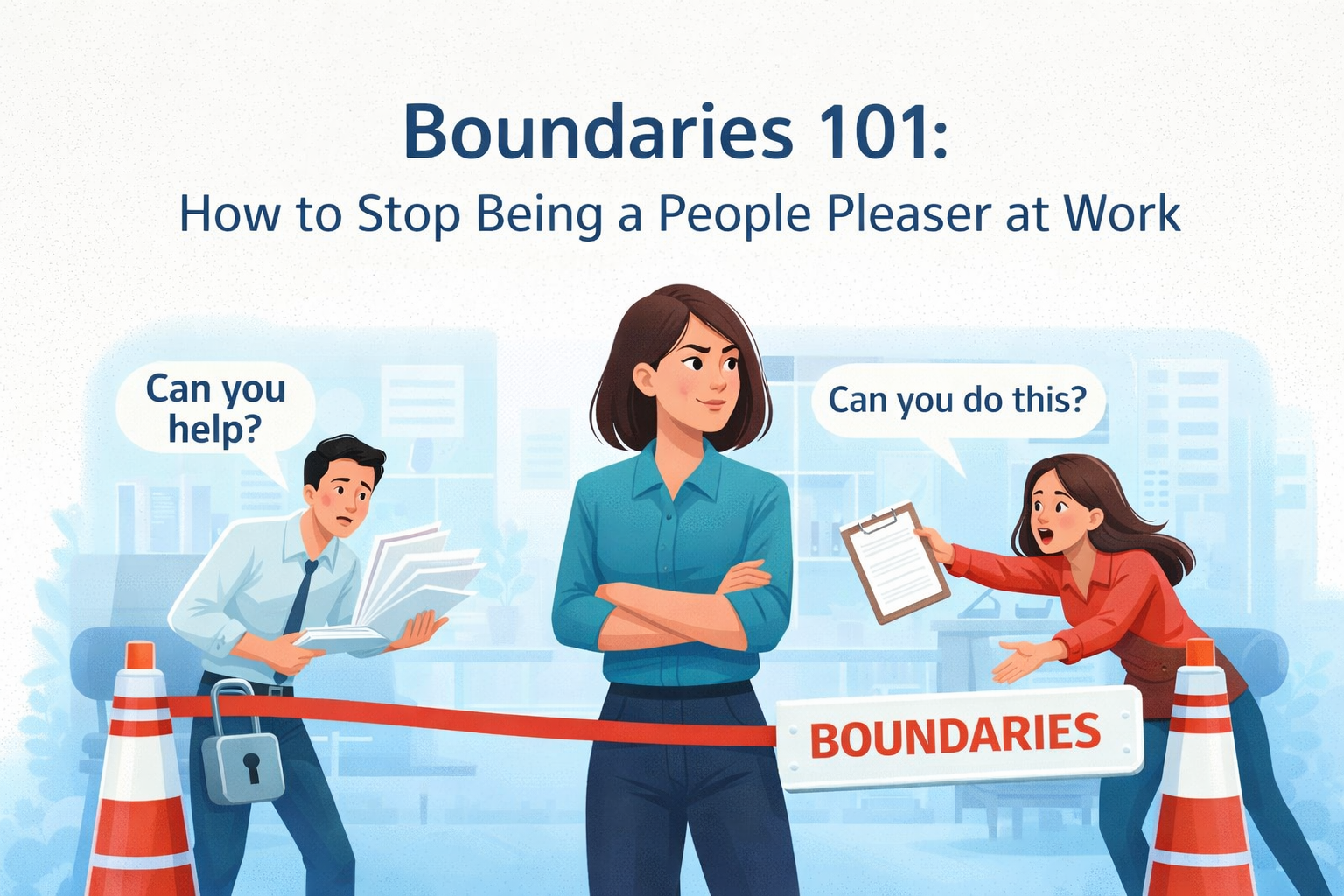
How to Stop Being a People Pleaser at Work?

Table of Contents

Introduction

Have you ever said “yes” at work when your mind was screaming “no”?

You agree to extra tasks, stay late without complaint, avoid difficult conversations, and constantly try to keep everyone happy. On the outside, you look like the “ideal employee.” But inside? You feel drained, undervalued, and sometimes even resentful.

If this feels familiar, you’re not alone.

Many professionals struggle with people-pleasing behavior at work, especially in environments where approval feels tied to job security, promotions, or team acceptance. It often starts with good intentions—being helpful, cooperative, and dependable. But over time, it turns into a pattern where your own needs take a backseat.

And that’s exactly why learning how to stop being a people pleaser at work is not just a personal growth goal—it’s a professional necessity.

From a psychological perspective, people-pleasing is deeply connected to fear of rejection, low self-worth, and conditioning from past experiences. In workplace settings, it gets reinforced through praise for compliance rather than contribution.

As a trainer working with corporate teams and individuals, I’ve seen this pattern repeatedly. One of my clients, a mid-level manager, once told me:

“I thought being liked would make me successful. But all it did was make me invisible.”

That statement stayed with me.

Because the truth is—when you constantly prioritize others, you slowly lose your voice.

This article is not about becoming rude or selfish. It’s about becoming assertive, respected, and emotionally balanced. You’ll learn practical strategies, psychological insights, and real-life examples to help you break free.

If you’re ready to stop overcommitting, start setting boundaries, and finally reclaim your professional identity, let’s dive into how to stop being a people pleaser at work—step by step.


Understanding People-Pleasing at Work

What Does It Mean to Be a People Pleaser at Work?

Being a people pleaser at work means consistently prioritizing others’ needs, expectations, and approval over your own limits, values, or well-being.

Common signs include:

  • Saying yes to everything—even when overwhelmed
  • Avoiding conflict at any cost
  • Struggling to say no to colleagues or bosses
  • Seeking constant validation
  • Feeling guilty when you prioritize yourself

This behavior is often mistaken for being “nice” or “team-oriented.” While learning How to Stop Being a People Pleaser at Work below is the diffrence between both:

Healthy CollaborationPeople Pleasing
Mutual respectSelf-sacrifice
Clear boundariesNo boundaries
Assertive communicationPassive compliance
Balanced workloadOverwork and burnout

Why Do People Become People Pleasers at Work?

Understanding the “why” is the first step in learning how to stop being a people pleaser at work.

1. Fear of Rejection or Conflict

Many people fear being disliked or excluded. This leads to avoiding difficult conversations.

2. Need for Approval

If your self-worth is tied to others’ opinions, you’ll constantly seek validation.

3. Childhood Conditioning

People who grew up in environments where approval was conditional often carry this pattern into adulthood.

4. Workplace Culture

Some organizations reward compliance more than creativity, reinforcing people-pleasing behavior.


The Hidden Cost of People Pleasing

At first glance, people pleasing seems harmless—even beneficial. But the long-term effects can be damaging:

  • Burnout and exhaustion
  • Lack of recognition
  • Decreased confidence
  • Resentment towards colleagues
  • Career stagnation

“You can’t pour from an empty cup.”


How to Stop Being a People Pleaser at Work (Step-by-Step Guide)

Now let’s get practical.

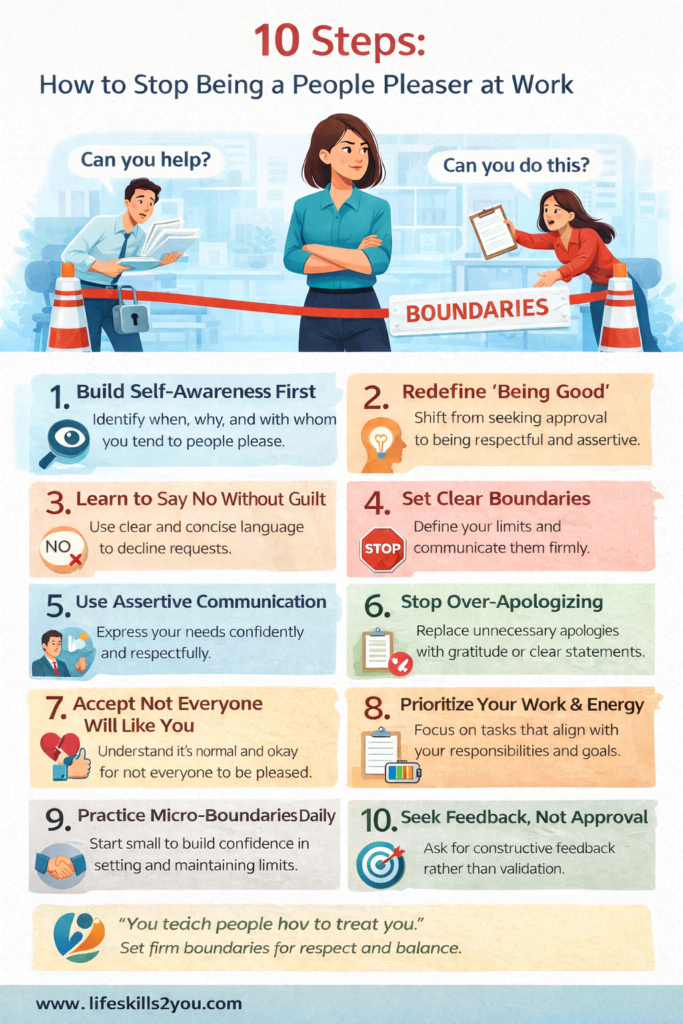
1. Build Self-Awareness First

You can’t change what you don’t notice.

Start observing:

  • When do you say yes reluctantly?
  • Who do you struggle to say no to?
  • What emotions come up—fear, guilt, anxiety?

Exercise:
Write down 3 recent situations where you said yes but wanted to say no.

This awareness is the foundation of how to stop being a people pleaser at work.


2. Redefine What “Being Good” Means

Many people equate being good with being agreeable.

But in reality:

  • Being good ≠ saying yes always
  • Being good = being honest, reliable, and clear

Shift your mindset from:
👉 “I must be liked”
to
👉 “I must be respected”


3. Learn the Art of Saying No (Without Guilt)

This is the most important skill.

Here are simple ways to say no:

  • “I’d love to help, but I’m currently at capacity.”
  • “I can take this up next week, not today.”
  • “I’m focusing on priority tasks right now.”

Pro Tip:
You don’t need to over-explain.

“No is a complete sentence.”


4. Set Clear Boundaries

Boundaries are not walls. They are guidelines.

Types of boundaries at work:

  • Time boundaries (leaving work on time)
  • Task boundaries (not taking extra workload)
  • Emotional boundaries (not absorbing others’ stress)

When you consistently set boundaries, people start respecting them.


5. Use Assertive Communication

Assertiveness is the middle ground between passive and aggressive.

Passive:

“I’ll do it…” (even if overwhelmed)

Aggressive:

“I’m not doing this!”

Assertive:

“I can’t take this right now, but I can help later.”

Learning assertiveness is key to mastering how to stop being a people pleaser at work.


6. Stop Over-Apologizing

Do you say “sorry” too often?

Replace:

  • “Sorry for the delay” → “Thank you for your patience”
  • “Sorry, I can’t” → “I won’t be able to take this on”

This small shift builds confidence.


7. Accept That Not Everyone Will Like You

This is uncomfortable—but freeing.

You are not here to please everyone.

You are here to:

  • Contribute
  • Grow
  • Add value

“Respect lasts longer than approval.”

You have accept that Accept That Not Everyone Will Like You while learning how to stop being a people pleaser at work.


8. Prioritize Your Work and Energy

Before saying yes, ask:

  • Is this aligned with my role?
  • Do I have time?
  • What will I sacrifice if I say yes?

This clarity helps you make better decisions.


9. Practice Micro-Boundaries Daily

Start small:

  • Decline one unnecessary request
  • Speak up once in a meeting
  • Take a proper lunch break

Understand that Small wins build confidence is the key lesson from how to stop being a people pleaser at work.


10. Seek Feedback, Not Approval

Instead of:
👉 “Did I do well?”

Ask:
👉 “What can I improve?”

This shift reduces dependency on validation.


Case Study – How to Stop Being a People Pleaser at Work.: From People Pleaser to Confident Professional

One of my trainees, Anita (name changed), worked in HR.

She:

  • Took on extra work
  • Avoided confrontation
  • Stayed late daily

Result?
She was exhausted—and overlooked for promotion.

During coaching, we worked on:

Within 3 months:

  • She started saying no
  • Delegated tasks
  • Spoke up in meetings

Outcome?
She was promoted.

Her words:

“When I stopped trying to please everyone, people finally started taking me seriously.”


How Do You Set Boundaries Without Damaging Relationships?

This is a common fear.

Here’s the truth:
Healthy boundaries improve relationships.

Tips:

  • Be polite but firm
  • Communicate clearly
  • Be consistent
  • Avoid emotional reactions

Example:
“I understand this is important, but I won’t be able to take it today.”


How Do I Stop Being Too Nice at Work?

Being nice is not the problem. Being overly accommodating is.

Replace:

  • Niceness → Authenticity
  • Compliance → Clarity
  • Fear → Confidence

Ask yourself:
“Am I being kind—or am I avoiding discomfort?”


How Do You Say No Professionally at Work?

Use this 3-step formula:

  1. Acknowledge
  2. Decline
  3. Offer alternative (optional)

Example:
“I understand this is urgent, but I’m currently focused on deadlines. I can help tomorrow.”


Psychological Frameworks Behind People Pleasing

1. Cognitive Behavioral Theory (CBT)

Your thoughts influence behavior.

Thought: “If I say no, they’ll dislike me.”
Reality: Most people respect boundaries.

Ref : Cognitive Behavior Therapy – StatPearls – NCBI Bookshelf – NIH


2. Self-Determination Theory

Humans need:

  • Autonomy
  • Competence
  • Relatedness

People pleasing reduces autonomy.

Ref: Self-Determination Theory – an overview


3. Transactional Analysis

Many people operate from a “Pleaser Child Ego State.”

Goal: Move to “Adult Ego State” → logical, balanced decisions.


Daily Habits to Break People-Pleasing Patterns

  • Practice saying no once a day
  • Reflect on your decisions
  • Track your energy levels
  • Celebrate small wins
  • Journal your thoughts

Motivational Reminders

  • “You teach people how to treat you.”
  • “Boundaries are self-respect in action.”
  • “You don’t need to earn your worth.”

Conclusion

Learning how to stop being a people pleaser at work is not about changing who you are—it’s about reclaiming your voice.

You don’t need to stop being kind.
You need to stop abandoning yourself.

When you:

  • Set boundaries
  • Communicate clearly
  • Value your time

You become:

  • More confident
  • More respected
  • More fulfilled

And most importantly—you become yourself.


Thank you for exploring this insightful article on How to Stop Being a People Pleaser at Work.
If you’re hungry for more knowledge, don’t miss out on our other engaging articles waiting for you. Dive into our treasure trove of wisdom and discover new perspectives on related topics.
Click Our Blog and How to Guide to embark on your next adventure.
Happy reading!


FAQs on How to Stop Being a People Pleaser at Work

1. Why am I a people pleaser at work?

People-pleasing often comes from fear of rejection, low self-esteem, or past conditioning. In workplaces, it gets reinforced when compliance is rewarded. Understanding your triggers is the first step toward change.

2. Is being a people pleaser bad for your career?

Yes, in the long run. While it may make you seem cooperative, it can lead to burnout, lack of recognition, and missed leadership opportunities.

3. How can I say no without feeling guilty?

Start by reminding yourself that saying no is not selfish—it’s necessary. Use polite, clear language and avoid over-explaining.

4. Can people pleasing be unlearned?

Absolutely. With awareness, practice, and assertiveness skills, you can break this pattern over time.

5. How do I set boundaries with my boss?

Be respectful but firm. Clearly communicate your workload and priorities. Offer alternatives instead of outright refusal when possible.

6. What are signs I am a people pleaser?

Overcommitting, avoiding conflict, seeking approval, and feeling guilty for saying no are common signs.

7. Will people dislike me if I stop people pleasing?

Some may resist initially, but most will respect your clarity and confidence.

8. How long does it take to change this habit?

It varies, but consistent effort over a few weeks can create noticeable change.

9. Can being assertive damage relationships?

No. Healthy assertiveness improves communication and builds mutual respect.

10. What is the first step to stop people pleasing?

Awareness. Start noticing when and why you say yes when you want to say no.

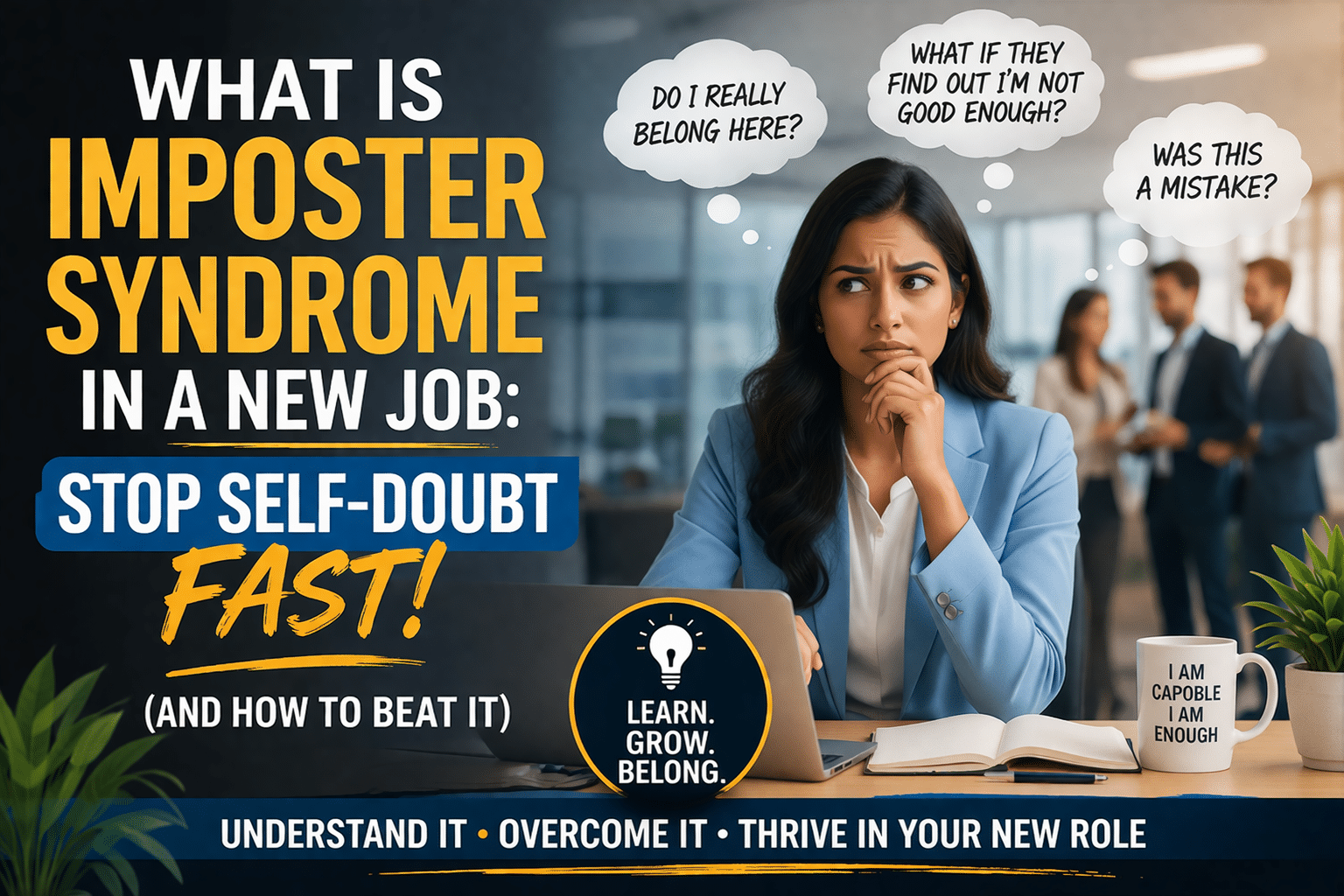
What is imposter syndrome in a new job?

Introduction

You finally got the job.

The offer letter felt like a dream. The congratulatory messages poured in. Your family felt proud. You promised yourself—this is my moment.

But then… something shifted.

On your first day, you looked around and thought,
“Do I really belong here?”
“What if they find out I’m not as good as they think?”
“Was this a mistake?”

If this sounds familiar, you’re not alone.

This silent, nagging voice inside your head has a name. It’s called imposter syndrome.

And today, we’re going to deeply explore what is imposter syndrome in a new job, why it happens, and how you can overcome it—not just temporarily, but permanently.

Let’s be real. Starting a new job is exciting, but it’s also overwhelming. New systems, new expectations, new people—and suddenly, your confidence shakes. You compare yourself with experienced colleagues. You hesitate to ask questions. You overthink every email you send.

This is exactly where what is imposter syndrome in a new job becomes more than just a concept—it becomes a lived experience.

As a trainer working with professionals across industries, I’ve seen this pattern repeatedly. High performers, talented individuals, even leaders—feeling like frauds in the beginning.

But here’s the truth:

“Imposter syndrome is not a sign of incompetence. It’s a sign that you are growing.”

In this article, we won’t just define what is imposter syndrome in a new job.
We will break it down psychologically, emotionally, and practically—so you walk away with clarity, confidence, and control.


What is imposter syndrome in a new job?

Imposter syndrome is a psychological pattern where you doubt your abilities, feel like a fraud, and fear being exposed—despite having real achievements and qualifications.

When applied to a workplace context, what is imposter syndrome in a new job becomes:

A state where you feel undeserving of your new role, constantly question your competence, and fear that others will discover you are not capable enough.


Psychological Roots of Imposter Syndrome

From a psychological perspective, what is imposter syndrome in a new job connects to:

  • Cognitive distortions (negative thinking patterns)
  • Low self-efficacy (belief in your abilities)
  • Perfectionism
  • Fear of failure and rejection

According to research published in the International Journal of Behavioral Science, nearly 70% of people experience imposter syndrome at some point in their lives.

Yes—70%.

That means even the person you think is “confident” may be silently struggling.


Types of Imposter Syndrome (Workplace Context)

Understanding types helps you identify your pattern:

1. The Perfectionist

  • Sets unrealistically high standards
  • Feels like a failure even with small mistakes

2. The Expert

  • Feels inadequate unless they know everything
  • Avoids tasks due to fear of not knowing enough

3. The Natural Genius

  • Believes success should come easily
  • Feels like a fraud when effort is required

4. The Soloist

  • Avoids asking for help
  • Thinks needing support = weakness

5. The Superhuman

  • Works excessively to prove worth
  • Burnout is common

Real-Life Example (From Training Experience)

During a corporate training session, a young manager told me:

“Sir, I got promoted, but I feel like they made a mistake. I’m scared every day.”

When I asked about his performance history—he had consistently exceeded targets.

So what was happening?

Not incompetence.
Not lack of skill.

Just a classic case of what is imposter syndrome in a new job.

Within 3 weeks of coaching:

  • His confidence improved
  • He started contributing ideas
  • His team performance increased

Awareness was the turning point.


Why Does Imposter Syndrome Happen in a New Job?

Now that you understand what is imposter syndrome in a new job, let’s explore why it happens.


1. Transition Shock

A new job = new environment.

Your brain moves from:

  • Known → Unknown
  • Comfort → Uncertainty

This triggers anxiety and self-doubt.


2. Comparison Trap

You start comparing:

  • Your Day 1 with others’ Year 5
  • Your learning phase with others’ mastery

This creates a false belief:

“I am not good enough.”


3. Fear of Judgment

You worry:

  • “What will my boss think?”
  • “Will my team respect me?”
  • “What if I make mistakes?”

This fear fuels what is imposter syndrome in a new job deeply.


4. High Expectations

Sometimes:

  • You expect too much from yourself
  • Or others expect too much from you

Either way → Pressure increases → Confidence drops.


5. Lack of Feedback

Silence is dangerous.

No feedback =
Your brain fills gaps with negative assumptions.


Signs You Have Imposter Syndrome in a New Job

Let’s check if you relate.

Common Symptoms:

  • Constant self-doubt
  • Over-preparing for simple tasks
  • Fear of asking questions
  • Attributing success to luck
  • Feeling like you “fooled” the interviewer
  • Avoiding challenges
  • Anxiety before meetings

Quick Self-Check Table

Thought PatternReality
“I don’t belong here”You were selected for a reason
“Others are smarter”Others have more experience
“I’ll be exposed”Learning is expected
“I got lucky”You earned this opportunity

How to Overcome Imposter Syndrome in a New Job (Step-by-Step Guide)

Now comes the most important part.

Understanding what is imposter syndrome in a new job is powerful—but transformation comes from action.


1. Normalize the Feeling

First rule:

“It’s not just you.”

Say it again.

Even top CEOs and leaders experience this.


2. Reframe Your Thoughts

Instead of:

  • “I don’t know this”

Say:

  • “I am learning this”

This small shift changes your mindset.


3. Track Your Wins

Create a “Confidence Journal”

Write:

  • Daily achievements
  • Positive feedback
  • Small wins

This builds evidence against self-doubt


4. Ask Questions Without Fear

Remember:

“Asking questions is a sign of growth, not weakness.”


5. Stop Comparing Yourself

Comparison kills confidence.

Focus on:

  • Your progress
  • Your growth

6. Seek Feedback Regularly

Ask:

  • “Am I on the right track?”
  • “What can I improve?”

Clarity reduces anxiety.


7. Accept Mistakes as Learning

Mistakes are not failures.

They are:

“Feedback in disguise.”


8. Build Support Systems

Connect with:

  • Mentors
  • Colleagues
  • Friends

You don’t have to do it alone.


9. Practice Self-Compassion

Be kind to yourself.

You are:

  • Learning
  • Growing
  • Adapting

10. Focus on Contribution, Not Perfection

Instead of asking:

  • “Am I perfect?”

Ask:

  • “Am I adding value?”

Case Study: From Self-Doubt to Confidence

A fresher joined a finance firm.

Week 1:

  • Silent in meetings
  • Avoided speaking
  • Felt overwhelmed

Week 4 (after coaching):

  • Started asking questions
  • Took initiative
  • Delivered a presentation

What changed?

Understanding what is imposter syndrome in a new job and applying small actions daily.


Is Imposter Syndrome Normal in a New Job?

Yes. Completely normal.

In fact:

  • It shows you care
  • It shows you want to perform well

But unmanaged, it can lead to:

  • Anxiety
  • Burnout
  • Low performance

How Long Does Imposter Syndrome Last?

It depends on:

  • Your mindset
  • Your environment
  • Your actions

For some:

  • Weeks

For others:

  • Months

With awareness and practice → It reduces faster.


Can Imposter Syndrome Be Positive?

Surprisingly—yes.

It can:

  • Push you to learn
  • Increase preparation
  • Build humility

But balance is key.

Too much → Paralysis
Healthy level → Growth


Powerful Mindset Shift

“You are not an imposter. You are in transition.”


Practical Daily Routine to Beat Imposter Syndrome

Morning:

  • Affirmation: “I deserve this role.”

During Work:

  • Ask 1 question daily
  • Note 1 learning

Evening:

  • Write 3 wins

Consistency creates confidence.


Expert Insight

From a behavioral science lens:

  • Imposter syndrome is linked to schema-based thinking
  • Early experiences shape self-belief
  • Workplace triggers activate these patterns

Using Cognitive Behavioral Techniques (CBT):

  • Identify negative thoughts
  • Challenge them
  • Replace them

This is evidence-based and effective.


References


Conclusion

Starting a new job is never easy.

And if you’ve been wondering what is imposter syndrome in a new job, now you know:

It’s not weakness.
It’s not failure.
It’s not incompetence.

It’s simply a phase of growth.

You are stepping into something bigger.
And your mind is trying to catch up.

So the next time that voice says:
“You don’t belong here”

Smile and reply:

“I am learning. I am growing. I belong here.”


Thank you for exploring this insightful article.
If you’re hungry for more knowledge, don’t miss out on our other engaging articles waiting for you. Dive into our treasure trove of wisdom and discover new perspectives on related topics.
Click Our Blog and How to Guide to embark on your next adventure.
Happy reading!

FAQs on What is imposter syndrome in a new job

1. What is imposter syndrome in a new job in simple terms?

It is a feeling where you doubt your abilities and fear being exposed as a fraud, even though you are qualified for your job. It often happens when you start a new role and are still learning.

2. Why do I feel like I don’t deserve my new job?

This feeling comes from self-doubt, comparison, and fear of judgment. Your brain is adjusting to a new environment and interpreting uncertainty as incompetence.

3. Is imposter syndrome a mental illness?

No, it is not a mental illness. It is a psychological pattern or mindset issue that many people experience, especially during transitions like a new job.

4. How can I quickly overcome imposter syndrome?

Start by acknowledging the feeling, tracking your achievements, asking questions, and seeking feedback. Consistent small actions help build confidence.

5. Does everyone experience imposter syndrome?

Yes, studies suggest around 70% of people experience it at some point in their lives, especially during new challenges or roles.

6. Can imposter syndrome affect job performance?

Yes, if unmanaged, it can lead to anxiety, hesitation, and reduced productivity. But with awareness, it can be controlled effectively.

7. How long does imposter syndrome last in a new job?

It varies from person to person. With the right mindset and strategies, it can reduce within weeks.

8. Should I talk to my manager about imposter syndrome?

Yes, if you feel comfortable. A supportive manager can provide guidance, feedback, and reassurance.

9. Can imposter syndrome happen even after years of experience?

Yes, it can reappear whenever you face new challenges, promotions, or unfamiliar responsibilities.

10. What is the best mindset to overcome imposter syndrome?

Focus on growth, not perfection. Replace “I don’t know” with “I am learning.”

AI-Empathy Integration: The Ultimate Human Edge

Table of Contents


Introduction

While reading the Dnyaneshwari, a simple but powerful thought stood out: Don’t stay mad at anyone for too long.

It sounds so human, right? So emotional. So real.

Now pause for a moment and ask yourself…
Can a machine ever understand this?

Can a machine feel your anger, your silence, your hurt… and gently tell you, “Let it go, it will bring you peace”?

This is where the idea of AI-Empathy Integration enters our lives.

We are living in a time where machines are not just calculating numbers—they are trying to understand emotions. From chatbots that comfort people during stress to AI therapists that listen without judgment, something unusual is happening. Technology is trying to act… human.

But here’s the real question:
👉 Is it real empathy… or just a smart illusion?

In my training sessions, I often ask participants, “Do you want someone who understands you, or someone who just says the right words?”
Most people pause. Because deep down, we all crave real connection, not just correct responses.

AI-Empathy Integration is powerful. It is growing fast. It is helping millions.
But it also raises an uncomfortable truth…

👉 Can something without feelings truly understand your feelings?

In this article, we will explore this deeply—through psychology, real-life examples, behavioural science, and practical insights.

Not just theory.
Not just technology.
But the real impact on your life, your emotions, and your relationships.


What Is AI-Empathy Integration in Simple Words?

Let’s not complicate this.

AI-Empathy Integration simply means teaching machines to understand and respond to human emotions.

Not feel them… but respond as if they understand.

Imagine this:

You message a chatbot:
“I feel very lonely today.”

A basic machine might say:
👉 “I am sorry. Try to stay positive.”

But a system using AI-Empathy Integration might respond:
👉 “I’m really sorry you’re feeling this way. Do you want to talk about what’s making you feel lonely?”

See the difference?

One gives an answer.
The other creates a connection.


The Psychology Behind It

Human empathy has two parts:

  • Cognitive empathy – understanding what someone feels
  • Emotional empathy – actually feeling it

Machines can only do the first one.

This is where Emotional Intelligence in AI becomes interesting.

Researchers from Harvard and Stanford suggest that machines can simulate empathy by analyzing:

  • Words
  • Tone
  • Facial expressions
  • Behaviour patterns

But simulation is not sensation.

👉 A machine can detect sadness… but it doesn’t feel sad.


Can AI Really Feel Emotions? (The Honest Answer)

Let’s be very clear.

👉 No, AI cannot feel emotions.

It doesn’t have:

  • A heart
  • A nervous system
  • Personal experiences
  • Conscious awareness

It works on algorithms, not emotions.

But here’s the twist…

👉 It can behave like it understands emotions so well that we start believing it does.

This is called Artificial Emotional Intelligence.


A Real-Life Training Example

In one of my workshops, a participant shared something surprising.

She said:
“I talk to an AI chatbot at night because it listens better than people.”

That hit me hard.

Not because AI is powerful…
But because humans are becoming emotionally unavailable.

AI-Empathy Integration is not just about machines becoming human.
It’s also about humans becoming… less human.


Why Is AI-Empathy Integration Growing So Fast?

Because it solves real problems.

Let’s look at them honestly.

1. People feel unheard

  • Many don’t have someone to talk to
  • AI is always available

2. No judgment

  • Machines don’t criticize
  • They don’t interrupt

3. Instant response

  • No waiting
  • No emotional baggage

4. Mental health support

Organizations like WHO highlight the growing mental health crisis. AI tools are helping bridge the gap.

👉 AI-Empathy Integration is filling an emotional gap in society.


Is AI Empathy Better Than Human Empathy?

Let’s be honest again.

Sometimes… yes.

And that’s uncomfortable.

AI is better at:

  • Listening without bias
  • Staying calm
  • Giving structured responses

Humans are better at:

  • Feeling
  • Connecting deeply
  • Understanding context beyond words

A Simple Truth

“A machine can respond perfectly… but only a human can truly care.”


The Danger You Must Not Ignore

This is where things get serious.

1. Emotional Dependency

People may start relying on AI instead of real relationships.

2. Illusion of Connection

You feel understood… but you’re actually interacting with code.

3. Reduced Human Skills

If AI does all emotional conversations, we may lose our own empathy skills.

4. Privacy Risks

Your deepest emotions become data.


A Coaching Insight

In counselling sessions, I’ve seen people struggle not because they lack support…
But because they avoid difficult human conversations.

AI-Empathy Integration can help…
But it should not replace real relationships.


How AI-Empathy Integration Works (Behind the Scenes)

Let’s simplify this.

AI uses:

1. Natural Language Processing (NLP)

Understands what you say

2. Sentiment Analysis

Detects emotion (happy, sad, angry)

3. Machine Learning

Learns from past conversations

4. Behavioural Patterns

Predicts your emotional needs


Example Table

InputAI InterpretationResponse
“I feel tired”Emotional fatigueSuggest rest
“Nobody cares”LonelinessOffer support
“I am angry”FrustrationEncourage expression

Real-World Applications of AI-Empathy Integration

Let’s see where it is already used.

1. Mental Health Apps

  • AI therapists
  • Emotional chatbots

2. Customer Service

  • Understanding frustrated customers

3. Education

  • Personalized emotional support

4. Workplace Coaching

  • Employee wellbeing tracking

Case Study: AI in Mental Health

A study published by Stanford showed that people opened up more to AI than humans in early conversations.

Why?

👉 No fear of judgment.

But long-term healing still required human therapists.


Can AI Teach Us to Be More Human?

This is the most interesting part.

Yes… it can.

When we see machines trying to:

  • Listen patiently
  • Respond kindly
  • Validate emotions

We realize something.

👉 These are the same skills we often forget to use.


A Powerful Reflection

Instead of asking:
👉 “Can AI feel?”

Ask this:
👉 “Why are humans not feeling enough?”


How to Use AI-Empathy Integration Wisely

Here’s a simple guide.

Use AI for:

Do NOT use AI for:

  • Replacing real relationships
  • Avoiding difficult conversations
  • Making emotional decisions

Golden Rule

“Use AI as a tool… not as a replacement for human connection.”


Step-by-Step: Building Healthy Emotional Balance

Step 1: Acknowledge your feelings

Don’t suppress them.

Step 2: Express safely

Talk to someone… or even AI initially.

Step 3: Move to real conversations

Don’t stay in digital comfort.

Step 4: Build emotional courage

Face difficult talks.

Step 5: Let go of ego

Just like Dnyaneshwari teaches.


Future of AI-Empathy Integration

The future is powerful… and uncertain.

We may see:

  • AI companions
  • Emotion-aware workplaces
  • Personalized therapy systems

But one thing will remain true:

👉 Machines may evolve… but human connection will always be irreplaceable.


Conclusion

So… can a machine feel?

No.

But it can make you feel understood.

And sometimes, that is enough… for a moment.

But not for life.

AI-Empathy Integration is a beautiful tool.
It can support, guide, and comfort.

But it cannot replace:

  • A friend’s silence
  • A mother’s concern
  • A partner’s understanding

In the end, happiness still comes from human connection.

Just like Dnyaneshwari says:

“The one who lets go first… finds peace first.”

Maybe the real lesson is not about machines learning empathy.

👉 It’s about humans remembering it.


References


Thank you for exploring this insightful article.
If you’re hungry for more knowledge, don’t miss out on our other engaging articles waiting for you. Dive into our treasure trove of wisdom and discover new perspectives on related topics.
Click ‘Our Blog’ and ‘How to Guide’ to embark on your next adventure.
Happy reading!

FAQs: AI-Empathy Integration

1. What is AI-Empathy Integration?

It is the ability to combine AI tools with human empathy. It helps in creating meaningful communication while using technology efficiently.

2. Why is AI-Empathy Integration important?

Because AI lacks emotional understanding. Integrating empathy ensures better relationships, trust, and communication.

3. Can AI develop empathy?

No, AI can simulate empathy but cannot genuinely feel emotions like humans.

4. How can professionals use AI-Empathy Integration?

By using AI for tasks and adding a human touch to communication and decision-making.

5. Is AI-Empathy Integration useful for leaders?

Yes, it helps leaders build trust, motivate teams, and improve workplace culture.

6. How does it improve communication?

It makes communication more human, relatable, and emotionally connected.

7. What industries need AI-Empathy Integration?

Almost all—especially healthcare, education, customer service, and leadership roles.

8. Can students learn AI-Empathy Integration?

Absolutely. It’s a future-ready skill that enhances both academic and career success.

9. What are the risks of ignoring empathy in AI use?

Loss of trust, poor relationships, and ineffective communication.

10. How can I start practicing AI-Empathy Integration today?

Start by reviewing your AI-generated content and adding emotional understanding and personalization.

Exit mobile version