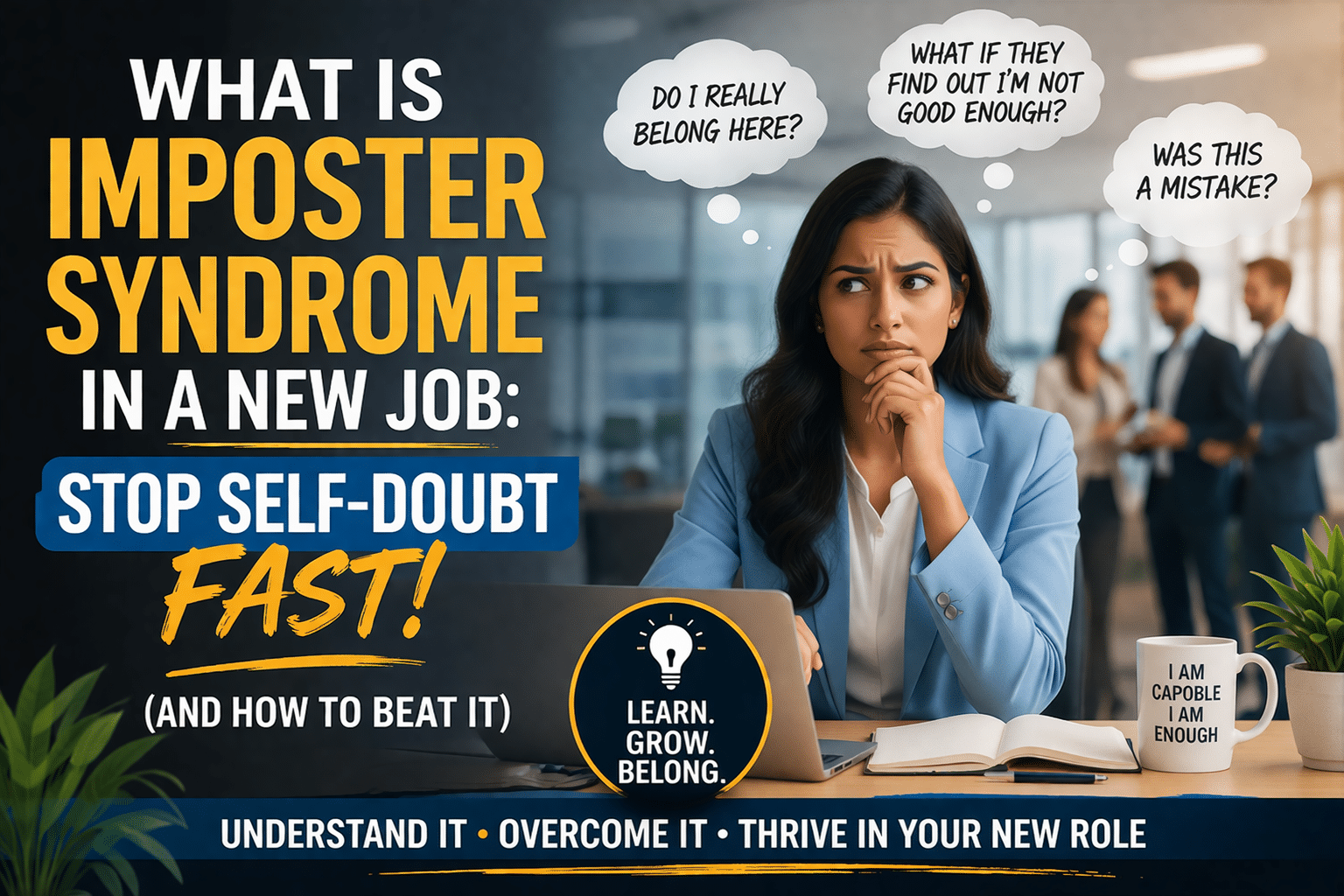
What is imposter syndrome in a new job?

Introduction

You finally got the job.

The offer letter felt like a dream. The congratulatory messages poured in. Your family felt proud. You promised yourself—this is my moment.

But then… something shifted.

On your first day, you looked around and thought,
“Do I really belong here?”
“What if they find out I’m not as good as they think?”
“Was this a mistake?”

If this sounds familiar, you’re not alone.

This silent, nagging voice inside your head has a name. It’s called imposter syndrome.

And today, we’re going to deeply explore what is imposter syndrome in a new job, why it happens, and how you can overcome it—not just temporarily, but permanently.

Let’s be real. Starting a new job is exciting, but it’s also overwhelming. New systems, new expectations, new people—and suddenly, your confidence shakes. You compare yourself with experienced colleagues. You hesitate to ask questions. You overthink every email you send.

This is exactly where what is imposter syndrome in a new job becomes more than just a concept—it becomes a lived experience.

As a trainer working with professionals across industries, I’ve seen this pattern repeatedly. High performers, talented individuals, even leaders—feeling like frauds in the beginning.

But here’s the truth:

“Imposter syndrome is not a sign of incompetence. It’s a sign that you are growing.”

In this article, we won’t just define what is imposter syndrome in a new job.
We will break it down psychologically, emotionally, and practically—so you walk away with clarity, confidence, and control.


What is imposter syndrome in a new job?

Imposter syndrome is a psychological pattern where you doubt your abilities, feel like a fraud, and fear being exposed—despite having real achievements and qualifications.

When applied to a workplace context, what is imposter syndrome in a new job becomes:

A state where you feel undeserving of your new role, constantly question your competence, and fear that others will discover you are not capable enough.


Psychological Roots of Imposter Syndrome

From a psychological perspective, what is imposter syndrome in a new job connects to:

  • Cognitive distortions (negative thinking patterns)
  • Low self-efficacy (belief in your abilities)
  • Perfectionism
  • Fear of failure and rejection

According to research published in the International Journal of Behavioral Science, nearly 70% of people experience imposter syndrome at some point in their lives.

Yes—70%.

That means even the person you think is “confident” may be silently struggling.


Types of Imposter Syndrome (Workplace Context)

Understanding types helps you identify your pattern:

1. The Perfectionist

  • Sets unrealistically high standards
  • Feels like a failure even with small mistakes

2. The Expert

  • Feels inadequate unless they know everything
  • Avoids tasks due to fear of not knowing enough

3. The Natural Genius

  • Believes success should come easily
  • Feels like a fraud when effort is required

4. The Soloist

  • Avoids asking for help
  • Thinks needing support = weakness

5. The Superhuman

  • Works excessively to prove worth
  • Burnout is common

Real-Life Example (From Training Experience)

During a corporate training session, a young manager told me:

“Sir, I got promoted, but I feel like they made a mistake. I’m scared every day.”

When I asked about his performance history—he had consistently exceeded targets.

So what was happening?

Not incompetence.
Not lack of skill.

Just a classic case of what is imposter syndrome in a new job.

Within 3 weeks of coaching:

  • His confidence improved
  • He started contributing ideas
  • His team performance increased

Awareness was the turning point.


Why Does Imposter Syndrome Happen in a New Job?

Now that you understand what is imposter syndrome in a new job, let’s explore why it happens.


1. Transition Shock

A new job = new environment.

Your brain moves from:

  • Known → Unknown
  • Comfort → Uncertainty

This triggers anxiety and self-doubt.


2. Comparison Trap

You start comparing:

  • Your Day 1 with others’ Year 5
  • Your learning phase with others’ mastery

This creates a false belief:

“I am not good enough.”


3. Fear of Judgment

You worry:

  • “What will my boss think?”
  • “Will my team respect me?”
  • “What if I make mistakes?”

This fear fuels what is imposter syndrome in a new job deeply.


4. High Expectations

Sometimes:

  • You expect too much from yourself
  • Or others expect too much from you

Either way → Pressure increases → Confidence drops.


5. Lack of Feedback

Silence is dangerous.

No feedback =
Your brain fills gaps with negative assumptions.


Signs You Have Imposter Syndrome in a New Job

Let’s check if you relate.

Common Symptoms:

  • Constant self-doubt
  • Over-preparing for simple tasks
  • Fear of asking questions
  • Attributing success to luck
  • Feeling like you “fooled” the interviewer
  • Avoiding challenges
  • Anxiety before meetings

Quick Self-Check Table

Thought PatternReality
“I don’t belong here”You were selected for a reason
“Others are smarter”Others have more experience
“I’ll be exposed”Learning is expected
“I got lucky”You earned this opportunity

How to Overcome Imposter Syndrome in a New Job (Step-by-Step Guide)

Now comes the most important part.

Understanding what is imposter syndrome in a new job is powerful—but transformation comes from action.


1. Normalize the Feeling

First rule:

“It’s not just you.”

Say it again.

Even top CEOs and leaders experience this.


2. Reframe Your Thoughts

Instead of:

  • “I don’t know this”

Say:

  • “I am learning this”

This small shift changes your mindset.


3. Track Your Wins

Create a “Confidence Journal”

Write:

  • Daily achievements
  • Positive feedback
  • Small wins

This builds evidence against self-doubt


4. Ask Questions Without Fear

Remember:

“Asking questions is a sign of growth, not weakness.”


5. Stop Comparing Yourself

Comparison kills confidence.

Focus on:

  • Your progress
  • Your growth

6. Seek Feedback Regularly

Ask:

  • “Am I on the right track?”
  • “What can I improve?”

Clarity reduces anxiety.


7. Accept Mistakes as Learning

Mistakes are not failures.

They are:

“Feedback in disguise.”


8. Build Support Systems

Connect with:

  • Mentors
  • Colleagues
  • Friends

You don’t have to do it alone.


9. Practice Self-Compassion

Be kind to yourself.

You are:

  • Learning
  • Growing
  • Adapting

10. Focus on Contribution, Not Perfection

Instead of asking:

  • “Am I perfect?”

Ask:

  • “Am I adding value?”

Case Study: From Self-Doubt to Confidence

A fresher joined a finance firm.

Week 1:

  • Silent in meetings
  • Avoided speaking
  • Felt overwhelmed

Week 4 (after coaching):

  • Started asking questions
  • Took initiative
  • Delivered a presentation

What changed?

Understanding what is imposter syndrome in a new job and applying small actions daily.


Is Imposter Syndrome Normal in a New Job?

Yes. Completely normal.

In fact:

  • It shows you care
  • It shows you want to perform well

But unmanaged, it can lead to:

  • Anxiety
  • Burnout
  • Low performance

How Long Does Imposter Syndrome Last?

It depends on:

  • Your mindset
  • Your environment
  • Your actions

For some:

  • Weeks

For others:

  • Months

With awareness and practice → It reduces faster.


Can Imposter Syndrome Be Positive?

Surprisingly—yes.

It can:

  • Push you to learn
  • Increase preparation
  • Build humility

But balance is key.

Too much → Paralysis
Healthy level → Growth


Powerful Mindset Shift

“You are not an imposter. You are in transition.”


Practical Daily Routine to Beat Imposter Syndrome

Morning:

  • Affirmation: “I deserve this role.”

During Work:

  • Ask 1 question daily
  • Note 1 learning

Evening:

  • Write 3 wins

Consistency creates confidence.


Expert Insight

From a behavioral science lens:

  • Imposter syndrome is linked to schema-based thinking
  • Early experiences shape self-belief
  • Workplace triggers activate these patterns

Using Cognitive Behavioral Techniques (CBT):

  • Identify negative thoughts
  • Challenge them
  • Replace them

This is evidence-based and effective.


References


Conclusion

Starting a new job is never easy.

And if you’ve been wondering what is imposter syndrome in a new job, now you know:

It’s not weakness.
It’s not failure.
It’s not incompetence.

It’s simply a phase of growth.

You are stepping into something bigger.
And your mind is trying to catch up.

So the next time that voice says:
“You don’t belong here”

Smile and reply:

“I am learning. I am growing. I belong here.”


Thank you for exploring this insightful article.
If you’re hungry for more knowledge, don’t miss out on our other engaging articles waiting for you. Dive into our treasure trove of wisdom and discover new perspectives on related topics.
Click Our Blog and How to Guide to embark on your next adventure.
Happy reading!

FAQs on What is imposter syndrome in a new job

1. What is imposter syndrome in a new job in simple terms?

It is a feeling where you doubt your abilities and fear being exposed as a fraud, even though you are qualified for your job. It often happens when you start a new role and are still learning.

2. Why do I feel like I don’t deserve my new job?

This feeling comes from self-doubt, comparison, and fear of judgment. Your brain is adjusting to a new environment and interpreting uncertainty as incompetence.

3. Is imposter syndrome a mental illness?

No, it is not a mental illness. It is a psychological pattern or mindset issue that many people experience, especially during transitions like a new job.

4. How can I quickly overcome imposter syndrome?

Start by acknowledging the feeling, tracking your achievements, asking questions, and seeking feedback. Consistent small actions help build confidence.

5. Does everyone experience imposter syndrome?

Yes, studies suggest around 70% of people experience it at some point in their lives, especially during new challenges or roles.

6. Can imposter syndrome affect job performance?

Yes, if unmanaged, it can lead to anxiety, hesitation, and reduced productivity. But with awareness, it can be controlled effectively.

7. How long does imposter syndrome last in a new job?

It varies from person to person. With the right mindset and strategies, it can reduce within weeks.

8. Should I talk to my manager about imposter syndrome?

Yes, if you feel comfortable. A supportive manager can provide guidance, feedback, and reassurance.

9. Can imposter syndrome happen even after years of experience?

Yes, it can reappear whenever you face new challenges, promotions, or unfamiliar responsibilities.

10. What is the best mindset to overcome imposter syndrome?

Focus on growth, not perfection. Replace “I don’t know” with “I am learning.”

Unlock Victory: 10 Winning Mindset Secrets!

Discover 10 science-backed techniques to develop a powerful mindset that leads to success, resilience, and unstoppable personal growth.

Have you ever wondered why some people seem to radiate confidence, bounce back from setbacks, and always seem to land on their feet? It’s not magic—it’s mindset. The way we think influences everything—from how we handle failure to how we chase our goals. In this article, we’re diving deep into 10 Proven Techniques to Cultivate a Winning Mindset Today! Whether you’re an entrepreneur, student, or just someone craving personal growth, these game-changing strategies will transform how you approach life and challenges. Ready to shift your thinking and level up?


💡 What Is a Winning Mindset—And Why Does It Matter?

Let’s break it down. A winning mindset isn’t about winning every time—it’s about thinking like a winner. It’s about resilience, confidence, grit, and growth. It’s believing that every setback is a setup for a comeback.

You’ve probably heard the saying, “Your mind is your strongest muscle—train it well.” And it’s true. Just like physical fitness, mental fitness requires consistency, the right tools, and a bit of sweat equity.

So what’s the big deal? With a winning mindset, you:

  • Handle stress like a pro
  • Stay focused under pressure
  • Turn obstacles into opportunities
  • Create success, not just chase it

Let’s get into the nitty-gritty of how to build one!


1. Embrace the Power of Growth Mindset 🚀

People with a growth mindset believe abilities can be developed. They don’t fear failure—they learn from it. Psychologist Carol Dweck, who popularized this concept, showed how thinking “I can learn this” beats “I’m not good at this” every time.

So, how do you shift from fixed to growth?

  • Replace “I can’t” with “I can learn”
  • Celebrate effort, not just outcomes
  • View challenges as opportunities

Tip: Journal your daily wins—even the tiny ones. Progress builds momentum.


2. Set Clear, Purpose-Driven Goals 🎯

A vague goal like “be successful” is like driving without a destination. Instead, get clear:

  • What exactly do you want?
  • Why do you want it?
  • When will you achieve it?

SMART goals (Specific, Measurable, Achievable, Relevant, Time-bound) are your best friends. They keep your vision focused and your actions aligned.

💡 Thought to Live By: “Clarity breeds confidence.”


3. Visualize Success Daily 🧠

Visualization is a mental rehearsal of your ideal outcome. Top athletes do it. CEOs do it. Why not you?

Close your eyes. See yourself achieving your goal. Feel it. Smell it. Live it. Your brain doesn’t know the difference between imagined success and real success—it just builds the wiring for both.

Do this daily, and you’re essentially installing the “software” for success.


4. Feed Your Mind with Positivity 📚

Garbage in, garbage out. What you read, watch, and listen to shapes your beliefs.

Curate a mindset diet:

  • Listen to empowering podcasts
  • Read growth-centered books
  • Follow inspiring creators

Avoid negativity like you’d avoid junk food. For some life-changing reads, check out James Clear’s Atomic Habits or Carol Dweck’s Mindset.


5. Practice Gratitude Religiously 🙏

Gratitude isn’t fluffy feel-good fluff—it’s a proven brain booster. Studies show it rewires your brain for positivity and resilience.

Try this:

  • Every morning, list 3 things you’re grateful for
  • Reflect on them before bed

The result? You train your brain to notice the good, even during chaos.


6. Cultivate Self-Awareness 🔍

Self-awareness is knowing your strengths, blind spots, and triggers. It’s the foundation of emotional intelligence and inner strength.

Ask yourself:

  • What am I feeling—and why?
  • What patterns keep repeating in my life?
  • What do I truly value?

Tools like journaling or personality assessments (like the VIA Character Strengths) can help uncover your inner compass.


7. Surround Yourself with Growth-Minded People 👥

“You are the average of the five people you spend the most time with.” —Jim Rohn

Are your friends pushing you to grow—or keeping you stuck?
Energy is contagious. Protect your vibe by choosing:

  • Mentors
  • Coaches
  • Positive peers

Online communities and masterminds can be a great place to start.


8. Develop Unshakeable Self-Discipline 💪

Motivation is fleeting. Discipline is your backup generator.

Train yourself to:

  • Follow through even when it’s hard
  • Keep commitments to yourself
  • Show up, rain or shine

Discipline is the invisible bridge between dreams and results.

🧠 Pro Tip: Start with micro-habits. One push-up. One sentence written. One dollar saved. Tiny wins lead to massive momentum.


9. Learn to Reframe Failure 🔥

Failure isn’t a stop sign. It’s feedback.

When things go sideways, ask:

  • What can I learn from this?
  • How can I use this to grow?

Michael Jordan missed over 9,000 shots in his career—but he never let failure define him. He used it to fuel his next success.


10. Anchor Your Mindset with Daily Affirmations 🗣️

Affirmations are powerful “mental software upgrades.” When repeated consistently, they shape your beliefs and identity.

Examples:

  • “I am capable of achieving greatness.”
  • “I bounce back stronger every time.”
  • “I am focused, fearless, and unstoppable.”

Say them out loud. Write them down. Live them.


🌍Real-World Examples and Resources

If you’re wondering how others have used these exact techniques, check out:

Both sites provide practical tools, assessments, and deep dives into topics we covered.


Inside the Mind of Winner

Conclusion: Start Winning from Within

By now, you’ve seen that a winning mindset isn’t something you’re born with—it’s something you build. It’s a combination of intentional habits, powerful beliefs, and conscious choices. Think of it like planting a seed: with daily nurturing, that seed turns into a strong, resilient tree capable of weathering any storm.

Remember, mindset isn’t about always being positive or pretending life is perfect. It’s about choosing progress over perfection, growth over comfort, and purpose over procrastination. If you’re willing to put in the work and consistently apply these 10 Proven Techniques to Cultivate a Winning Mindset Today!, you’ll start noticing a shift—not just in your thoughts, but in your results, relationships, and reality.

Don’t wait for the “perfect time” to start. There is no perfect time. The time is now.

🔥 Slogan to Live By: “Win the battle in your mind—and you’ll win in life.”


Final Call to Action

Thank you for exploring this insightful article on 10 Proven Techniques to Cultivate a Winning Mindset Today! If you’re hungry for more knowledge, don’t miss out on our other engaging articles waiting for you. Dive into our treasure trove of wisdom and discover new perspectives on related topics.

👉 Click here to explore Our Blog and How-to Guides to embark on your next adventure.

Stay curious. Stay growing. And most importantly—keep believing in your power to change your life from the inside out.

Happy reading! 🌱


10 Unique FAQs on Cultivating a Winning Mindset

1. What’s the fastest way to build a winning mindset?

Start with micro-habits like journaling, daily affirmations, or setting one small goal each day. Consistency beats intensity.

2. Can mindset really affect my career success?

Absolutely. A winning mindset influences how you handle feedback, set goals, and deal with setbacks—crucial traits for professional growth.

3. How do I stay positive when life gets tough?

Positivity doesn’t mean ignoring reality. It means choosing empowering interpretations and focusing on solutions rather than problems.

4. Are affirmations scientifically proven to work?

Yes. Studies in neuroscience show that affirmations activate the brain’s reward system and help rewire negative self-talk.

5. What’s the difference between fixed and growth mindset?

A fixed mindset believes abilities are static. A growth mindset believes they can be developed through effort and learning.

6. Can I develop a winning mindset later in life?

Absolutely. Mindset is flexible at any age. Neuroplasticity allows the brain to adapt, change, and grow—even in adulthood.

7. How important is environment in shaping mindset?

Very important. Your environment, including people and media, can either uplift or limit your thinking. Choose wisely.

8. How do I overcome self-doubt?

Challenge your inner critic. Use evidence-based thinking, track your wins, and surround yourself with encouraging influences.

9. What’s a good daily routine to boost mindset?

Try this: Morning gratitude + goal review + 10-minute visualization + action step toward your goal + evening reflection.

10. How can I help my kids develop a winning mindset?

Praise effort over talent, encourage problem-solving, model resilience, and talk openly about learning from mistakes.

Unlock the Secret to Master Continuous Learning

Continuous learning is the key to thriving in a rapidly changing world. In an era where knowledge evolves at lightning speed, staying ahead means cultivating a mindset of growth and adaptability. Whether you’re looking to sharpen your professional skills, explore new passions, or become a more well-rounded individual, continuous learning empowers you to unlock opportunities and reach your fullest potential. In this article, we’ll explore practical strategies, proven methods, and inspiring insights to help you master the art of lifelong learning. Get ready to transform your approach to learning and achieve remarkable growth.

“Knowledge is power, but applied knowledge is a superpower.”

How to Master Continuous Learning?

Why Continuous Learning Matters

In a world where innovation never sleeps, the importance of continuous learning cannot be overstated. It keeps your mind agile, ensures your skills stay relevant, and enhances your ability to adapt to change. Professionals who invest in lifelong learning often find themselves more confident, adaptable, and successful in their endeavors.

As the saying goes, “Knowledge is power, but applied knowledge is a superpower.” Embracing continuous learning allows you to harness this superpower to overcome challenges and seize new opportunities.


Building a Growth Mindset

A growth mindset is the foundation of continuous learning. This mindset encourages you to see challenges as opportunities and failures as lessons. To nurture a growth mindset:

  1. Embrace curiosity: Question assumptions and seek to understand new perspectives.
  2. Celebrate progress: Recognize even small achievements as stepping stones.
  3. Reframe failure: Instead of fearing mistakes, view them as essential learning experiences.

Dr. Carol Dweck’s groundbreaking research on mindset emphasizes that those with a growth mindset are far more likely to persist in the face of setbacks, making it an essential trait for continuous learners.


Strategies to Cultivate Lifelong Learning

Here are actionable ways to integrate continuous learning into your life:

  1. Set Clear Goals
    Define what you want to learn and why. Goals help focus your efforts and measure your progress. For example, if you aim to master digital marketing, break it into smaller goals like learning SEO or social media analytics.
  2. Leverage Online Learning Platforms
    Platforms like Coursera, Udemy, and LinkedIn Learning provide courses on diverse topics. The accessibility and flexibility of these resources make them a favorite for professionals and students alike.
  3. Adopt Microlearning
    Short, focused learning sessions help retain information better. Apps like Duolingo or Blinkist are excellent for quick, daily learning.
  4. Seek Feedback and Mentorship
    Constructive feedback helps identify areas for improvement, while mentors can provide guidance and share valuable experiences.
  5. Apply What You Learn
    The best way to solidify knowledge is by applying it. Practice skills in real-world scenarios, whether through projects, volunteering, or side gigs.

The Role of Curiosity in Continuous Learning

Curiosity drives exploration and innovation. Here’s how to ignite and sustain it:

  • Ask more questions: Even if they seem basic, questions are the starting point of deeper understanding.
  • Explore diverse fields: Learning about seemingly unrelated topics often sparks creativity and innovation.
  • Keep a learning journal: Document what intrigues you and revisit it for inspiration.

Embracing Technology for Learning

Technology has revolutionized how we learn, offering unprecedented access to resources. Here are a few ways to use tech to your advantage:

  • E-learning platforms: Websites like Khan Academy and Skillshare provide free and paid resources.
  • Podcasts and audiobooks: Perfect for learning on the go.
  • AI-powered tools: Apps like Quizlet or Grammarly can enhance your learning experience.

Overcoming Challenges in Continuous Learning

Embarking on the path of lifelong learning isn’t without hurdles. Here’s how to overcome them:

  1. Time Constraints
    • Utilize time-blocking techniques to dedicate specific hours for learning.
    • Replace passive activities like scrolling social media with productive learning.
  2. Lack of Motivation
    • Connect learning goals to personal aspirations to stay driven.
    • Join communities or learning groups for accountability and support.
  3. Information Overload
    • Focus on one skill or subject at a time to avoid feeling overwhelmed.
    • Use tools like Notion or Evernote to organize and prioritize learning materials.

Thought for the Journey

“The capacity to learn is a gift; the ability to learn is a skill; the willingness to learn is a choice.”

Brian Herbert

Your willingness to embrace learning will determine how far you can go in both personal and professional realms.

Resource Recommendations

For further inspiration and strategies, check out:


Conclusion

Continuous learning is not just a skill but a way of life. By fostering curiosity, leveraging technology, and overcoming challenges, you can transform your approach to growth and success. Whether it’s enhancing your career, exploring passions, or staying relevant in an ever-changing world, mastering continuous learning will always serve you well.


Call to Action

Thank you for exploring this insightful article! If you’re hungry for more knowledge, don’t miss out on our other engaging articles waiting for you.

Dive into our treasure trove of wisdom

Discover new perspectives on related topics to embark on your next adventure. Happy reading!


FAQs: How to Master Continuous Learning

1. What is continuous learning, and why is it important?

Continuous learning refers to the ongoing process of developing new skills, gaining knowledge, and staying updated in your personal and professional life. It’s crucial because it helps you adapt to change, stay competitive in your field, and achieve personal growth.

2. How can I start incorporating continuous learning into my daily life?

Begin by setting clear learning goals, dedicating specific time for learning, and exploring resources like online courses, podcasts, or books. Start small with microlearning techniques, such as dedicating 15–30 minutes daily to focused study or practice.

3. What are some of the best platforms for online learning?

Popular platforms include:
1. Coursera: Offers courses from top universities.
2. Udemy: Provides affordable, topic-specific courses.
3. LinkedIn Learning: Focuses on professional skills.
4. Khan Academy: Free educational resources for all ages.

4. How can I overcome the challenge of staying motivated to learn?

1. Tie your learning goals to personal or professional aspirations.
2. Break your goals into smaller, manageable steps.
3. Join a learning community or group for accountability.
4. Reward yourself for achieving milestones.

5. What is microlearning, and how does it help?

Microlearning is a focused learning method involving short bursts of content, such as 5–10 minute lessons or quick videos. It helps improve retention and makes learning more manageable, especially for busy individuals.

6. How can I balance continuous learning with a busy schedule?

Use time-blocking techniques to allocate dedicated learning time. Incorporate learning into your routine by listening to audiobooks or podcasts during commutes or while exercising. Replace unproductive activities like scrolling social media with educational content.

7. How does a growth mindset contribute to continuous learning?

A growth mindset encourages you to embrace challenges, view failures as learning opportunities, and believe in your ability to improve. This mindset helps you persist in your learning journey, even when facing obstacles.

8. What are some common mistakes to avoid when pursuing lifelong learning?

1. Trying to learn too many things at once, leading to overwhelm.
2. Focusing only on theoretical knowledge without practical application.
3. Neglecting feedback and avoiding accountability.

9. Can technology help with continuous learning?

Absolutely! Technology offers tools like:
1. E-learning platforms for structured courses.
2. Mobile apps for quick lessons (e.g., Duolingo, Quizlet).
3. AI tools like Grammarly for skill enhancement.
4. Podcasts and audiobooks for on-the-go learning.

10. Are there any free resources for continuous learning?

1. Khan Academy: Free courses in various subjects.
2. OpenLearn by the Open University: Free educational content.
3. YouTube: Tutorials and informative videos.
4. Podcasts: Cover diverse topics, often free.

Setting and Achieving Goals: Your Path to Personal Growth and Success

In a world driven by constant change and evolving aspirations, setting and achieving goals has become a fundamental aspect of realizing personal growth and achieving success. Whether you’re striving for professional advancement, improving your health and well-being, or pursuing a passion, the journey begins with defining clear and SMART goals, fostering personal growth, and nurturing unwavering motivation.

The Power of SMART Goals

Setting goals is an art that requires careful planning, dedication, and an understanding of the SMART framework – Specific, Measurable, Achievable, Relevant, and Time-bound. By incorporating these elements, you create a roadmap that outlines your objectives, making them more manageable and attainable.

Specific: Clearly defining what you want to achieve is the cornerstone of effective goal setting. Rather than vaguely aiming to “get fit,” you might set the specific goal of “losing 15 pounds within six months through a combination of regular exercise and a balanced diet.”

Measurable: Quantifying your progress allows you to track your achievements and stay motivated. In our fitness example, measuring your weight loss progress each month provides tangible evidence of your success.

Achievable: Goals should be challenging yet realistic. Losing 50 pounds in a month might be unattainable, but aiming for 15 pounds is more achievable, promoting sustained effort.

Relevant: Your goals should align with your values, aspirations, and overall life plan. If career growth is your focus, setting a goal to complete a relevant certification is more aligned than pursuing unrelated endeavors.

Time-bound: Setting a timeframe creates a sense of urgency and prevents procrastination. In our weight loss scenario, having a six-month timeframe pushes you to take consistent action.

Nurturing Personal Growth Through Goal Pursuit

Personal growth is the essence of continuous development and self-improvement. The pursuit of meaningful goals fuels this growth, propelling you forward on your path to success.

By embarking on the journey of setting and achieving goals, you expose yourself to new experiences, challenges, and learning opportunities. Each milestone achieved brings a sense of accomplishment, boosting your confidence and encouraging you to tackle even more ambitious objectives.

Moreover, goal pursuit often requires stepping out of your comfort zone, which is where growth truly happens. Overcoming obstacles, adapting to changes, and acquiring new skills contribute to your personal development, expanding your capabilities and enhancing your self-awareness.

Cultivating Unwavering Motivation

Motivation is the driving force behind sustained goal pursuit. It’s what keeps you going when the initial excitement fades and challenges arise. To maintain unwavering motivation, it’s essential to understand the sources of motivation and employ effective strategies.

Intrinsic Motivation: This type of motivation comes from within and is fueled by personal values, passions, and a sense of purpose. When your goals align with your core beliefs, you’re more likely to stay committed and enthusiastic.

Extrinsic Motivation: External factors like rewards, recognition, or praise from others can also fuel motivation. While effective, it’s important to strike a balance between intrinsic and extrinsic motivation to avoid dependency on external validation.

Visualization and Affirmations: Visualizing your success and using positive affirmations can reinforce your commitment and keep your goals at the forefront of your mind. Envisioning yourself achieving your objectives creates a powerful mental image that boosts motivation.

Accountability Partnerships: Sharing your goals with a trusted friend or mentor holds you accountable and provides valuable support. Regular check-ins and discussions about progress can reignite motivation during challenging times.

The Synergy of Personal Growth and Success

As you embark on your journey of setting and achieving goals, you’ll notice a beautiful synergy between personal growth and success. The pursuit of meaningful goals fosters qualities such as resilience, adaptability, determination, and discipline – attributes that are not only crucial for achieving success but also for sustaining it.

Personal growth equips you with the mindset and skills needed to navigate the ever-changing landscape of life. The challenges you overcome and the lessons you learn along the way become invaluable tools that enhance your overall success, both personally and professionally.

In essence, the process of setting and achieving goals is a transformative experience that not only leads to tangible outcomes but also cultivates a stronger, wiser, and more accomplished version of yourself.

Conclusion

In the pursuit of personal growth and success, setting and achieving goals serve as guiding stars, lighting up the path ahead. The journey is transformative, propelling you toward a more empowered and accomplished version of yourself. By harnessing the power of SMART goals, nurturing personal growth, and cultivating unwavering motivation, you pave the way for a future brimming with triumph and fulfillment.

Exit mobile version