The 3 R’s: How to Beat Procrastination Scientifically and Get Things Done

Introduction:

I have sat in classrooms, training rooms, and even at my own desk and thought, “I’ll start in five minutes.”
And in some way… That five minutes turns into two hours.

If I’m being real with you, procrastination isn’t laziness. It’s something deeper. Emotional. Psychological.

And once you understand that, everything changes.

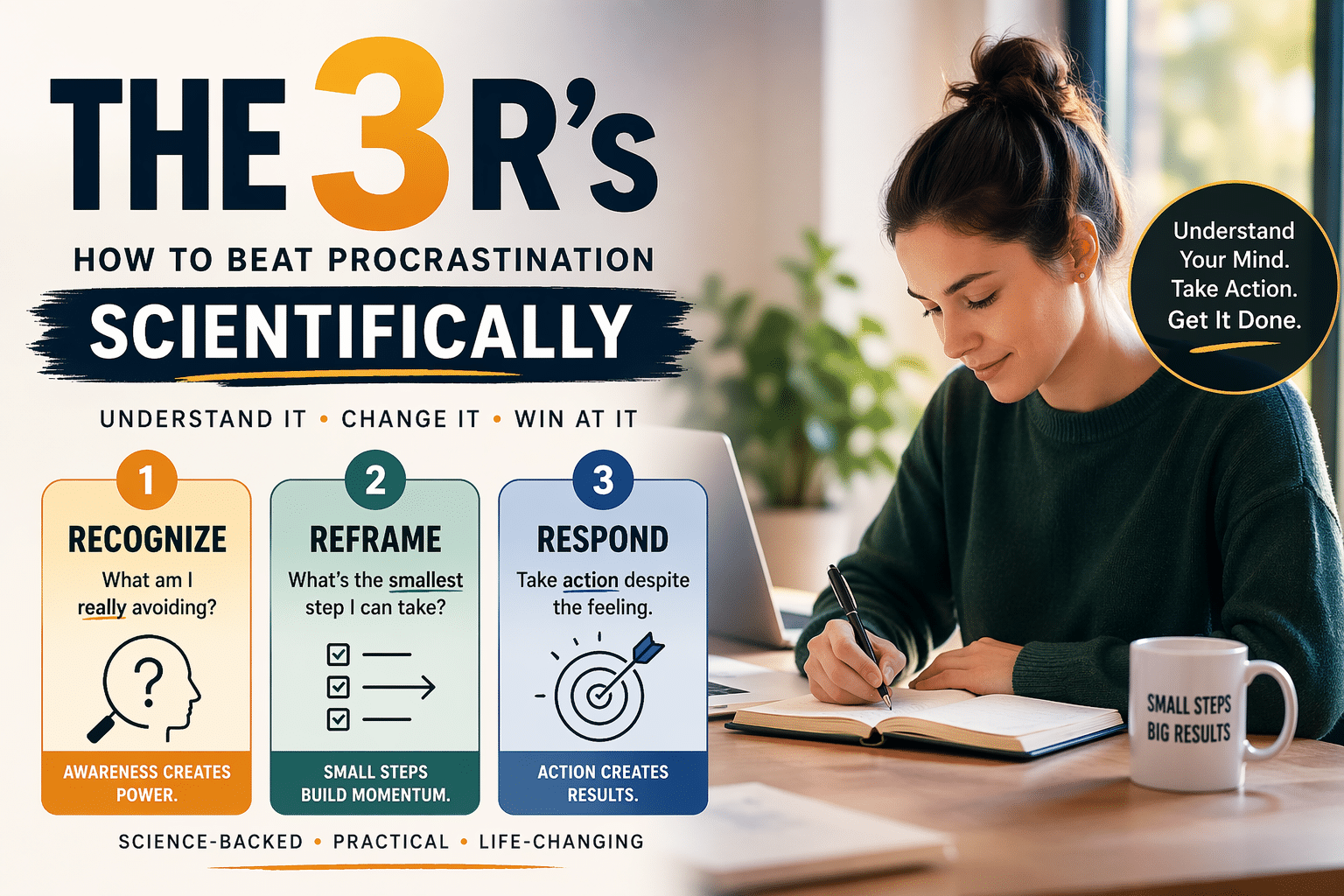
This article isn’t about pushing yourself harder. It’s about understanding how to beat procrastination scientifically using a simple but powerful framework: the 3 R’s — Recognize, Reframe, and Respond.


What Does Science Say About Procrastination?

Before we jump into the solution, let’s understand the problem.

Research shows procrastination is linked to emotional regulation, not time management. According to studies from institutions like Stanford and the American Psychological Association, we procrastinate to avoid discomfort — not because we don’t have time.

👉 In simple words:
We delay tasks because they feel uncomfortable, not because they’re difficult.

And honestly… that hits hard.


The 3 R’s Method: How to Beat Procrastination Scientifically

This is where things get interesting.

Instead of forcing discipline, the 3 R’s approach works with your brain, not against it.


1. Recognize — “What am I really avoiding?”

This might sound simple… but it’s not easy.

Most people think they’re procrastinating on a task.
But in reality, they’re avoiding a feeling.

Ask yourself:

  • Am I feeling overwhelmed?
  • Am I afraid of failure?
  • Am I bored or uninterested?

In one of my training sessions, a participant kept delaying a report. When we dug deeper, it wasn’t the report—it was fear of criticism.

And honestly… that changed everything for him.

👉 Awareness reduces resistance.


2. Reframe — “What’s the smallest step I can take?”

Here’s where science really helps.

Your brain hates big, vague tasks.
But it’s okay with small, clear actions.

Instead of saying
❌ “I need to complete this project.”
Say:
✅ “I will write the first paragraph.”

This technique is backed by behavioral psychology—breaking tasks reduces cognitive load.

Try this:

  • Turn big tasks into micro-actions
  • Focus on starting, not finishing

Because once you start… momentum kicks in.


3. Respond—”Take action despite the feeling”

This is the hardest part.

Because you’re not waiting for motivation anymore.

You’re acting even when you don’t feel like it.

And honestly… this is where growth happens.

Psychologists call this “opposite “action”—doing the task despite emotional resistance.

A simple rule:

👉 “Do it for 5 minutes.”

That’s it.

Most of the time, you’ll continue.
And even if you don’t—you’ve broken the cycle.


Why the 3 R’s Actually Work (Science Behind It)

Let’s connect the dots.

Experts like Daniel Goleman emphasize emotional intelligence as key to behavior change. And honestly, procrastination is just a lack of emotional regulation.


How to Beat Procrastination Scientifically in Daily Life

Let’s make this practical.

Morning Routine Trick

Before starting your day, ask:
👉 “What’s one uncomfortable task I will start today?”

Not finish. Just start.


The 2-Minute Rule

If something takes less than 2 minutes… do it immediately.

This builds momentum.


Environment Matters More Than Motivation

Remove distractions:

  • Keep phone away
  • Use a clean workspace
  • Set a timer

Small changes. Big impact.


Real Talk: Why Motivation is Overrated

This might sound harsh…

But waiting for motivation is the biggest trap.

In my experience as a trainer, the most successful people don’t feel motivated all the time.

They just… show up.

Even when it’s messy. Even when it’s uncomfortable.


Resources


Conclusion:

If you’ve been searching for how to beat procrastination scientifically, here’s the truth:

It’s not about forcing yourself.
It’s about understanding yourself.

Recognize the emotion.
Reframe the task.
Respond with action.

And slowly… things start moving.

Not perfectly. But consistently.

And honestly… that’s enough.


FAQ’s on How to Beat Procrastination Scientifically

What is the scientific way to stop procrastination?

The scientific way involves understanding emotional triggers, breaking tasks into small steps, and taking action despite discomfort using behavioral techniques like the 3 R’s.

Why do people procrastinate even when they know it’s bad?

Procrastination is linked to emotional avoidance, not laziness. People delay tasks to avoid stress, fear, or discomfort.

How can I start a task when I don’t feel motivated?

Start with just 5 minutes. This reduces resistance and helps build momentum, making it easier to continue.

What are the 3 R’s method for procrastination?

It stands for Recognize (identify emotions), Reframe (simplify the task), and Respond (take action anyway).

Can emotional intelligence help reduce procrastination?

Yes, managing emotions effectively helps you overcome avoidance and take action more consistently.

Is procrastination a mental health issue?

It can be linked to anxiety, stress, or low self-esteem, but it’s mainly a behavioral pattern that can be changed.

How do I stop procrastinating daily?

Focus on small tasks, remove distractions, and commit to starting rather than finishing.

Does breaking tasks really help?

Yes, smaller tasks reduce overwhelm and make it easier for the brain to initiate action.

What is the 2-minute rule?

If a task takes less than 2 minutes, do it immediately to build productivity habits.

How long does it take to overcome procrastination?

It varies, but consistent small actions daily can show improvement within a few weeks.
The Science-Backed Best Morning Routine for Entrepreneurs to Boost Focus

Have you ever felt like your entire day depends on how your morning starts?

If want to say Honestly..!

Some mornings feel powerful—you wake up energized, clear, and ready to take on the world.

And then there are those mornings…
You hit snooze 5 times, scroll your phone, rush through everything—and suddenly your whole day feels messy.

If you’re an entrepreneur, you already know this truth:

👉 Your morning is not just a start… it sets the direction of your entire business day.

I’ve worked with professionals, entrepreneurs, and trainees—and one pattern is crystal clear:

The most successful people don’t leave their mornings to chance.

They design them.

And the best part?
Science actually supports this.

Let’s see below in a simple, practical, real-life way the Best Morning Routine for Entrepreneurs


What is the Best Morning Routine for Entrepreneurs?

The best morning routine for entrepreneurs is a structured set of habits that improves focus, energy, clarity, and emotional control—so you can make better decisions throughout the day.

It’s not about waking up at 4 AM just because someone on the internet said so.

👉 It’s about creating a routine that works for you, backed by psychology and neuroscience.


Why is a Morning Routine So Important for Entrepreneurs?

Does your brain really work better in the morning?

Yes—and here’s the science behind it.

Research shared in platforms like Harvard Business Review and insights from experts like Daniel Goleman highlight that:

  • Your willpower is highest in the morning
  • Your decision-making ability is strongest early in the day
  • Your mental clarity is at its peak after rest

This is called “cognitive freshness.”

👉 Most people waste it on:

  • Social media scrolling
  • Emails
  • Random distractions

But entrepreneurs? They use it strategically.


What Happens When You Start Your Day Right?

Let me share something I’ve seen during training sessions.

Two people. Same skills. Same opportunities.

But:

  • One starts the day with clarity
  • The other starts with chaos

After 30 days…

👉 The difference becomes huge.

A powerful morning routine helps you:

  • Improve focus and deep work
  • Reduce stress and anxiety
  • Make better business decisions
  • Stay emotionally stable under pressure
  • Build discipline and consistency

As Stephen Covey said:

“Win the morning, win the day.”


What is the Science-Backed Best Morning Routine for Entrepreneurs?

Now let’s get practical.

This is not theory—this is a realistic, science-backed routine you can actually follow.


1. What Time Should Entrepreneurs Wake Up?

Let’s clear a myth first.

👉 You don’t need to wake up at 4 AM.

The key is:

  • 7–8 hours of sleep
  • A consistent wake-up time

Best practice:

  • Wake up between 5:30 AM – 7:00 AM
  • Keep it consistent—even on weekends

👉 Your brain loves rhythm.


2. Why Should You Avoid Your Phone First Thing in the Morning?

Have you ever checked your phone and suddenly felt stressed?

That’s not random.

Your brain goes into reactive mode.

Instead of leading your day, you start responding to others.

What to do instead:

  • No phone for first 30 minutes
  • Avoid emails and social media

👉 Protect your mental space.


3. How Does Hydration and Movement Improve Focus?

After 7–8 hours of sleep, your body is dehydrated.

Simple habit:

  • Drink 1–2 glasses of water
  • Do light stretching or a short walk

Why it works:

  • Boosts blood flow
  • Activates brain function
  • Improves alertness

Even 5–10 minutes is enough.


4. Should Entrepreneurs Practice Meditation or Mindfulness?

Short answer: YES.

Even 5–10 minutes can change your entire day.

Experts like Brené Brown and research from APA show:

👉 Mindfulness improves:

Simple method:

  • Sit quietly
  • Focus on your breath
  • No need to overcomplicate

5. Why is Planning Your Day in the Morning Important?

Most people start their day with confusion.

Entrepreneurs don’t.

They start with clarity.

Try this:

Write down:

  • Top 3 priorities of the day
  • One important task that moves your business forward

👉 This creates direction.


6. What Role Does Exercise Play in Productivity?

Let me tell you something from real experience.

People who move their body in the morning:
👉 Think better
👉 Feel better
👉 Work better

You don’t need a gym:

  • 15-minute walk
  • Yoga
  • Light workout

That’s enough to boost:

  • Dopamine (motivation)
  • Endorphins (happiness)

Other Reference: Exercise Increases Productivity


7. Should You Read or Learn Something in the Morning?

Absolutely.

Morning is the best time for learning.

Try:

  • 10 pages of a book
  • Listening to a podcast

This builds:

  • New ideas
  • Better thinking
  • Growth mindset

A Simple Example of the Best Morning Routine

Here’s a realistic version you can follow:

6:00 AM – Wake up
6:05 AM – Drink water
6:10 AM – Light stretching / walk
6:25 AM – Meditation (5–10 mins)
6:40 AM – Planning your day
6:50 AM – Reading / learning
7:10 AM – Start work with focus

👉 Simple. Powerful. Effective.


Practical Tips to Build Your Morning Routine

Let’s make it easier for you.

Start small:

  • Don’t try everything at once
  • Add one habit at a time

Be consistent:

  • Same wake-up time daily

Prepare the night before:

  • Decide your morning tasks
  • Keep things ready

Track your progress:

  • Use a simple checklist

Focus on progress, not perfection:

  • Missing one day is okay
  • Don’t quit

Common Mistakes Entrepreneurs Make in Morning Routines

Do you know? Most of the people fail here.

1. Trying to copy others

What works for someone else may not work for you.

2. Overloading the routine

Too many habits = burnout.

3. Using phone immediately

Kills focus instantly.

4. Skipping sleep

No routine works without proper rest.

5. Being inconsistent

Routine works only with repetitio


Here’s the Truth Most People Don’t Realize…

Your morning routine is not about productivity.

👉 It’s about control.

When you control your morning:
You control your mind.
When you control your mind:
You control your life.


Final Thoughts: Build a Morning That Builds You

Have you ever noticed…

Some people just seem calm, focused, and in control?

It’s not luck.

It’s habits.

👉 Your morning routine is your hidden advantage.

Start small. Stay consistent. Trust the process.

And remember:

“You don’t need a perfect routine. You need a consistent one.”


Frequently Asked Questions (FAQs)

Q1. What is the best morning routine for entrepreneurs?

Answer: The best morning routine for entrepreneurs includes waking up consistently, avoiding phone usage, hydrating, light exercise, mindfulness, and planning top priorities. This combination improves focus, decision-making, and productivity throughout the day.

Q2. How long should a morning routine be?

Answer: A morning routine should ideally be 45 to 90 minutes. However, even a 20–30 minute structured routine can be effective if it includes key habits like planning, movement, and mindfulness.

Q3. Why is waking up early important for entrepreneurs?

Answer: Waking up early helps entrepreneurs use their peak mental energy hours. It allows uninterrupted focus, better planning, and proactive decision-making before daily distractions begin.

Q4. Should I check emails first thing in the morning?

Answer: No, checking emails first puts your brain in reactive mode. It is better to focus on your priorities first and check emails later to maintain control over your day.

Q5. Is exercise necessary in a morning routine?

Answer: Yes, exercise boosts blood flow, increases energy, and improves mental clarity. Even light activity like walking or stretching can significantly enhance focus and productivity.

Q6. How does meditation help entrepreneurs?

Answer: Meditation improves emotional control, reduces stress, and enhances decision-making ability. It helps entrepreneurs stay calm and focused in high-pressure situations.

Q7. Can I create my own morning routine?

Answer: Yes, the best routine is personalized. Choose habits that fit your lifestyle and goals instead of copying others. Consistency matters more than perfection.

Q8. How long does it take to build a morning routine habit?

Answer: It usually takes 21 to 30 days to build a consistent habit. Regular practice and small steps help make the routine sustainable.

Q9. Can a morning routine really improve business success?

Answer: Yes, a structured morning routine improves focus, clarity, and discipline, which directly impact productivity, decision-making, and long-term business success.

It’s Not Too Late: How to Find Your Life Purpose in Your 40s

how to find your life purpose in your 40s

(and why feeling lost right now… might actually mean you’re waking up)

I had a participant once — mid 40s, stable job, good family, everything “sorted” from outside.

He said something quietly during a session… almost like he didn’t want others to hear:

“Sir… I don’t know why I’m doing all this anymore.”

No drama. No breakdown.
Just… emptiness.

And honestly… I’ve heard versions of this so many times.

People don’t always call it a “purpose crisis.”
They just say… something feels missing.


Why do people start questioning life purpose in their 40s?

Because this is the stage where noise reduces.

In your 20s — you’re chasing.
In your 30s — you’re building.
But somewhere in your 40s…

you pause.

And questions start showing up:

  • Is this all?
  • Did I choose right?
  • What actually matters to me?

This might sound uncomfortable… but it’s actually a good sign.

It means you’re not on autopilot anymore.

I’ve seen people ignore this phase — they stay busy, distract themselves…
But the ones who sit with it? They grow differently.


Is it too late to find your purpose after 40?

Short answer? No.

Real answer… it’s actually one of the best times.

Because now you have:

  • experience
  • failures
  • clarity about what you don’t want

I’ve worked with people who discovered their real direction at 45, 50… even later.

One woman I trained shifted from a routine admin job to community work in her late 40s.
She told me, “For the first time… I feel useful.”

Not successful.
Useful.

There’s a difference.


What does “life purpose” really mean at this stage?

This is where people get confused.

Purpose doesn’t always mean quitting your job and doing something dramatic.

Sometimes… it’s quieter.

It’s about alignment.

  • What gives you meaning
  • What uses your strengths
  • What feels worth your time

Brené Brown talks about living a wholehearted life — where your actions match your values.

And in your 40s… you finally start seeing that gap clearly.


How do you actually start finding your life purpose?

Not by overthinking.

I’ve seen this mistake a lot — people sit and think about purpose like it’s a puzzle to solve.

It’s not.

It’s something you discover by doing.

Let me walk you through what I usually suggest in my sessions…


Start with what drains you (not what excites you)

This might sound strange, but it works.

Instead of asking: “What is my passion?”
Ask: “What is slowly exhausting me?”

Because clarity often comes from contrast.

I had one participant who realized… it wasn’t his job he hated —
it was the lack of interaction.

That small realization changed everything.


Notice what you keep coming back to

You know those things you ignore… but they keep returning?

  • an interest
  • an idea
  • a desire to help in a certain way

Pay attention to that.

Your purpose is rarely something completely new.
It’s usually something you’ve been avoiding.


Try small experiments (not big decisions)

This is where most people get stuck.

They think: “If I choose something, I have to commit fully.”

No.

Start small.

  • volunteer
  • take a short course
  • try something on weekends

I’ve seen people gain more clarity from 3 small actions than 6 months of thinking.

Ref: How to Find Your Purpose in Midlife


Use your past… don’t reject it

Some people feel like they “wasted years.”

But honestly… nothing is wasted.

Your past experience is your advantage.

Even if you change direction — you carry your skills, your understanding, your maturity.

That matters more than you think.


Why fear increases in your 40s (and how to deal with it)

This part is real.

In your 20s, you risk easily.
In your 40s… you think about responsibilities.

Family. Stability. Financial pressure.

So the fear becomes louder.

And I’ve seen this — people don’t move forward not because they lack clarity…
but because they’re scared to disturb what they’ve built.

And honestly… that fear is valid.

But here’s a small shift:

You don’t need to destroy your current life to find purpose.
You can build it alongside.

Slowly.


Can purpose change over time?

Yes. And it will.

Purpose is not one fixed destination.

It evolves.

What mattered to you at 25… won’t feel the same at 45.

And that’s okay.

Actually… that’s growth.

Daniel Goleman talks about self-awareness — and this stage of life increases it naturally.

You start understanding yourself better.

And that changes direction.


What if you still feel stuck?

Then don’t chase purpose.

Focus on meaning.

There’s a difference.

Purpose can feel big, heavy, overwhelming.
Meaning is smaller, immediate.

  • helping someone
  • doing work that feels useful
  • learning something new

Start there.

I’ve seen people find purpose only after they stopped chasing it directly.


A small reflection (you can try this)

Not a complicated exercise.

Just sit quietly and ask yourself:

“When do I feel most like myself?”

Not happiest. Not most successful.
Just… most like yourself.

That answer… is a clue.


Final thoughts… (just something I’ve noticed)

People think finding purpose is about adding something new to life.

Sometimes… it’s about removing what doesn’t belong anymore.

The noise. The expectations. The roles you’ve been playing for years.

And what remains…
is usually closer to your real direction.


FAQs on How to Find Your Life Purpose in Your 40s?

What is the best way to find your life purpose in your 40s?

Start with self-reflection and small actions. Notice what interests you, what drains you, and try small experiments. Purpose becomes clear through action, not just thinking.

Is it normal to feel lost in your 40s?

Yes, it’s completely normal. Many people start questioning their life direction at this stage. It often means you’re becoming more self-aware.

Can you change your life purpose after 40?

Yes, absolutely. Purpose is not fixed. Many people discover new meaning and direction later in life using their past experience.

How do I know what I’m truly passionate about?

Look at what keeps coming back to your mind. Your interests often repeat themselves. Pay attention to those patterns.

Do I need to quit my job to find my purpose?

No. You can explore your purpose alongside your current job. Start small and grow gradually without taking big risks immediately.

Why do I feel stuck even when everything is stable?

Stability doesn’t always mean fulfillment. Feeling stuck often comes from lack of meaning, not lack of success.

How long does it take to find your purpose?

There’s no fixed timeline. It’s a gradual process. Some clarity can come in weeks, deeper clarity may take months or years.

What if I have too many interests and feel confused?

Start with one small action. You don’t need to figure everything out at once. Clarity comes step by step.

Can life purpose change over time?

Yes. Your purpose evolves as you grow. What matters to you changes with experience and self-awareness.

What should I do if I feel afraid to change my life?

Start small. You don’t need drastic changes. Take small steps while maintaining stability. That reduces fear and builds confidence.

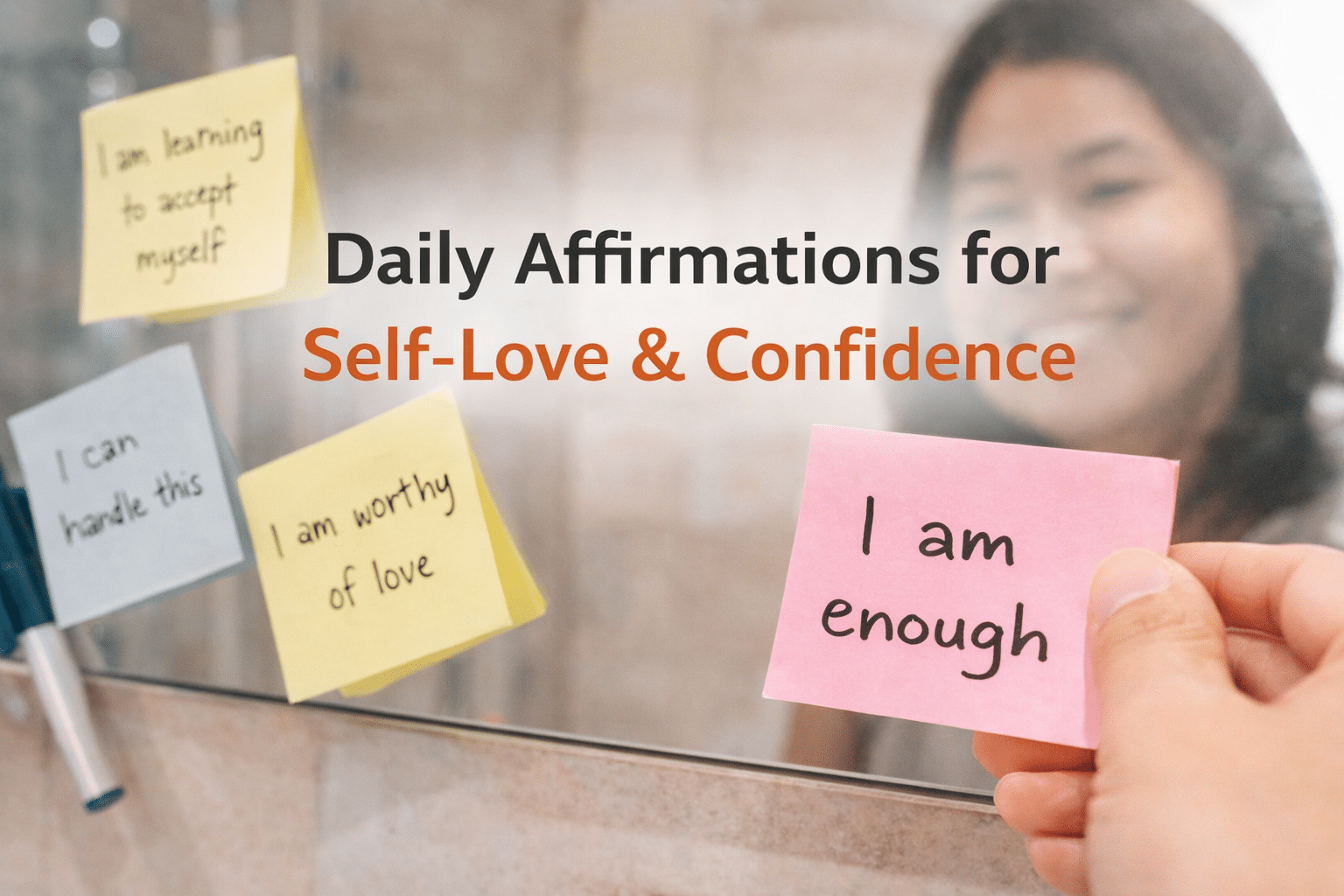
Powerfull 30 Daily Affirmations for Self-Love and Confidence

I’ll be honest with you… the first time I tried affirmations, I felt ridiculous.

I was standing in front of a mirror, saying, “I love myself. I am confident.”
…and somewhere inside, a voice went, “Really? Are you though?”

Before downloading 30 Daily Affirmations for Self-Love and Confidence go through entire article.

If you’ve ever felt that — you’re not alone. I’ve seen this again and again in my training sessions. People want confidence. They want self-love. But when it comes to actually saying it out loud… something resists.

And honestly… that resistance is where the real work begins.


Why do daily affirmations even matter?

There’s this concept in psychology — your brain believes what it hears repeatedly.

Not immediately. Not magically. But slowly… quietly… over time.

I remember one participant, a young woman, very capable, very sharp — but she kept saying, “I’m not good enough.” Not loudly. Just casually. Like it was a fact.

And that’s the thing —
we don’t just have thoughts… we rehearse them.

That’s where affirmations come in. They interrupt that old script.

Even Brené Brown talks about how our inner dialogue shapes our sense of worth. And Daniel Goleman emphasizes awareness — noticing what we tell ourselves.

Affirmations are… a way to gently rewrite that.

Not forcefully. Not fake positivity.
Just… intentional repetition.


What makes affirmations actually work (and not feel fake)?

This might sound simple, but it’s not easy…

Affirmations don’t work if you don’t feel anything.

And I don’t mean you need to fully believe them on Day 1 — that’s unrealistic.

But they should feel possible.

Instead of saying:
“I am extremely confident all the time”
(which your brain will reject instantly…)

Try:
“I am learning to trust myself more each day.”

See the difference?

It’s softer. Real. Believable.

I usually tell people in my workshops —
don’t lie to yourself… stretch yourself.


What are some daily affirmations for self-love and confidence?

Alright… let’s not overcomplicate this.

These are the ones I’ve seen actually resonate with people — not the fancy ones, just the real ones.

🌱 For self-love

  • I am allowed to take up space
  • I don’t need to be perfect to be worthy
  • I am learning to be kinder to myself
  • My feelings are valid… even the messy ones
  • I deserve the same compassion I give others

There’s something powerful about that last one.

I’ve noticed… the most caring people are often the harshest on themselves.

Other Resource: 100-affirmations-to-help-build-self-esteem-and-self-confidence


💬 For confidence

  • I can handle what comes my way
  • I don’t need everyone’s approval
  • I trust my decisions, even if I make mistakes
  • I am growing, even when it feels slow
  • I am enough… as I am, right now

And honestly… sometimes just saying “I’ll figure it out” is more powerful than any perfect affirmation.


When should you say affirmations?

This is where people get stuck. They ask — morning or night? Mirror or journal? Loud or silent?

And my answer is usually…
whenever you’ll actually do it.

But if I’m being real with you, these moments work best:

1. Right after you wake up

Your mind is still quiet. Less defensive.

2. Before something uncomfortable

Like a meeting, presentation, difficult conversation

3. At night — when you replay your day

Replace self-criticism with something softer

I personally prefer mornings… but I’ve also whispered affirmations before sessions when I wasn’t feeling my best.

Yeah — even trainers need them.


What if affirmations don’t feel true?

This is important.

If your mind says, “This is nonsense”… don’t fight it.

Acknowledge it.

Then continue anyway.

Because change doesn’t start with belief —
it starts with repetition.

I’ve seen people roll their eyes at affirmations in the beginning… and a few weeks later, something shifts.

Not dramatically. Not like a movie scene.

Just… they speak about themselves differently.

And that’s everything.


Can affirmations really build confidence over time?

Short answer? Yes.

Long answer… yes, but not alone.

Affirmations are like seeds.
They need action to grow.

You can say, “I am confident”…
but if you avoid every opportunity, nothing changes.

So I usually tell people:

“Say it… and then take one small action that supports it.”

Even something tiny.

Speak up once.
Say no once.
Share your idea once.

Confidence builds in moments like these… not just in words.


A small exercise I give in my sessions

Try this for 7 days.

Not forever. Just 7 days.

  • Pick 3 affirmations that feel real to you
  • Say them twice a day
  • Write them once (yes, writing matters)
  • And notice your thoughts… not judge, just notice

That’s it.

Simple… but not easy.


Final thoughts (just between us…)

If you’re expecting affirmations to suddenly make you love yourself overnight…
you’ll be disappointed.

But if you treat them like a daily conversation with yourself…
something changes.

Slowly.

Quietly.

And one day, you’ll notice —
you’re not as harsh anymore.

You don’t doubt yourself as quickly.

You pause… and choose a better thought.

And honestly… that’s real confidence.

Not loud. Not perfect.

Just… steady.

Download 30 Daily Affirmations for Self-Love and Confidence Here

Got it… this is where most blogs miss the game.

Voice search isn’t about keywords — it’s about how people actually talk.
Short questions. Direct answers. Almost like they’re asking a friend.

So I’ll keep this natural, slightly conversational… but also crisp enough for Google to pick as a featured snippet.


Other Resource:


FAQs on 30 Daily Affirmations for Self-Love & Confidence

Do daily affirmations really work?

Yes, daily affirmations do work — but only if you repeat them consistently and support them with action.
They help you change negative self-talk into more supportive thoughts. Over time, this builds self-love and confidence. But they’re not instant… they work gradually.

How do I start daily affirmations?

Start simple.
Pick 2 or 3 affirmations that feel believable to you.
Say them in the morning and before sleep.
And honestly… don’t overthink it. Even saying them once with awareness is a good start.

What are the best affirmations for self-love?

The best affirmations for self-love are the ones that feel real and not forced.
For example:
“I am learning to accept myself”
“I deserve kindness, including from myself”
If it feels slightly true… it will work better.

How long should I say affirmations each day?

You don’t need a lot of time.
Just 2 to 5 minutes daily is enough.
What matters more is consistency, not duration.
Even a few mindful repetitions can make a difference over time.

Why do affirmations feel fake at first?

Affirmations feel fake because your mind is used to negative beliefs.
When you say something new, your brain resists it.
That’s normal.
With repetition, the discomfort reduces and the affirmation starts feeling natural.

Can affirmations increase confidence?

Yes, affirmations can increase confidence by improving your internal dialogue.
When you consistently tell yourself supportive thoughts, you begin to act more confidently in real situations.
But affirmations work best when combined with small actions.

Should I say affirmations out loud?

Yes, saying affirmations out loud is more effective.
It makes the message stronger and more real.
But if you’re not comfortable, you can start silently and still get benefits.

When is the best time to do affirmations?

The best time is in the morning and before sleep.
But honestly… the most powerful time is when you’re feeling self-doubt.
That’s when affirmations help the most.

Can I create my own affirmations?

Yes, and you should.
Make them personal, positive, and realistic.
For example:
“I am becoming more confident every day” works better than something extreme or unrealistic.

How many affirmations should I use daily?

Use 3 to 5 affirmations daily.
Too many can feel overwhelming and reduce consistency.
A few meaningful ones work better than a long list.

Mastering the Art of How to Embrace Vulnerability Without Being Weak

Table of Contents

Let’s be honest…

Most of us have been taught one thing since childhood — “Don’t show weakness.”
Don’t cry. Don’t share too much. Don’t let people see your struggles.

But here’s the truth…

The more you hide, the heavier life becomes.

And the moment you start opening up — even a little — something powerful happens.

You feel lighter. More real. More connected.

But then another fear hits you…

👉 “What if people think I’m weak?”

If you’ve ever felt this confusion, this article is for you.

Let’s break it down in a simple, practical, and real way.


🤔 What Does It Mean to Be Vulnerable?

Vulnerability is not about oversharing your life with everyone.

It simply means:

👉 Being honest about your thoughts, emotions, and experiences — without pretending to be perfect.

According to researcher Brené Brown, vulnerability is actually the birthplace of courage, connection, and creativity.

Let that sink in.

So vulnerability is not weakness…

It’s raw honesty with strength behind it.


❓ Is Vulnerability a Sign of Weakness?

Short answer: No. Not at all.

But I get why you might feel that way.

We often confuse vulnerability with:

  • Emotional breakdown
  • Lack of control
  • Dependence on others

But here’s the reality:

👉 Weakness is hiding behind a fake image.
👉 Strength is standing in your truth — even when it’s uncomfortable.

Even leaders and top performers are now encouraged to be open.

A study from Harvard Business Review shows that leaders who show vulnerability build stronger, more trusting teams.

So no — vulnerability doesn’t reduce respect.
It increases authenticity.


🤔 Why Do People Fear Being Vulnerable?

Have you ever stopped yourself from saying how you feel?

Maybe you thought:

  • “What will they think?”
  • “What if they judge me?”
  • “What if they use this against me?”

That fear is very real.

Here’s why it happens:

1. Past experiences

If you’ve been judged or hurt before, your mind tries to protect you.

2. Social conditioning

We’re taught to “stay strong” — especially men.

3. Fear of rejection

Humans naturally want acceptance.

But here’s something most people don’t realize…

👉 Avoiding vulnerability doesn’t protect you — it isolates you.


❓ How Can You Be Vulnerable Without Being Weak?

This is the most important part.

Let’s make it practical.

💡 1. Choose the Right People

You don’t need to open up to everyone.

Start with:

  • A trusted friend
  • A mentor
  • A supportive colleague

👉 Vulnerability is not about exposure. It’s about safe expression.


💡 2. Share Gradually (Not All at Once)

You don’t have to reveal your entire life story.

Start small:

  • “I’ve been feeling a bit stressed lately.”
  • “I’m not sure about this decision.”

Small steps build confidence.


💡 3. Set Emotional Boundaries

Being vulnerable doesn’t mean:

  • Letting people disrespect you
  • Accepting negativity

👉 You can be open and strong at the same time.


💡 4. Express, Don’t Overshare

There’s a difference between:

  • Sharing with purpose ✔️
  • Dumping emotions randomly ❌

Ask yourself:
👉 “Is this helpful to share in this moment?”


💡 5. Accept Imperfection

Let’s be real…

Nobody has everything figured out.

Even successful people struggle.

As Daniel Goleman explains in emotional intelligence, self-awareness and emotional honesty are key to personal growth.

👉 You don’t need to be perfect to be respected.


❓ What Are the Benefits of Being Vulnerable?

You might be wondering…

“Okay, but what do I really gain from this?”

Let’s talk honestly.

🌱 1. Stronger Relationships

People connect with real people — not perfect masks.

🌱 2. Emotional Freedom

You stop carrying everything alone.

🌱 3. Increased Confidence

Ironically, being open makes you feel stronger.

🌱 4. Better Communication

You express clearly instead of bottling things up.


❓ Can Vulnerability Make You More Confident?

Yes — and here’s how.

Confidence is not about:

  • Always being right
  • Never feeling fear

👉 It’s about being okay with who you are.

When you accept your flaws:

  • You stop seeking validation
  • You stop pretending

And that’s where real confidence begins.


❓ How Do You Practice Vulnerability in Daily Life?

Let’s make this practical.

🛠️ Everyday Examples:

  • Admit when you don’t know something
  • Say “I need help” without guilt
  • Share your ideas in meetings
  • Talk honestly in relationships

Start small. Stay consistent.


🚀 Practical Action Steps (Start Today)

Here’s a simple plan you can follow:

✅ Step 1: Identify one safe person

Talk to someone you trust.

✅ Step 2: Share one honest feeling

Keep it simple.

✅ Step 3: Observe the response

Most of the time, you’ll feel accepted.

✅ Step 4: Repeat regularly

Build emotional strength gradually.


⚠️ Common Mistakes to Avoid

Let’s clear some confusion.

❌ Mistake 1: Oversharing with everyone

Not everyone deserves your story.

❌ Mistake 2: Expecting instant understanding

People may take time.

❌ Mistake 3: Confusing vulnerability with weakness

They are completely different.

❌ Mistake 4: Ignoring boundaries

You can be open and protected.


💬 A Real-Life Perspective

In my training sessions, I’ve seen this again and again…

People who finally open up:

  • Feel relief instantly
  • Build deeper trust
  • Perform better in teams

One participant once said:

👉 “I thought hiding my struggles made me strong. But sharing them made me free.”

And that’s the shift.


🔥 Final Thoughts: Your Strength Lies in Being Real

Let me leave you with this…

You don’t become strong by hiding your emotions.
You become strong by understanding them.

You don’t lose respect by being vulnerable.
You gain respect by being authentic.

So next time you feel like opening up…

Don’t stop yourself.

Because maybe — just maybe —
👉 That’s not your weakness… that’s your real strength showing.


Here’s everything you need to strengthen your blog post for SEO, internal linking, and user engagement:


FAQs on How to Embrace Vulnerability Without Being Weak

1. What is vulnerability in simple words?

Vulnerability means being honest about your feelings, thoughts, and struggles without pretending to be perfect.

2. Is being vulnerable a weakness?

No, vulnerability is a strength. It shows courage, emotional awareness, and authenticity.

3. How can I be vulnerable without getting hurt?

Choose trusted people, set boundaries, and share gradually instead of opening up to everyone.

4. Why is vulnerability important in relationships?

It builds trust, deepens emotional connection, and helps both people understand each other better.

5. Can vulnerability improve mental health?

Yes, expressing emotions reduces stress, anxiety, and emotional burden.

6. How do I start being vulnerable?

Start small by sharing simple feelings with someone you trust and build from there.

7. What are examples of vulnerability in daily life?

Admitting mistakes, asking for help, expressing feelings, and sharing honest opinions.

8. How do I stop fearing judgment when being vulnerable?

Focus on self-acceptance and remind yourself that not everyone’s opinion matters.

9. What is the difference between vulnerability and oversharing?

Vulnerability is intentional and meaningful, while oversharing is uncontrolled and often inappropriate.

10. Can vulnerability make me more confident?

Yes, accepting your true self increases self-confidence and reduces fear of judgment.

Exit mobile version