Table of Contents
Introduction
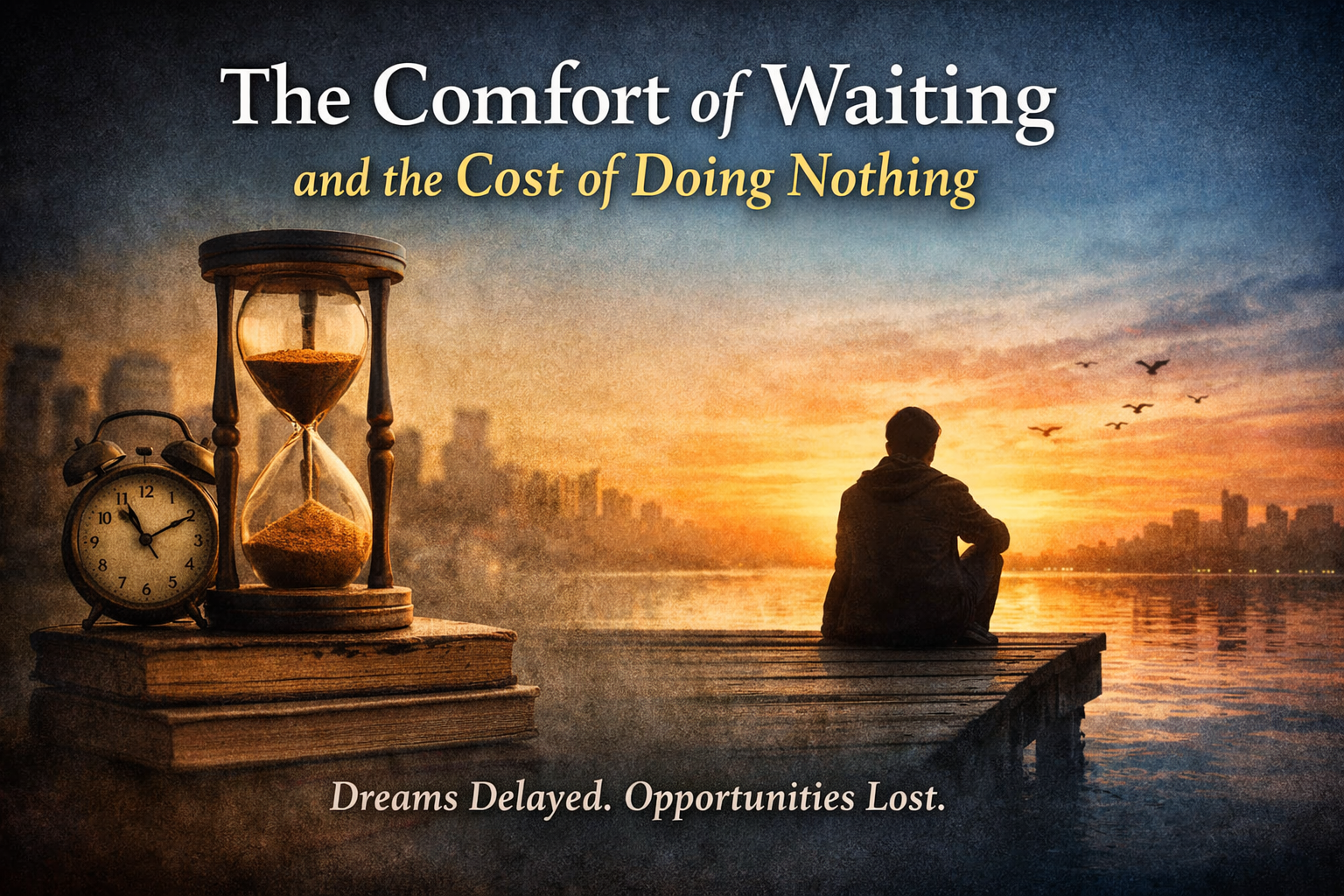
comfort of waiting 🤔? You rarely notice it while it’s happening. One day, you simply look back and wonder how so much time slipped through your fingers. How years passed and nothing truly changed. How ten years went by and you are still standing in the same place, holding the same ideas, carrying the same dreams you once promised yourself you’d act on. The questions come quietly at first.
How did this happen?
When did I stop moving?
Why didn’t I start when I had the chance?
Without realizing it, you may have been living in the comfort of waiting all along.
The Silent Arrival of Regret
Then regret seeps in slowly, like rot. By the time you notice it, the damage has already been done. You begin to imagine what could have been.
You wish you had started earlier. You wish you weren’t so afraid of failing. You wish you had confronted those limiting beliefs head-on instead of negotiating with them. You wish you had just acted imperfectly, clumsily, and visibly.
Because after five or ten years, the truth becomes impossible to ignore: there was never a right time. There never was.
“The right time” was an excuse in disguise. It always was.
And often, it was nothing more than the comfort of waiting.
The Illusion of Preparation
Five years ago, if someone had told you this, you wouldn’t have believed them. You felt intentional. You were “putting things in place.” You had milestones you wanted to reach first. You told yourself you were being responsible. It sounded mature. Measured. Calculated. Wise.
And whenever someone said, “Just start,” you had a well-prepared response. You explained why now wasn’t the time. Why you weren’t ready yet. Why everything hadn’t aligned. Why starting now would be premature.
What felt like preparation was often the comfort of waiting in disguise, something many people struggle with before they build a growth mindset.
Fear Disguised as Wisdom
What you didn’t know, what you hadn’t realized at the time, was that your mind was quietly masking your fear. The careful, disciplined waiting you called wisdom wasn’t wisdom at all.
It was fear in disguise.
Fear of failing in front of others
Fear of being seen trying
Fear of falling short of expectations
Fear of starting as an unprofessional
Fear of being a beginner
Fear of discovering that the thing you imagined so vividly might never work in reality.
So you waited, choosing the comfort of waiting over the uncertainty of action, often without developing self-awareness about your own patterns.
When Waiting Unknowingly Becomes a Habit
And hours turned into days. Days into weeks. Weeks into months. Months into years. Slowly, almost invisibly, waiting stopped being a strategy and became a habit.
Your confidence thinned.
Self-trust eroded.
Doubt took root and grew strong.
What once felt exciting now felt heavy. Starting began to feel overwhelming. Without realizing it, you trained yourself to delay, to be a procrastinator. You perfected the art of explanation. You learned how to make inaction sound reasonable, safe, and sensible—hallmarks of the comfort of waiting, often when you are not aligned with your core values and priorities.
The Comfort Trap
Have you noticed how every time you feel “not ready,” your mind immediately supplies beautiful reasons to support that feeling? Reasons that actually sound logical and convincing.
Over time, those reasons become comfortable. You relax into them. You begin to live inside the pause, still chasing an imaginary future where everything is perfectly aligned.
That’s when you have now trained yourself to be comfortable in the comfort of waiting. But the comfort comes at a cost.
The Hidden Cost of Doing Nothing
Doing nothing rarely feels dangerous at first. So your life continues. Days pass. Nothing collapses. That’s what makes it deceptive.
The damage isn’t a dramatic one, because it happens slowly.
Skills don’t develop.
Confidence doesn’t form, especially if you haven’t learned how to build a growth mindset.
Opportunities don’t always disappear; they just stop knocking as loudly as they used to.
You don’t fail. But you don’t grow either. The longer you stay in the comfort of waiting, the more familiar waiting becomes. It stops being a decision and turns into a way of life.
The Truth You Need to Hear
What I’m saying is simple: if you have an idea, start.
I’m not saying you should start blindly. But carefully, without letting “calculation” become another excuse for inaction. Because too often, waiting to make a calculated move turns into making no move at all.
And the longer you remain in the comfort of waiting, the harder it becomes to begin.
A Way Out Still Exists
The good news is this: once you become aware of what’s happening to you, you can always make an exit. You can always make a U-turn once you realize what waiting has done to you—and how deeply the comfort of waiting has held you back.
At times, this awareness may come when you start focusing on your emotional well-being and self-care practices.
It may be uncomfortable. It may be slower than you hoped. But it’s worth it.
Don’t let yourself become someone who is always waiting for the right time. The moment the idea appears is already a signal.
Start Now
Start where you are. Move imperfectly and unapologetically.
Adjust as you go.
Step out of the comfort of waiting and into action.
That’s how life actually begins.
Here are AI-friendly, SEO-optimized FAQs for your article “The Comfort of Waiting and the Cost of Doing Nothing”.
These are structured for featured snippets, voice search, and RankMath FAQ schema 👇
Frequently Asked Questions (FAQs)
1. What does the comfort of waiting mean?
The comfort of waiting is a mental state in which putting off action seems safe and right. People would rather wait for the “right time” than take risks, and this often leads to inaction.
2. Why do people keep waiting instead of taking action?
Fear—of failure, judgment, or the unknown—keeps many people in the comfort of waiting. Even though it slows progress, waiting feels safer than acting because it avoids immediate danger.
3. Is waiting always a bad thing?
No, waiting isn’t always a bad thing. Waiting strategically can help you plan or get a clearer picture. But if waiting becomes a habit because you’re scared or overthinking, it can stop you from growing as a person.
4. How does waiting affect personal growth?
Staying in the comfort of waiting stops skill development, lowers confidence, and limits chances. Over time, it stops progress instead of moving forward.
5. What is the hidden cost of doing nothing?
The hidden cost of doing nothing is that you miss out on chances, lose confidence, don’t grow as a person, and regret it in the long run. At first, it’s hard to see the damage because it happens slowly.
6. How can I stop waiting and start taking action?
To get over the comfort of waiting, take small steps, accept that things won’t always be perfect, and focus on making progress instead of being perfect. Over time, taking action makes you more confident and less scared.
7. Why do we wait for the perfect time?
People wait for the right time because they think things need to be just right before they start. In reality, perfect timing is rare, and this belief often causes delays that aren’t needed.
8. Can overthinking lead to waiting?
Yes, overthinking is a big reason why people wait. It makes people doubt, confused, and scared, which makes it harder to do something and easier to stay in a comfortable but unproductive state.
9. What is the difference between preparation and procrastination?
Preparation means taking steps toward a goal, while procrastination, which is often mistaken for the comfort of waiting, puts off action without making any real progress.
10. What is the best way to break the habit of waiting?
The best way to break the comfort of waiting is to take immediate, imperfect action. Even small steps create momentum and help you move forward instead of staying stuck.