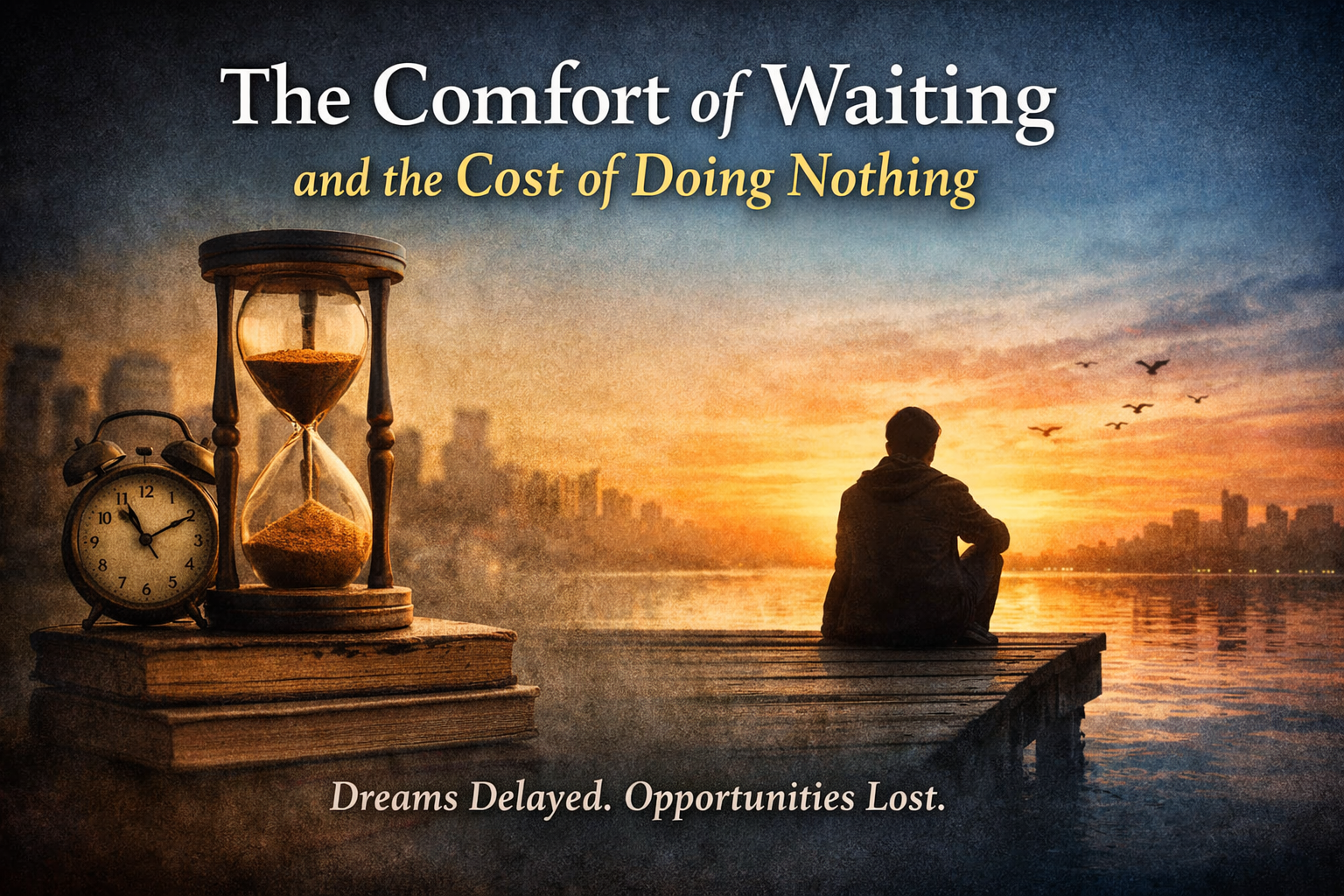
comfort of waiting 🤔? You rarely notice it while it’s happening. One day, you simply look back and wonder how so much time slipped through your fingers. How years passed and nothing truly changed. How ten years went by and you are still standing in the same place, holding the same ideas, carrying the same dreams you once promised yourself you’d act on. The questions come quietly at first.
How did this happen? When did I stop moving? Why didn’t I start when I had the chance?
Without realizing it, you may have been living in the comfort of waiting all along.
The Silent Arrival of Regret
Then regret seeps in slowly, like rot. By the time you notice it, the damage has already been done. You begin to imagine what could have been.
You wish you had started earlier. You wish you weren’t so afraid of failing. You wish you had confronted those limiting beliefs head-on instead of negotiating with them. You wish you had just acted imperfectly, clumsily, and visibly.
Because after five or ten years, the truth becomes impossible to ignore: there was never a right time. There never was.
“The right time” was an excuse in disguise. It always was. And often, it was nothing more than the comfort of waiting.
The Illusion of Preparation
Five years ago, if someone had told you this, you wouldn’t have believed them. You felt intentional. You were “putting things in place.” You had milestones you wanted to reach first. You told yourself you were being responsible. It sounded mature. Measured. Calculated. Wise.
And whenever someone said, “Just start,” you had a well-prepared response. You explained why now wasn’t the time. Why you weren’t ready yet. Why everything hadn’t aligned. Why starting now would be premature.
What felt like preparation was often the comfort of waiting in disguise, something many people struggle with before they build a growth mindset.
Fear Disguised as Wisdom
What you didn’t know, what you hadn’t realized at the time, was that your mind was quietly masking your fear. The careful, disciplined waiting you called wisdom wasn’t wisdom at all.
It was fear in disguise. Fear of failing in front of others Fear of being seen trying Fear of falling short of expectations Fear of starting as an unprofessional Fear of being a beginner Fear of discovering that the thing you imagined so vividly might never work in reality.
And hours turned into days. Days into weeks. Weeks into months. Months into years. Slowly, almost invisibly, waiting stopped being a strategy and became a habit.
Your confidence thinned. Self-trust eroded. Doubt took root and grew strong.
What once felt exciting now felt heavy. Starting began to feel overwhelming. Without realizing it, you trained yourself to delay, to be a procrastinator. You perfected the art of explanation. You learned how to make inaction sound reasonable, safe, and sensible—hallmarks of the comfort of waiting, often when you are not aligned with your core values and priorities.
The Comfort Trap
Have you noticed how every time you feel “not ready,” your mind immediately supplies beautiful reasons to support that feeling? Reasons that actually sound logical and convincing.
Over time, those reasons become comfortable. You relax into them. You begin to live inside the pause, still chasing an imaginary future where everything is perfectly aligned.
That’s when you have now trained yourself to be comfortable in the comfort of waiting. But the comfort comes at a cost.
The Hidden Cost of Doing Nothing
Doing nothing rarely feels dangerous at first. So your life continues. Days pass. Nothing collapses. That’s what makes it deceptive.
The damage isn’t a dramatic one, because it happens slowly. Skills don’t develop. Confidence doesn’t form, especially if you haven’t learned how to build a growth mindset. Opportunities don’t always disappear; they just stop knocking as loudly as they used to.
You don’t fail. But you don’t grow either. The longer you stay in the comfort of waiting, the more familiar waiting becomes. It stops being a decision and turns into a way of life.
The Truth You Need to Hear
What I’m saying is simple: if you have an idea, start.
I’m not saying you should start blindly. But carefully, without letting “calculation” become another excuse for inaction. Because too often, waiting to make a calculated move turns into making no move at all.
And the longer you remain in the comfort of waiting, the harder it becomes to begin.
A Way Out Still Exists
The good news is this: once you become aware of what’s happening to you, you can always make an exit. You can always make a U-turn once you realize what waiting has done to you—and how deeply the comfort of waiting has held you back.
It may be uncomfortable. It may be slower than you hoped. But it’s worth it.
Don’t let yourself become someone who is always waiting for the right time. The moment the idea appears is already a signal.
Start Now
Start where you are. Move imperfectly and unapologetically. Adjust as you go.
Step out of the comfort of waiting and into action.
That’s how life actually begins.
Here are AI-friendly, SEO-optimized FAQs for your article “The Comfort of Waiting and the Cost of Doing Nothing”. These are structured for featured snippets, voice search, and RankMath FAQ schema 👇
Frequently Asked Questions (FAQs)
1. What does the comfort of waiting mean?
The comfort of waiting is a mental state in which putting off action seems safe and right. People would rather wait for the “right time” than take risks, and this often leads to inaction.
2. Why do people keep waiting instead of taking action?
Fear—of failure, judgment, or the unknown—keeps many people in the comfort of waiting. Even though it slows progress, waiting feels safer than acting because it avoids immediate danger.
3. Is waiting always a bad thing?
No, waiting isn’t always a bad thing. Waiting strategically can help you plan or get a clearer picture. But if waiting becomes a habit because you’re scared or overthinking, it can stop you from growing as a person.
4. How does waiting affect personal growth?
Staying in the comfort of waiting stops skill development, lowers confidence, and limits chances. Over time, it stops progress instead of moving forward.
5. What is the hidden cost of doing nothing?
The hidden cost of doing nothing is that you miss out on chances, lose confidence, don’t grow as a person, and regret it in the long run. At first, it’s hard to see the damage because it happens slowly.
6. How can I stop waiting and start taking action?
To get over the comfort of waiting, take small steps, accept that things won’t always be perfect, and focus on making progress instead of being perfect. Over time, taking action makes you more confident and less scared.
7. Why do we wait for the perfect time?
People wait for the right time because they think things need to be just right before they start. In reality, perfect timing is rare, and this belief often causes delays that aren’t needed.
8. Can overthinking lead to waiting?
Yes, overthinking is a big reason why people wait. It makes people doubt, confused, and scared, which makes it harder to do something and easier to stay in a comfortable but unproductive state.
9. What is the difference between preparation and procrastination?
Preparation means taking steps toward a goal, while procrastination, which is often mistaken for the comfort of waiting, puts off action without making any real progress.
10. What is the best way to break the habit of waiting?
The best way to break the comfort of waiting is to take immediate, imperfect action. Even small steps create momentum and help you move forward instead of staying stuck.
Learn how to build personal growth mindset for adults with practical strategies, science-backed tools, and real-life examples to elevate your personal growth.
Have you ever reached a point in life where growth felt harder than it used to be? Maybe you’ve caught yourself saying things like:
“I’m just not good at this.”
“I’m too old to learn new skills.”
“People like me don’t change.”
If so, you’re not alone. Many adults carry invisible mental blocks shaped by childhood, early experiences, or repeated failures. But here’s the liberating truth: your abilities, intelligence, habits, and outcomes are not fixed. Modern psychology, neuroscience, and behavioural studies consistently reveal that adults can rewire their thinking and unlock higher potential at any age.
That’s where today’s topic becomes a life-changer: how to build personal growth mindset for adults.
Whether you’re trying to advance your career, lead your team better, improve your emotional resilience, or simply become a stronger version of yourself — developing personal growth mindset is the foundation for lasting transformation.
In my 12+ years as a life skills trainer, I’ve worked with professionals, entrepreneurs, rural self-help groups, government staff, and youth leaders. Across all these groups, one pattern is constant: 🌱 People who adopt personal growth mindset achieve better results, stay motivated longer, and handle challenges more effectively than those who don’t.
What makes the difference isn’t talent, luck, or intelligence — it’s mindset.
In this in-depth blueprint, you’ll learn:
The psychology behind mindset
Real-life stories of adults who transformed their lives
Science-backed tools from Stanford, Harvard & behavioural research
Step-by-step strategies to cultivate personal growth mindset starting today
A complete transformation system you can apply at home or work
This guide is written to be practical, human, and deeply relatable. You’ll not only understand the concept — you’ll feel confident implementing it.
Let’s begin your journey into The Best Blueprint for How to Build personal growth mindset for Adults.
🔶 Understanding the Psychology Behind Personal Growth Mindset
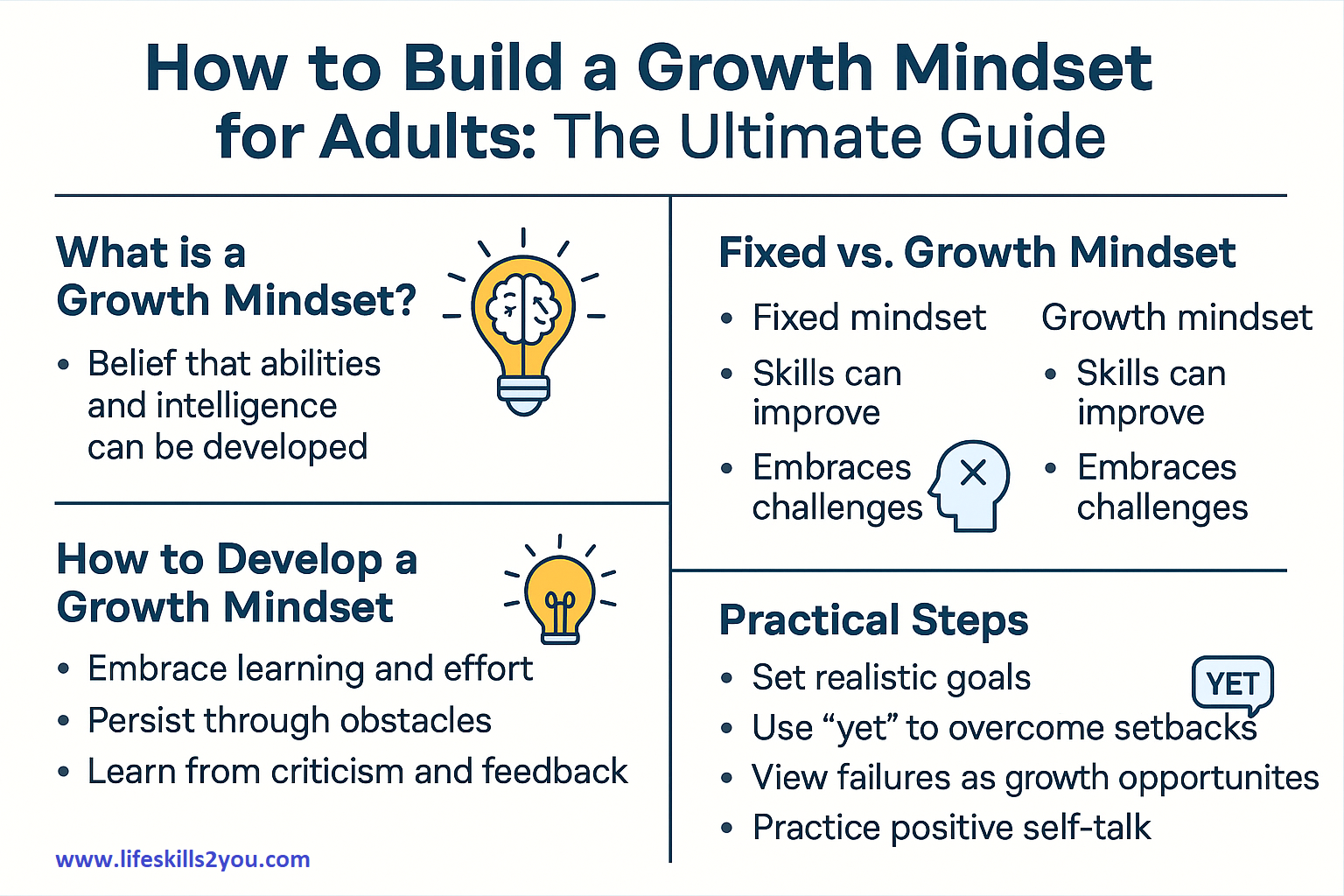
Before diving into The Best Blueprint for How to Build personal growth mindset for Adults, it’s essential to understand why your mindset shapes your reality. The term “growth mindset” originates from the pioneering research of Dr. Carol Dweck, a Stanford University psychologist known for her work on motivation and behaviour change. Her studies demonstrate that individuals who believe abilities can be developed achieve more than those who believe abilities are fixed.
But here’s something most people don’t talk about:
👉 Adults struggle more with shifting mindset than children Why? Because adults have decades of experiences, fears, conditioning, and emotional patterns built into their identity.
Your brain becomes comfortable with predictable routines. Your nervous system associates change with risk. And your habits quietly train you to stay where you are.
Yet neuroscience also reveals an empowering truth: 🧠 Adult neuroplasticity is real. Your brain can grow new pathways at any age.
Whether you’re 25, 45, or 75, the human brain can rewire, relearn, and rebuild confidence — if you follow the right process.
That’s exactly what the full blueprint below will help you do.
🔶 Signs You May Be Operating from a Fixed Mindset
Before learning how to build personal growth mindset for adults, check if any of these resonate with you. Awareness is the first step toward personal transformation.
1. You Avoid Challenges or Feel Drained by Them
Challenges feel like threats instead of opportunities. You might avoid tasks outside your comfort zone because you fear failure or judgement.
2. You Believe Talent Matters More Than Effort
If you’ve ever said,
“I’m not naturally good at this,”
“He’s talented; I’m not,” these are fixed-thinking patterns.
3. You Feel Defeated by Setbacks
Personal growth mindset sees mistakes as feedback. A fixed mindset interprets them as personal inadequacy.
4. You Seek Approval Instead of Learning
If you prioritise looking smart over improving, you may be stuck in performance mode rather than learning mode.
5. You Take Criticism Personally
Feedback feels like an attack, not a tool for development.
If you relate to any of these, don’t worry — this article will teach you exactly how to break free from fixed mindset thinking and cultivate a resilient growth mindset instead.
🔶 The Best Blueprint for How to Build Personal Growth Mindset for Adults
Below is a complete, science-backed transformation system designed specifically for adults who want to reshape how they think, lead, grow, and live.
Each step includes behavioural science, coaching insights, real examples, and now-proven techniques.
Let’s dive in.
🔷 Step 1: Shift Your Mindset from Outcome to Learning
One of the core principles in how to build Personal Growth Mindset for adults is switching your focus from being the best to becoming better.
Why This Matters
Adults are conditioned to chase outcomes:
Promotions
Validation
Salaries
Achievements
Social approval
But studies conducted at Harvard Business School show that when individuals focus on daily learning instead of performance, they grow faster, achieve more confidence, and sustain long-term motivation.
Try the Learning Focus Reframe
Instead of asking: ❌ “Did I succeed?” Ask: ✅ “What did I learn today?”
Real-Life Example 1: Corporate Manager, Age 42
A client of mine, a mid-level manager in Bengaluru, constantly felt insecure about not getting promoted. When he shifted attention from proving himself to improving himself, everything changed. Within eight months, he improved communication skills, handled pressure better, and was eventually promoted — not because he chased outcomes, but because he focused on daily learning.
🔷 Step 2: Rewire Your Beliefs Through Neuroplasticity Habits
This is one of the most powerful tools in how to build Personal Growth Mindset for adults.
Neuroscience research from University College London shows that neural pathways can be reshaped through repetition and emotional engagement.
Use Growth Affirmations the Right Way
Not generic positivity. But identity-shifting affirmations like:
“I am capable of improving any skill I commit to.”
“Every challenge strengthens my abilities.”
“My brain learns, adapts, and expands daily.”
Combine Affirmations + Evidence
Instead of simply saying “I can improve,” write down moments today where you DID improve.
This reinforces belief with proof.
🔷 Step 3: Redefine Failure as Data, Not Identity
This is where most adults get stuck.
They see failure as:
Embarrassment
Proof of incompetence
A sign to quit
But successful people interpret failure differently.
Failure = Information
Every setback offers:
Skill gaps
Emotional triggers
Strategy flaws
Areas needing refinement
Quote to Empower You
“Failure is not the opposite of success; it is a crucial part of success.”
Real-Life Example 2: The Entrepreneur Who Rebuilt Everything
A 38-year-old female entrepreneur I once coached failed twice in her startup journey. She felt ashamed, doubted her intelligence, and nearly gave up. After learning to see failure as feedback, she rebuilt her business model and now runs a profitable learning platform.
She didn’t change her life by “winning.” She changed because she redefined failing.
🔷 Step 4: Build Emotional Resilience Through Growth Mindset Thinking
Adults often confuse emotions with personal limitations.
But research published on PositivePsychology.com shows that emotional intelligence and resilience are highly trainable traits.
The 3-Step Emotional Reset Formula
Pause – Notice what you’re feeling
Name – Label the emotion (fear, frustration, doubt)
Navigate – Choose a wiser response instead of reacting
Real-Life Example 3: From Impulsive to Empowered
A government field trainer struggled with anger during team conflicts. Once she adopted the emotional reset formula, her team rated her as more composed, supportive, and solution-focused within just six weeks.
This is what growth mindset looks like in action: Better emotional responses → better outcomes.
🔷 Step 5: Surround Yourself with Growth-Minded People
Adults absorb the energy and mindset of people around them. If your environment is full of:
complainers
gossipers
excuse-makers
negative thinkers
people stuck in comfort zones
…it will be extremely hard to grow.
Build a Growth-Mindset Circle
Your group should include:
A mentor
A peer who challenges you
Someone you teach
Someone who inspires you
This combination reinforces growth, accountability, and motivation.
Real-Life Example 4: Skill Development in Rural Communities
When working with rural women’s SHGs, I observed that members who spent time with goal-driven peers completed training faster and started microenterprises sooner. Growth mindset spreads through community influence.
🔷 Step 6: Develop the Habit of Daily Micro-Progress
Adults often fail because they aim for big leaps. But research from the University of Chicago shows that small daily wins create more motivation than large, inconsistent efforts.
Both explain psychology-based insights that strengthen the concepts discussed above.
🔶 CONCLUSION
Building Personal Growth Mindset as an adult is not just a learning strategy — it is a lifelong transformation. It reshapes how you think, behave, respond to challenges, and design your future. Throughout this blueprint, you explored step-by-step methods rooted in psychology, neuroscience, coaching, emotional intelligence, and real-life success stories.
The truth is simple: Your potential is never fixed. You can improve any skill, break any limitation, and rise beyond past conditioning if you commit consistently. Growth is not an accident — it is a daily choice. And today, by reading this guide, you’ve taken one powerful step toward unlocking your fullest capabilities.
Whether you’re upgrading your career, mindset, relationships, communication, or self-confidence — now you have the tools to strengthen your transformation journey.
So go ahead. Apply one skill today. Build one new habit tomorrow. And watch how your mindset — and your life — begins to expand.
🔶 CALL TO ACTION
Thank you for exploring this insightful article. If you’re hungry for more knowledge, don’t miss out on our other engaging articles waiting for you. Dive into our treasure trove of wisdom and discover new perspectives on related topics. Click ‘Our Blog’ and ‘How to Guide’ to embark on your next adventure. Happy reading!
🔶 10 FAQson How to Build Personal Growth Mindset for Adults: The Ultimate Guide
1. Can adults genuinely change their mindset?
Yes. Neuroscience proves that adult brains can grow new pathways through learning, reflection, and repeated practice. Age is never a barrier.
2. How long does it take to build a growth mindset?
Typically 30–90 days of consistent practice. Mindset change is not overnight but happens gradually.
3. What is the biggest obstacle in developing a growth mindset as an adult?
Fear of failure and past conditioning. Adults often tie identity to performance.
4. Can a growth mindset improve career success?
Absolutely. It enhances problem-solving, leadership, communication, and adaptability — top skills employers value.
5. Does journaling help in growth mindset development?
Yes, journaling builds self-awareness and helps reframe challenges.
6. Can introverts develop a growth mindset?
Yes. Mindset is not about personality. It’s about beliefs and behaviours.
7. What is the role of habits in mindset transformation?
Habits create consistency, which rewires the brain and strengthens learning.
8. How do I stay motivated while building a growth mindset?
Set small goals, track wins, and surround yourself with growth-minded people.
9. Can growth mindset help reduce stress?
Yes, because it teaches you to view challenges as manageable and temporary.
10. Is professional coaching useful in building a growth mindset?
Yes. A coach provides structure, feedback, and accountability that accelerates progress.
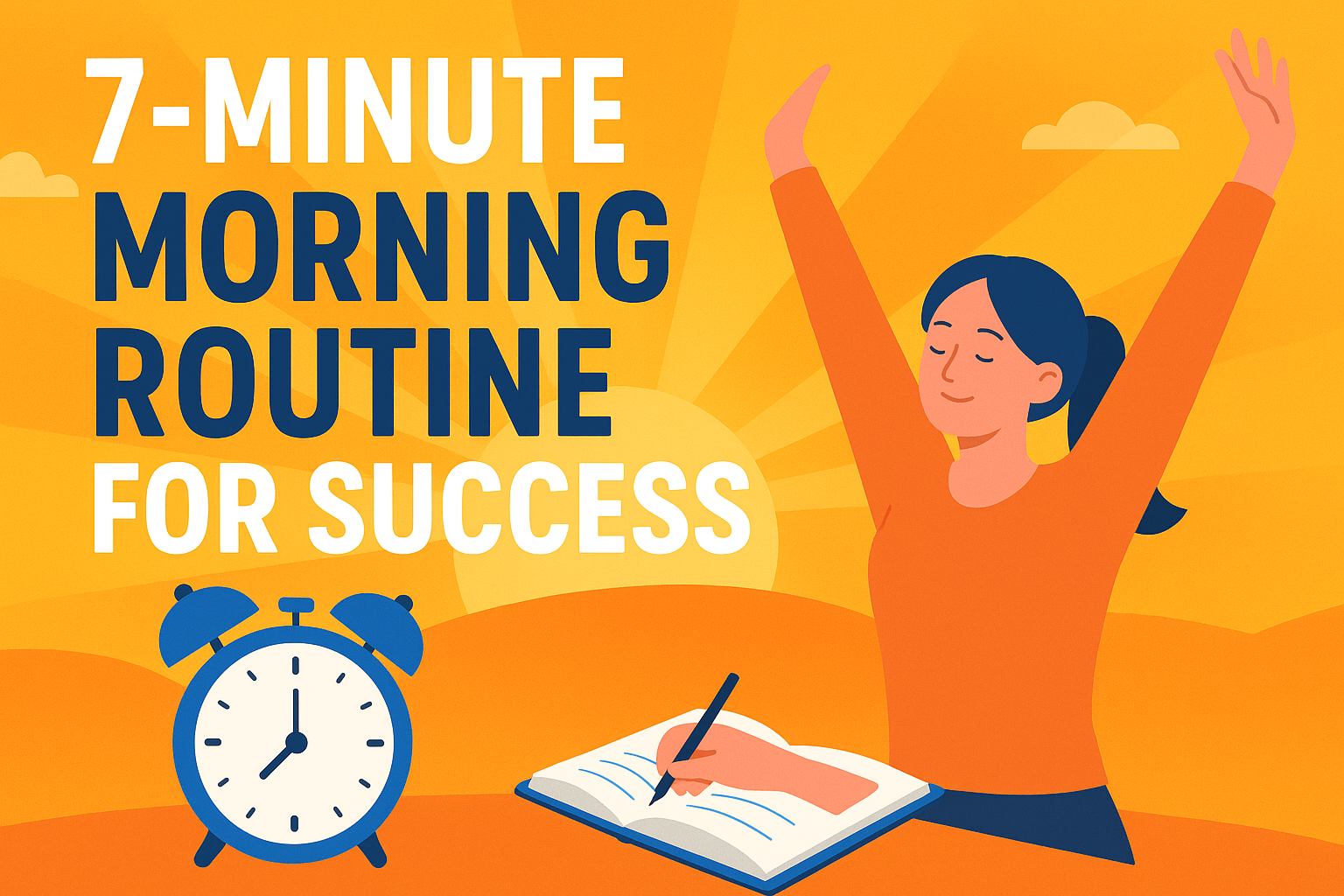
Morning routines have always been a hot topic among successful people. From CEOs to athletes, many attribute their daily wins to what they do first thing after waking up. But here’s the truth—not everyone has hours to meditate, journal, exercise, or read in the morning. Most of us are racing against the clock, juggling work, family, and personal commitments. That’s where the 7-minute morning routine steps in. It’s short, effective, and powerful enough to shape your day—and your future.
In this article, we’ll dive deep into why morning routines matter, how a 7-minute habit can outperform lengthy rituals, and step-by-step practices you can implement today. If you’ve been searching for the best morning routine for personal development, you’re about to discover a game-changer.
Why Morning Routines Matter for Personal Development
The way you start your morning sets the tone for everything that follows. Think of your brain as a smartphone battery—you plug it in at night, and in the morning, it’s fully charged. What you do in those first minutes determines whether you use that energy wisely or waste it.
Successful people don’t just roll out of bed and dive straight into chaos. They follow intentional rituals that prime their minds and bodies. These routines create mental clarity, build emotional resilience, and give them the edge needed to stay focused throughout the day.
The Psychology Behind Morning Habits
Morning routines tap into something psychologists call “habit stacking.” When you attach a small new habit to something you already do—like brushing your teeth or drinking water—it becomes easier to stick with. This principle explains why starting the day with even a 7-minute routine can create lasting change.
Neurologically, mornings are a fresh slate. The brain’s prefrontal cortex, which handles decision-making and focus, is most active in the early hours. This means the actions you take shortly after waking influence your thought patterns, mood, and productivity. By practicing mindfulness, gratitude, or light movement in the morning, you’re training your brain to operate from a state of calm and clarity rather than stress and distraction.
How Small Rituals Shape Big Success
Many people believe that massive results require massive effort. But in reality, it’s the small, repeated actions that compound over time. Consider this: a single glass of water doesn’t hydrate you for life, but drinking water daily sustains your health. In the same way, a short but powerful morning routine plants seeds that grow into long-term success.
For high achievers, consistency is everything. Whether you’re an entrepreneur, student, or professional, showing up every day with energy and focus is the key to outperforming the competition. Even just a few minutes spent centering yourself in the morning can mean the difference between reacting to your day and intentionally creating it.
Some people might doubt whether just 7 minutes can really make a difference. But science says yes. Studies on habit formation, neuroplasticity, and time management all prove that short, consistent actions often outperform longer, inconsistent ones.
Time Efficiency and Cognitive Boosts
Modern life is busy. Most of us don’t have two hours to dedicate to yoga, journaling, or reading every morning. However, research shows that even brief practices—like two minutes of stretching, one minute of deep breathing, or a short gratitude reflection—can significantly boost mental performance.
For example, Harvard researchers have found that two minutes of power posing can boost confidence and reduce stress hormones. Similarly, just five minutes of mindful breathing has been shown to lower anxiety and improve focus. Imagine what a balanced blend of these practices could do in only seven minutes.
The Power of Consistency Over Duration
Here’s a simple truth: it’s better to do a short routine daily than a long one occasionally. Think about exercising. One hour at the gym once a week won’t change your body. But ten minutes of daily movement will reshape your health over time. The same principle applies to morning routines.
Consistency wires your brain for success. The more you repeat a behavior, the stronger the neural connections become. A 7-minute routine, done every day, creates a rhythm that aligns your thoughts, emotions, and actions with your long-term goals.
If you’ve ever woken up with your mind racing—thinking about deadlines, meetings, or errands—you know how easy it is to start the day on the wrong note. That’s where mindful breathing comes in. In just one minute, you can calm your nervous system, quiet your thoughts, and anchor yourself in the present moment.
Why Breathwork Sets the Tone
Breathing is something we all do unconsciously, but when done with intention, it becomes a powerful tool. Research shows that slow, deep breathing activates the parasympathetic nervous system, also known as the “rest and digest” mode. This reduces cortisol (the stress hormone) and increases oxygen flow to the brain, giving you mental clarity.
For high achievers, this matters because stress is the enemy of focus. Starting your day with mindful breathing clears away the mental fog, lowers anxiety, and allows you to approach challenges with a sharper, calmer mindset.
Practical Breathing Techniques for Beginners
You don’t need to be a meditation expert to benefit from breathwork. Here are two simple one-minute techniques:
Box Breathing (4-4-4-4 Method):
Inhale through your nose for 4 seconds.
Hold your breath for 4 seconds.
Exhale slowly for 4 seconds.
Hold again for 4 seconds. Repeat for one minute. This technique is used by Navy SEALs to stay calm under pressure.
4-7-8 Breathing:
Inhale deeply through your nose for 4 seconds.
Hold for 7 seconds.
Exhale slowly for 8 seconds. This method is excellent for reducing anxiety and setting a peaceful tone for the day.
The beauty of mindful breathing is that it requires no equipment, no preparation, and no special environment. You can do it sitting in bed, standing in front of a mirror, or even while sipping your morning water.
Step 2 – Two Minutes of Movement
After calming your mind, it’s time to wake up your body. High achievers know that energy is their most valuable asset, and movement is the fastest way to boost it. You don’t need a full workout—just two minutes of intentional movement can fire up your circulation, release endorphins, and switch your brain into “action mode.”
Quick Exercises to Energize Your Body
Here are a few options you can rotate between:
Jumping Jacks (30 seconds): Gets your heart pumping and oxygen flowing.
Bodyweight Squats (30 seconds): Strengthens your legs and improves blood flow.
Push-Ups (30 seconds): Activates your upper body and core.
Stretching (30 seconds): Loosens up stiff muscles and improves mobility.
This routine can be adjusted based on your fitness level. Even light stretches and neck rolls count—what matters is movement, not intensity.
How Movement Enhances Focus and Mood
Exercise, even in small doses, stimulates the release of dopamine and serotonin—two neurotransmitters linked to motivation and happiness. When you move first thing in the morning, you’re not just waking up your muscles—you’re priming your brain for productivity.
In fact, researchers from the University of Bristol found that employees who exercised before work reported improved concentration, sharper memory, and better problem-solving skills throughout the day. That’s why this 2-minute practice is such a powerful component of the best morning routine for personal development.
Step 3 – One Minute of Gratitude Practice
The third step in the 7-minute morning routine is all about rewiring your mindset. Gratitude isn’t just about being polite—it’s a mental habit that changes how you see the world. In just one minute, you can shift your focus from what’s missing to what’s already working in your life.
The Role of Gratitude in Mental Clarity
Gratitude activates the brain’s reward system, releasing dopamine and serotonin. This not only makes you feel good but also sharpens your focus. When you start your day appreciating what you have, you’re less likely to be distracted by negativity or overwhelm.
Psychologists have found that people who practice gratitude regularly experience less stress, better sleep, and stronger relationships. For high achievers, this emotional resilience is invaluable—it allows them to bounce back from setbacks and stay centered under pressure.
Simple Gratitude Rituals for Busy Professionals
Here are quick gratitude practices you can try in just one minute:
Three Blessings: Write down (or mentally note) three things you’re grateful for. They can be as simple as having a warm bed, good health, or a supportive friend.
Gratitude Visualization: Close your eyes and imagine one thing you’re grateful for in vivid detail—feel the emotions connected to it.
Gratitude Affirmation: Repeat a positive statement such as “I am grateful for this new day and the opportunities it brings.”
This small habit rewires your brain to look for the positives instead of obsessing over challenges. Over time, gratitude becomes a lens through which you view your entire life.
Step 4 – Two Minutes of Affirmations
If gratitude is about appreciating what you already have, affirmations are about creating the future you want. This step might feel awkward at first, but science backs it up. Speaking empowering words to yourself literally reprograms your subconscious mind. In just two minutes, affirmations can help you overcome self-doubt, strengthen confidence, and align your thoughts with your goals.
Why Affirmations Build Confidence and Direction
Our brains are wired to believe what we repeatedly tell them. When you wake up and start your day by affirming positive truths, you’re training your mind to expect success instead of failure. This practice is rooted in neuroplasticity—the brain’s ability to form new pathways based on repeated thoughts and behaviors.
High achievers often face imposter syndrome, pressure, and endless challenges. Affirmations serve as mental armor, reminding you that you’re capable, resilient, and deserving of success. Over time, these short statements influence not just how you think but also how you act.
Examples of Morning Affirmations
Here are powerful affirmations you can rotate daily:
“I am focused, disciplined, and ready to achieve my goals today.”
“Challenges are opportunities for growth, and I embrace them with confidence.”
“I am grateful for my progress and excited about my future.”
“I create success by taking small, consistent steps every day.”
The key is to say these affirmations out loud with energy and belief. You’re not just reciting words—you’re declaring your intention for the day.
Step 5 – One Minute of Goal Setting
Now that your mind and body are primed, it’s time to add clarity. Many people start their day reacting to emails, messages, and other people’s demands. But high achievers don’t operate like that. They start with intentionality by deciding what matters most before distractions take over.
The Power of Daily Goal Clarity
Studies show that people who set specific goals are 10 times more likely to achieve them than those who don’t. When you define what success looks like for your day, you eliminate decision fatigue and improve focus.
This doesn’t mean writing a 20-item to-do list. Instead, it’s about identifying your top one to three priorities—the tasks that, if completed, would make the day a success.
Practical One-Minute Goal Ritual
Here’s a quick method you can try:
Grab a notebook or your phone.
Write down your top three goals for the day.
Rank them in order of importance.
For example:
Finish project proposal draft.
Call a potential client.
Spend 30 minutes on personal development reading.
This ritual ensures you start the day with direction instead of distraction.
The Complete 7-Minute Morning Routine in Action
Let’s quickly recap how the routine flows:
One Minute of Mindful Breathing – Calm your mind.
Two Minutes of Movement – Energize your body.
One Minute of Gratitude – Shift your mindset.
Two Minutes of Affirmations – Build confidence.
One Minute of Goal Setting – Gain clarity.
That’s it—seven minutes, yet powerful enough to transform your life when practiced consistently.
Think of it like sharpening your sword before going into battle. You wouldn’t want to face the challenges of the day unprepared. These small, intentional steps make sure you start strong, stay focused, and finish with energy.
Why High Achievers Swear by Short Routines
At this point, you might wonder: if short routines are so powerful, why do some people spend hours on morning rituals? The truth is, both long and short routines work—but the key is sustainability.
High achievers love short routines because:
They’re realistic. Even on busy days, seven minutes is doable.
They’re flexible. You can adapt the routine whether you’re at home, traveling, or staying in a hotel.
They’re consistent. It’s easier to stick to a short habit daily than to commit to a long one occasionally.
Over time, many people expand their routines. The 7-minute version serves as a foundation—once it becomes second nature, you can add journaling, meditation, reading, or exercise. But even if you never expand, these seven minutes are enough to create a massive difference.
How to Stay Consistent with Your 7-Minute Routine
The hardest part of building a new habit isn’t starting—it’s sticking with it. Consistency is where most people fail. But with a few strategies, you can turn this routine into a lifelong practice.
Tips for Making It Stick
Pair it with an existing habit. Do it right after brushing your teeth or making your bed.
Use a timer. Knowing it only takes seven minutes makes it easier to commit.
Prepare the night before. Keep a notebook, water, or yoga mat ready so there are no excuses.
Track your progress. Use a habit tracker app or mark off days on a calendar to stay motivated.
Overcoming Common Obstacles
Some mornings you’ll wake up tired, stressed, or in a rush. That’s normal. Instead of skipping the routine altogether, do a shorter version—just breathing and gratitude. The key is never to break the chain. Even two minutes of effort keeps the momentum alive.
Remember: consistency matters more than perfection.
The Long-Term Benefits of a 7-Minute Morning Routine
When people hear “7 minutes,” they often underestimate its potential impact. But just like a single drop of water can ripple across an entire pond, these few minutes ripple into every area of your life. Over weeks and months, the routine becomes less about the minutes you spend and more about the person you’re becoming.
Improved Mental Clarity and Focus
The breathing and gratitude practices sharpen your brain. Instead of starting your day in a rush or fog, you begin with presence and calm. This mental clarity allows you to prioritize better, make smarter decisions, and stay less reactive throughout the day.
Imagine walking into meetings with a composed mind instead of feeling frazzled. Or tackling your most important tasks without procrastination. That’s the mental upgrade this routine delivers.
Boosted Emotional Resilience
Gratitude and affirmations train you to look for the good instead of dwelling on the negative. Over time, you develop resilience—the ability to bounce back quickly from setbacks. High achievers thrive not because they never fail, but because they recover faster than most people. This morning routine gives you that bounce-back ability.
Increased Energy and Motivation
The two minutes of movement aren’t just about fitness—they’re about energy management. That physical spark keeps you from dragging through the morning. Add affirmations, and you’ve got a motivational cocktail that keeps you going long after your coffee wears off.
A Stronger Sense of Purpose
Daily goal setting ensures you’re not drifting aimlessly. Instead of letting the day happen to you, you’re making it happen. Over time, this builds a deeper sense of purpose. You’re no longer just busy—you’re intentional.
Common Mistakes to Avoid When Starting This Routine
As simple as it sounds, many people sabotage their own success with avoidable mistakes. Recognizing them early can save you from frustration.
Trying to Do Too Much Too Soon
The biggest trap is overcomplicating the routine. You don’t need a 10-step ritual or fancy equipment. The beauty of this method is its simplicity. Start with the basics and expand only if you want to—not because you feel pressured to.
Skipping on Busy Days
Ironically, the days you feel “too busy” are the days you need the routine most. Skipping breaks the consistency chain and makes it harder to restart. Instead, commit to at least the one-minute breathing exercise. That way, you never lose momentum.
Rushing Through Without Intention
This routine isn’t about checking boxes—it’s about being present. If you rush through affirmations without meaning the words, or scribble goals without thinking, you’re missing the point. Focus on quality, not speed.
Adapting the Routine to Your Lifestyle
The 7-minute morning routine is universal, but it’s also flexible. Whether you’re a student, a busy parent, or an entrepreneur, you can shape it to fit your life.
For Professionals
If your mornings are packed with meetings and deadlines, this routine helps you start grounded. Keep a notepad by your desk for quick goal-setting, and do the breathing exercise in your office chair before diving into emails.
For Students
Studying requires focus and memory retention. This routine gives you both. Try affirmations like, “I am capable of mastering new knowledge today,” and set daily goals like finishing one chapter or revising notes.
For Parents
Juggling family life often means putting yourself last. This short routine ensures you invest in yourself first—before the day’s chaos begins. You can even involve your kids by practicing gratitude together at the breakfast table.
The Connection Between Morning Routines and Success Stories
If you look at high achievers across industries, a common thread appears: intentional mornings. While not everyone uses the same routine, the principle remains consistent—they prime their minds and bodies before tackling the day.
Richard Branson swears by morning exercise to fuel his energy.
Tony Robbins practices a short routine of breathing, movement, and gratitude.
The exact steps may vary, but the formula is the same: focus, energy, and clarity first—then business.
The 7-minute routine is essentially a condensed version of what the world’s most successful people are already doing. It proves you don’t need hours—you just need intention.
Conclusion: Small Steps, Big Transformation
The best morning routine for personal development isn’t the one that looks impressive on paper—it’s the one you can actually stick with. This 7-minute routine is powerful because it blends simplicity with impact.
With mindful breathing, movement, gratitude, affirmations, and goal-setting, you’re covering the essentials: body, mind, and purpose. Seven minutes may feel small in the moment, but over time, it rewires your brain, strengthens your habits, and transforms your results.
So tomorrow morning, instead of reaching for your phone or rushing into chaos, try this simple sequence. It might just be the tiny change that leads to your biggest breakthrough.
FAQs on 7-Minute Morning Routine for Personal Developm
Can a 7-minute morning routine really make a difference?
Yes! Short, consistent habits compound into big results over time. Even seven minutes daily creates clarity, focus, and energy that shapes your entire day.
Do I have to follow the exact order of steps?
Not at all. The order is designed for flow, but you can adapt it. The key is consistency, not perfection.
What if I only have 3 minutes?
Do the essentials: 1 minute of breathing, 1 minute of gratitude, and 1 minute of goal setting. It’s better to do less consistently than skip entirely.
Should I expand the routine once I’m consistent?
If you want to, yes. Many people naturally add journaling, reading, or longer workouts once the 7-minute habit is solid.
How long before I see results?
Some people feel immediate benefits like calmness and focus. Long-term transformations—such as better resilience and productivity—usually appear after a few weeks of daily practice.