Essential Life Skills for Teenagers

10 Must-Have Skills! for Teenagers

College is an exciting yet challenging phase in every teenager’s life. It’s their first big leap into independence, where they’ll be making crucial decisions, managing responsibilities, and navigating new social dynamics. But how prepared are they for this transition?

Mastering essential life skills for teenagers before heading to college isn’t just about acing academics—it’s about thriving in the real world. From managing finances to effective communication, these essential life skills for teenagers empower teens to take charge of their lives confidently.

So, let’s dive into the 10 must-have life skills every teenager should master before stepping into college!

Understanding and practicing these essential life skills for teenagers can make all the difference in their future success.


Related : Who’s Top 10 Essential Life Skills for Everyone in 2024


1. Financial Management

These essential life skills for teenagers include budgeting, responsible spending, and effective personal finance management.

Money management is a skill that will serve teens for a lifetime. Understanding budgeting, saving, and smart spending helps them avoid financial pitfalls.

How to Master It?

  • Teach them to create and stick to a budget.
  • Introduce them to banking essentials like debit/credit cards, loans, and interest rates.
  • Encourage saving habits with a simple savings account or investment options.
  • Explain the risks of debt and the importance of responsible borrowing.

📌 “A budget is telling your money where to go instead of wondering where it went.” – Dave Ramsey


By mastering these essential life skills for teenagers, students can maintain a balanced lifestyle.

2. Time Management

Balancing studies, social life, and personal responsibilities can be overwhelming in college. Learning to manage time effectively helps students stay organized and stress-free.

How to Master It?

  • Encourage the use of planners, apps, or digital calendars.
  • Teach prioritization using Eisenhower’s Matrix (urgent vs. important tasks).
  • Establish routines to develop discipline and consistency.
  • Introduce the Pomodoro Technique for focused study sessions.

These essential life skills for teenagers help them build lasting relationships and communicate effectively.


3. Effective Communication

Good communication skills are essential for building relationships, expressing ideas, and resolving conflicts.

How to Master It?

Emotional intelligence is one of the key essential life skills for teenagers that helps in personal growth.

  • Practice active listening and clear articulation.
  • Encourage polite and assertive speech instead of aggression or passivity.
  • Teach digital communication etiquette for emails and texts.
  • Emphasize non-verbal cues like eye contact and body language.

4. Emotional Intelligence

Understanding and managing emotions play a crucial role in handling stress, relationships, and personal growth.

Learning basic cooking is one of the most practical essential life skills for teenagers that they can carry into adulthood.

How to Master It?


5. Basic Cooking Skills

Self-care practices are also among the essential life skills for teenagers that promote overall well-being.

College means fewer home-cooked meals and more self-sufficiency in the kitchen. Knowing how to cook simple meals ensures good nutrition and saves money.

How to Master It?

  • Teach basic meal prep and cooking techniques.
  • Introduce grocery shopping and meal planning.
  • Discuss healthy eating habits and food safety.
  • Show how to make budget-friendly meals.

Critical thinking and problem-solving are vital essential life skills for teenagers to face challenges effectively.

6. Personal Hygiene & Self-Care

Good hygiene and self-care contribute to confidence, health, and overall well-being.

How to Master It?

  • Teach daily hygiene routines (brushing, bathing, grooming).
  • Emphasize the importance of sleep, hydration, and exercise.
  • Educate about skincare, dental care, and personal grooming.
  • Discuss mental health awareness and coping strategies.

Understanding home maintenance is one of the practical essential life skills for teenagers that fosters independence.


7. Problem-Solving & Critical Thinking

College life comes with unexpected challenges, and the ability to think critically helps teens make sound decisions.

How to Master It?

Social skills are essential, and mastering these essential life skills for teenagers is crucial for networking.


8. Basic Home Maintenance

Knowing simple home repairs and maintenance tasks prevents dependency and saves money.

Employing stress management techniques is one of the crucial essential life skills for teenagers to maintain mental health.

How to Master It?

  • Teach basic plumbing fixes (clogged drains, leaky faucets).
  • Show how to change a light bulb or fix minor electrical issues.
  • Introduce laundry and cleaning techniques.
  • Explain appliance maintenance and safety precautions.

9. Social & Interpersonal Skills

In conclusion, the essential life skills for teenagers foster resilience and confidence in young adults.

Building strong relationships and networking are crucial for personal and professional growth.

How to Master It?

With these essential life skills for teenagers, they can navigate the complexities of adulthood more easily.

  • Encourage teamwork and collaboration.
  • Teach the importance of respect and boundaries.
  • Foster social confidence through real-life interactions.
  • Discuss conflict resolution and negotiation techniques.

Building a foundation of essential life skills for teenagers is critical for their ongoing development.


10. Stress & Anxiety Management

College life comes with deadlines, exams, and pressures. Coping strategies help maintain mental well-being.

How to Master It?

Overall, the development of essential life skills for teenagers is fundamental for their future success and well-being.

  • Teach relaxation techniques like deep breathing and meditation.
  • Encourage time-outs and self-reflection.
  • Promote physical activities as stress relievers.
  • Discuss when and how to seek professional help if needed.


Conclusion

Mastering these essential life skills for teenagers before college is the key to a smooth transition into adulthood. It’s not just about surviving college—it’s about thriving in every aspect of life. By equipping teens with these skills, we empower them to take on challenges with confidence and independence.

💡 “Success is not about being the best, but about being prepared.”


Encouraging the growth of essential life skills for teenagers should start early for the best outcome.


Call to Action

Thank you for exploring this insightful article! If you’re hungry for more knowledge, don’t miss out on our other engaging articles waiting for you. Dive into our treasure trove of wisdom and discover new perspectives on related topics. Click ‘Our Blog’ and ‘How-to Guide’ to embark on your next adventure. Happy reading!

FAQs on Essential Life Skills for Teenagers

1. Why are life skills important for teenagers?

Life skills help teens become independent, confident, and ready for real-world challenges.

2. When should teenagers start learning these life skills?

The earlier, the better! Ideally, by middle or high school.

3. What are some effective ways to teach teens financial management?

Encourage budgeting apps, savings goals, and real-life money-handling experiences.

4. How can parents help teens improve time management?

Encourage planners, set routines, and teach prioritization techniques.

5. Are emotional intelligence and communication skills connected?

Yes! Understanding emotions improves communication and relationships.

6. Can stress management really impact academic performance?

Absolutely! Managing stress leads to better focus and improved learning.

7. What are some easy meals teenagers should learn to cook?

Pasta, stir-fry, scrambled eggs, sandwiches, and simple soups.

8. How do social skills impact college life?

Good social skills help in networking, teamwork, and building meaningful relationships.

9. What’s the best way to encourage problem-solving skills?

Encourage independent thinking, real-world problem scenarios, and creative solutions.

10. How can teens stay mentally healthy in college?

By maintaining a balance between academics, social life, and self-care practices.

Unlock the Secret Life Skills for Career Adavancement!

Introduction:

Unlock the Secret Life Skills for Career Advancement! In the fiercely competitive job market, it’s not just technical skills that can propel you forward; it’s the mastery of life skills for career advancement that truly sets you apart. These invaluable skills act as the catalyst for personal and professional growth, providing you with the resilience and adaptability needed to thrive in today’s ever-changing landscape. If you’re ready to accelerate your climb up the career ladder, look no further than the power of life skills for career advancement.


What Are Life Skills and Why Are They Crucial for Career Advancement?

Life skills for career advancement are a mix of interpersonal, emotional, and practical abilities that enable you to navigate challenges, make informed decisions, and build meaningful relationships. They aren’t just nice-to-haves—they’re the foundation of professional growth.

Integrating life skills for career advancement into your daily routine can significantly boost your professional image and prospects.

You can explore our article Who’s Top 10 Essential Life Skills for Everyone in 2024

Core Life Skills That Propel Careers Forward

  • Communication: Your ability to articulate ideas clearly influences collaboration and leadership.
  • Emotional Intelligence: Understanding and managing emotions builds trust and fosters better teamwork.
  • Problem-Solving: Employers value those who can think critically and find solutions under pressure.
  • Time Management: Prioritizing tasks efficiently can skyrocket productivity and reduce stress.
  • Adaptability: In a rapidly changing work environment, staying flexible is a must.

How Life Skills Impact Your Career Trajectory

By applying life skills for career advancement, you can better influence and lead your team, paving the way for mutual success.

Investing in your life skills for career advancement can yield incredible returns in job satisfaction and professional fulfillment.

Imagine two professionals: one with technical expertise but poor interpersonal skills and the other with a balance of both. Who would you choose as a leader? Employers and colleagues value individuals who can inspire, connect, and deliver. Life skills bridge the gap between competence and excellence.

Breaking Down the Benefits:

Moreover, life skills for career advancement are instrumental in navigating workplace conflicts and fostering a positive environment.

Focus on enhancing your life skills for career advancement to improve your adaptability to new roles and responsibilities.

As you develop your communication, remember that these life skills for career advancement can set you apart in job interviews.

  1. Stronger Workplace Relationships: Empathy and communication make collaborations seamless.
  2. Enhanced Leadership Qualities: Great leaders inspire action and cultivate a supportive environment.
  3. Increased Job Satisfaction: When you manage stress and navigate challenges effectively, work feels rewarding.
  4. Career Resilience: Life skills prepare you to thrive in uncertain situations, ensuring longevity in your profession.

Enhancing your emotional intelligence is among the most valuable life skills for career advancement you can acquire.


Good time management is essential, and it’s one of the key life skills for career advancement that employers seek.

Steps to Develop Life Skills for Career Advancement

Furthermore, learning problem-solving techniques is vital for developing life skills for career advancement.

1. Hone Your Communication Skills

Being adaptable is another one of the most important life skills for career advancement in today’s job market.

Effective communication is more than just speaking; it’s about listening, observing, and responding. Attend workshops, read books, or practice active listening in daily conversations.

2. Build Emotional Intelligence

Start by being self-aware. Pay attention to your emotions and how they influence your decisions. Tools like journaling or feedback from mentors can help.

3. Master Time Management

Create a system—whether it’s using digital tools like Trello or old-fashioned to-do lists—to prioritize and manage tasks.

4. Learn Problem-Solving Techniques

Develop a structured approach: Identify the issue, brainstorm solutions, evaluate options, and implement the best one. Simple, right?

5. Stay Adaptable

Life rarely goes according to plan. By embracing change and learning continuously, you’ll stay relevant and indispensable.


Practical Tips to Strengthen Life Skills

Join a Networking Group: Surround yourself with professionals who inspire growth.
Volunteer or Take Up Side Projects: These experiences build teamwork, adaptability, and problem-solving skills.
Embrace Feedback: Constructive criticism is a goldmine for personal and professional improvement

“Success is not just about reaching the top; it’s about how gracefully you navigate the climb.”

Referenced Resources:


How to Apply Life Skills in the Workplace

Mastering life skills is great, but applying them in your professional environment is the game-changer. Let’s explore some real-world examples:

Emphasizing life skills for career advancement will help you build a reputation as a resourceful employee.

1. Effective Communication in Action

Imagine you’re leading a team meeting. Instead of overwhelming your colleagues with jargon, you use clear, concise language and invite feedback. This approach fosters understanding and encourages collaboration.

2. Emotional Intelligence During Conflicts

Let’s say there’s a disagreement in your team. By practicing empathy and active listening, you can address the concerns of both sides, de-escalate tensions, and guide the team toward a solution.

3. Time Management in Deadlines

Picture a scenario where you have multiple projects with tight deadlines. By breaking tasks into smaller, manageable steps and using tools like calendars or time-blocking techniques, you ensure every task is completed without stress.

4. Adaptability During Organizational Changes

The company implements a new software system, and your coworkers are hesitant. Instead of resisting, you dive into learning the system, positioning yourself as a resource and boosting your reputation as a proactive problem-solver.


Life Skills for Long-Term Career Growth

Career advancement isn’t a sprint—it’s a marathon. To stay ahead, focus on these strategies:

1. Continuous Learning

The moment you stop learning, you stop growing. Enroll in online courses, attend industry seminars, or simply stay curious. Knowledge is power.

2. Networking and Relationship Building

Professional connections are invaluable. Attend conferences, engage on platforms like LinkedIn, and don’t hesitate to ask mentors for advice. Remember, relationships are your career’s lifeline.

3. Cultivating Leadership Skills

You don’t need a formal title to be a leader. Inspire your team by being dependable, solution-oriented, and supportive. Leadership is about action, not authority.

To truly master your career, focus on developing your life skills for career advancement consistently.

4. Prioritizing Personal Well-Being

Join our community to learn more about life skills for career advancement and how you can implement them in your life.

Your mental and physical health play a massive role in your career. Regular exercise, mindfulness practices, and setting boundaries can help you stay at your best.


Understanding your life skills for career advancement can help you make better choices in your professional journey.

Ultimately, it’s about applying your life skills for career advancement in everyday situations to see real benefits.

Common Misconceptions About Life Skills

1. “Life skills are soft skills—they don’t matter.”
False! Life skills are often the differentiators between a good employee and a great one. They make you more adaptable and capable in the workplace.
2. “You’re born with life skills or you’re not.”
Not true. Life skills can be learned, practiced, and improved at any stage of your career.


Real-Life Success Stories of Life Skills in Action

  • Steve Jobs’ Communication Genius: Known for his captivating presentations, Jobs mastered the art of storytelling to inspire teams and revolutionize the tech industry.
  • Oprah Winfrey’s Emotional Intelligence: Oprah’s ability to connect deeply with people has made her an icon of authenticity and compassion.

These examples prove that life skills are the silent engines behind extraordinary careers.


Conclusion

Mastering life skills isn’t just about career advancement—it’s about creating a fulfilling life where you thrive personally and professionally. From improving communication to staying resilient, these skills empower you to tackle challenges, seize opportunities, and leave a lasting impact. Remember, your career is a reflection of the effort and dedication you invest in yourself.


Call to Action

Thank you for exploring this insightful article! If you’re hungry for more knowledge, don’t miss out on our other engaging articles waiting for you. Dive into our treasure trove of wisdom and discover new perspectives on related topics. Click Our Blog and How to Guide to embark on your next adventure. Happy reading!


FAQs on Life Skills for Career Adavancement

1. What are life skills?

Life skills are essential abilities that help you navigate challenges, make decisions, and build relationships effectively.

2. Why are life skills important for career advancement?

Life skills enhance problem-solving, communication, and adaptability, all of which are crucial for professional growth.

3. Can life skills be learned?

Yes, life skills can be developed through practice, training, and experience.

4. What is the most important life skill for career success?

While all life skills matter, communication and adaptability are often highlighted as game-changers in the workplace.

5. How do I develop my emotional intelligence?

Start with self-awareness, practice empathy, and seek feedback from peers or mentors.

6. Are life skills only useful in professional settings?

Not at all! Life skills improve personal relationships, decision-making, and overall well-being.

7. How do I use life skills to stand out in a job interview?

Showcase your skills through real-life examples. Highlight how you’ve solved problems, led teams, or adapted to changes.

8. What’s the difference between life skills and soft skills?

Life skills are broader and include everyday problem-solving and decision-making, while soft skills focus on workplace behaviors.

9. How does networking relate to life skills?

Networking requires effective communication, emotional intelligence, and relationship-building—all vital life skills.

10. Where can I learn more about life skills?

Explore resources like Lifehack.org or MindTools.com, and don’t forget to check out our own blog for practical tips and guides.

Tuckman’s Stages of Group Development

Introduction:

You know how some teams just seem to click, while others feel like a constant struggle? There’s a good reason for that! Successful teams don’t just magically happen. Instead, they all go through a natural process of development. Understanding these stages and how teams evolve can be the secret ingredient to their success—or why they fall apart.

Think of teams like living things – they grow, adapt, and change. But without some guidance, this natural progression can go off track. That’s where group development models come in. They’re like a compass, helping everyone understand what’s really going on with the team. So, when things get tough (and they will!), you’ll know it’s not the end of the world, just a normal part of the process.

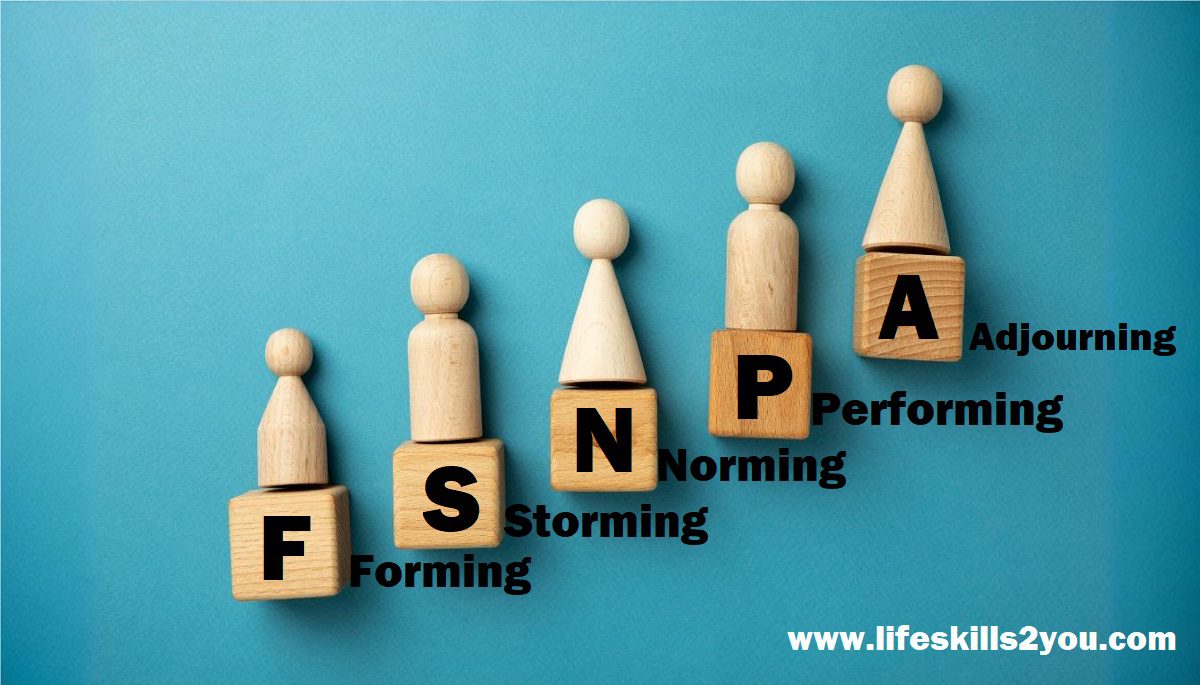
We need a framework to understand this, and that’s where Tuckman’s Stages of Group Development comes in handy. Psychologist Bruce Tuckman created this model in 1965, and it breaks down team development into five main phases: forming, storming, norming, performing, and adjourning. It helps us understand how teams come together and how they work, making group dynamics a lot less confusing.

No matter if you’re leading a big work project, managing a volunteer group, or just part of a school assignment, this framework gives you a clear picture. It helps teams work through disagreements, team up effectively, and ultimately reach their goals. Think of it as a roadmap to turn a bunch of individuals into a strong, high-achieving team


What Are Tuckman’s Stages of Group Development?

Tuckman’s Stages of Group Development are developed by Bruce Tuckman in 1965, this model outlines the journey teams undergo as they evolve. It’s not just about achieving goals; it’s about growing as a unit. Here are the five key stages:

  1. Forming: The honeymoon phase where excitement meets uncertainty.
  2. Storming: The storm of conflicts as personalities clash and roles are defined.
  3. Norming: The calm after the storm when unity begins to blossom.
  4. Performing: The golden phase of peak productivity and collaboration.
  5. Adjourning: The bittersweet goodbye when the team dissolves after achieving its objectives.

Each stage brings unique challenges and opportunities. Let’s break Tuckman’s Stages of Group Development down further.


1. Forming: Setting the Stage for Success

Picture this: a group of strangers coming together to tackle a project. During the forming stage, members are polite, cautious, and eager to understand their roles. It’s like the first day of school—everyone’s on their best behavior, but there’s an undercurrent of apprehension.

Key Characteristics:

  • High dependence on the leader for guidance.
  • Unclear roles and responsibilities.
  • Limited interaction and trust.

How to Navigate:

  • Define clear goals: Ensure everyone knows the team’s mission.
  • Establish ground rules: Set expectations for communication and behavior.
  • Encourage icebreakers: Build rapport to ease initial awkwardness.

2. Storming: Weathering the Challenges

Conflict is inevitable when diverse minds come together. In the storming phase, disagreements arise as team members assert their opinions and vie for roles. While it may feel chaotic, this stage is crucial for growth.

Key Characteristics:

  • Personality clashes and power struggles.
  • Resistance to authority and differing work styles.
  • Emotional tensions and frustration.

How to Navigate:

  • Address conflicts head-on: Foster open dialogue to resolve issues.
  • Practice empathy: Understand differing perspectives.
  • Reinforce the vision: Remind the team of shared goals to maintain focus.

3. Norming: Building Bridges

Ah, the sweet taste of harmony. In the norming stage, the team begins to find its rhythm. Members start trusting each other, and collaboration takes center stage.

Key Characteristics:

  • Clear roles and responsibilities.
  • Increased trust and respect among members.
  • Focused communication and teamwork.

How to Navigate:

  • Celebrate milestones: Acknowledge progress to boost morale.
  • Foster inclusivity: Ensure everyone’s voice is heard.
  • Strengthen bonds: Encourage social activities outside of work.

4. Performing: Reaching Peak Efficiency

This is where the magic happens. The team operates like a well-oiled machine, delivering exceptional results with minimal supervision. Productivity and innovation are at their peak.

Key Characteristics:

  • High levels of autonomy and accountability.
  • Seamless collaboration and problem-solving.
  • Mutual respect and a shared sense of purpose.

How to Navigate:

  • Delegate effectively: Trust team members to take ownership.
  • Encourage innovation: Promote creative thinking and experimentation.
  • Maintain momentum: Keep the team motivated with regular feedback.

5. Adjourning: Parting Ways

All good things must come to an end. The adjourning stage, added later by Tuckman, marks the conclusion of the team’s journey. It’s a time for reflection, celebration, and goodbyes.

Key Characteristics:

  • Mixed emotions of accomplishment and loss.
  • Formal recognition of achievements.
  • Dissolution of the team structure.

How to Navigate:

  • Conduct a debrief: Reflect on lessons learned and celebrate successes.
  • Provide closure: Facilitate a smooth transition for team members.
  • Stay connected: Encourage maintaining professional relationships.

Why Tuckman’s Stages of Group Development Matter

Understanding these stages isn’t just theoretical—it’s practical.
It equips leaders and team members with the tools to:
Identify and address challenges proactively.
Foster a culture of trust and collaboration.
Drive teams toward sustained success.

Remember, every great team was once a group of individuals navigating these stages. Success lies in embracing the journey and learning from each step.


Real-Life Application of Tuckman’s Model

Consider a startup team launching a new product. In the forming stage, they brainstorm ideas enthusiastically. During storming, disagreements over design arise. By norming, they find common ground and establish workflows. In performing, they deliver a stellar product, and in adjourning, they celebrate their success before moving on to new ventures.

For deeper insights, check out resources like MindTools and Verywell Mind for actionable strategies on managing group dynamics.


Overcoming Challenges in Tuckman’s Stages of Group Development

While Tuckman’s model provides a roadmap, real-world scenarios often present unique challenges. Here’s how to tackle them:

Forming:

  • Challenge: Hesitancy to engage fully.
  • Solution: Organize team-building exercises to break the ice.

Storming:

  • Challenge: Prolonged conflicts.
  • Solution: Appoint a neutral mediator to resolve disputes constructively.

Norming:

  • Challenge: Complacency.
  • Solution: Set stretch goals to keep the team energized.

Performing:

  • Challenge: Burnout.
  • Solution: Prioritize work-life balance and recognize individual efforts.

Adjourning:

  • Challenge: Emotional disconnect.
  • Solution: Provide a platform for members to express their feelings and celebrate together.

Adapting Tuckman’s Stages of Group Development Model for Modern Teams

In today’s world of remote work and diverse teams, Tuckman’s stages are more relevant than ever. Virtual teams can use tools like video conferencing, project management software, and regular check-ins to navigate the stages effectively. Cultural sensitivity and adaptability play a crucial role in fostering unity across borders.


Understanding Tuckman’s Stages of Group Development

Thank you for exploring this insightful article! If you’re hungry for more knowledge, don’t miss out on our other engaging articles waiting for you. Dive into our treasure trove of wisdom and discover new perspectives on related topics. Click ‘Our Blog‘ and ‘How to Guide‘ to embark on your next adventure. Happy reading!

FAQ’s on Tuckman’s Stages of Group Development

1. What are the five stages of Tuckman’s model of group development?

The five stages are Forming, Storming, Norming, Performing, and Adjourning. Each stage represents a step in the evolution of a team as they grow and achieve their goals.

2. Why is the Storming stage important in team development?

The Storming stage is essential because it helps resolve conflicts, define roles, and establish team dynamics. It’s a critical step for building trust and collaboration.

3. Can a team skip a stage in Tuckman’s model?

While teams might appear to skip a stage, the challenges or dynamics of that stage will usually resurface. Each stage contributes to the team’s long-term effectiveness.

4. How can leaders support their teams during the Forming stage?

Leaders can provide clear guidance, set expectations, and organize icebreaker activities to help team members feel comfortable and aligned with the group’s objectives.

5. What happens during the Adjourning stage of a team?

In the Adjourning stage, the team disbands after achieving its objectives. Members may experience mixed emotions, and it’s a time for reflection, recognition, and closure.

6. Is Tuckman’s model applicable to remote or virtual teams?

Yes, Tuckman’s model applies to remote teams as well. Using tools for virtual collaboration, regular communication, and clear guidelines can help navigate the stages effectively.

7. What are some challenges teams face in the Norming stage?

Complacency and resistance to change can arise during the Norming stage. It’s important to set stretch goals and keep the team motivated to maintain momentum.

8. How does the Performing stage differ from the other stages?

The Performing stage is characterized by high productivity, strong collaboration, and minimal supervision. The team functions efficiently and focuses on achieving shared goals.

9. Can Tuckman’s model be applied to non-work-related groups?

Absolutely. Tuckman’s stages are applicable to any group dynamic, including sports teams, volunteer groups, and social organizations.

10. How can a team recover if they regress to an earlier stage?

Teams can recover by revisiting the principles of the earlier stages, addressing conflicts, and reinforcing trust and communication. Leadership plays a crucial role in guiding this process.

Unlock Your Potential with Goleman’s Emotional Intelligence Framework

Introductory Paragraph:
Have you ever wondered what truly sets successful individuals apart? It’s not just IQ, academic degrees, or technical expertise—it’s emotional intelligence (EI). Coined by Daniel Goleman, Emotional Intelligence Framework emphasizes mastering self-awareness, empathy, and interpersonal skills to thrive in today’s world. Whether you’re leading a team, managing relationships, or simply striving for personal growth, this framework is your blueprint to success. Let’s dive into Goleman’s transformational model and explore how it can revolutionize the way you connect, lead, and live.


The Ultimate Guide to Goleman’s Emotional Intelligence Framework

When we talk about success in life and work, Emotional Intelligence (EI) often takes center stage. Daniel Goleman, a psychologist and journalist, popularized the concept through his groundbreaking book Emotional Intelligence: Why It Can Matter More Than IQ. In this article, we’ll unpack his framework, understand its five key components, and learn practical ways to apply it in everyday life.

What is Emotional Intelligence?

Emotional Intelligence Meaning : At its core, emotional intelligence is the ability to recognize, understand, and manage our emotions while effectively navigating the emotions of others. Think of it as your personal GPS for emotional and social landscapes. While technical skills are important, EI enables you to harness the human connection that fuels both personal and professional relationships.


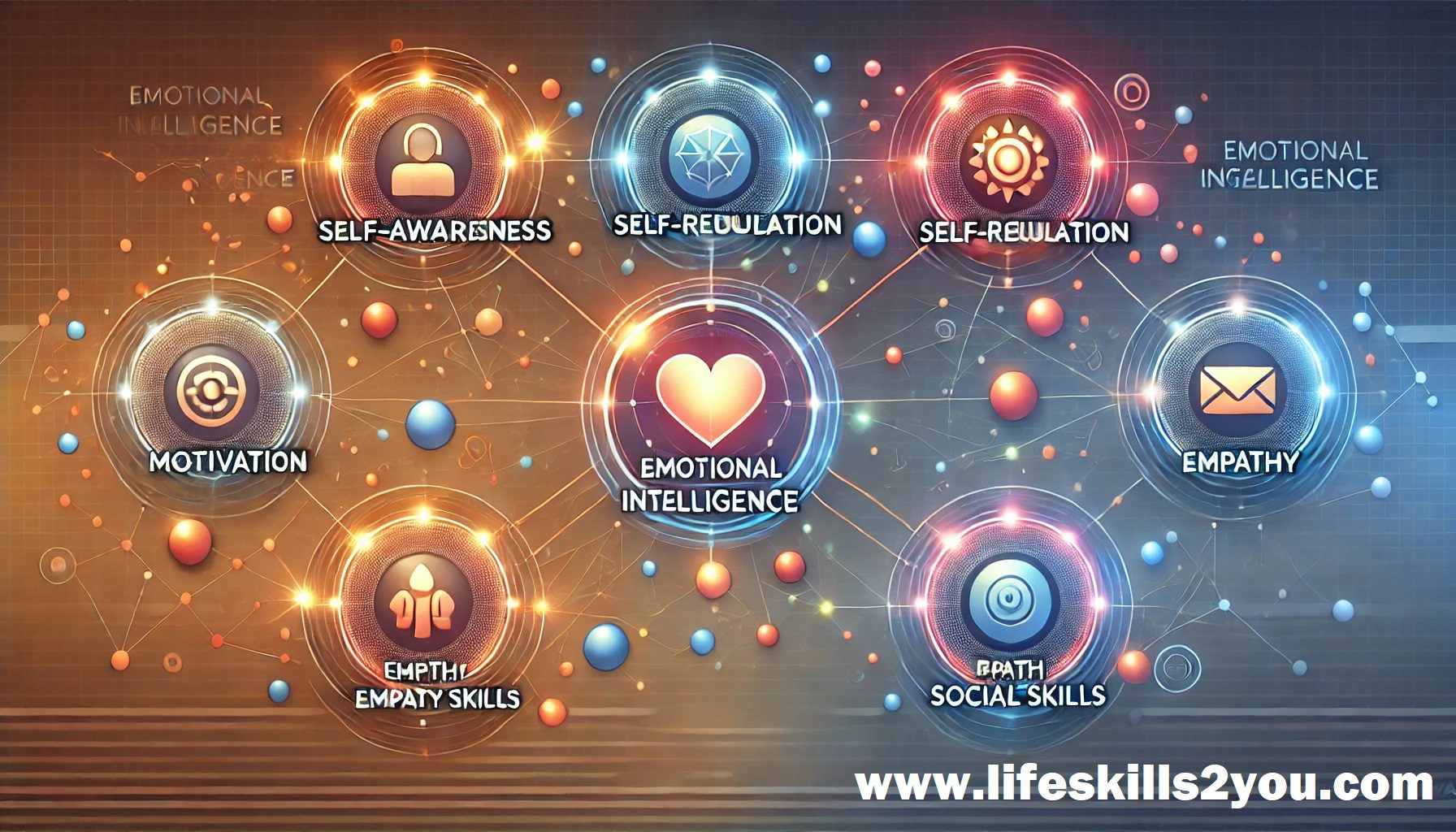
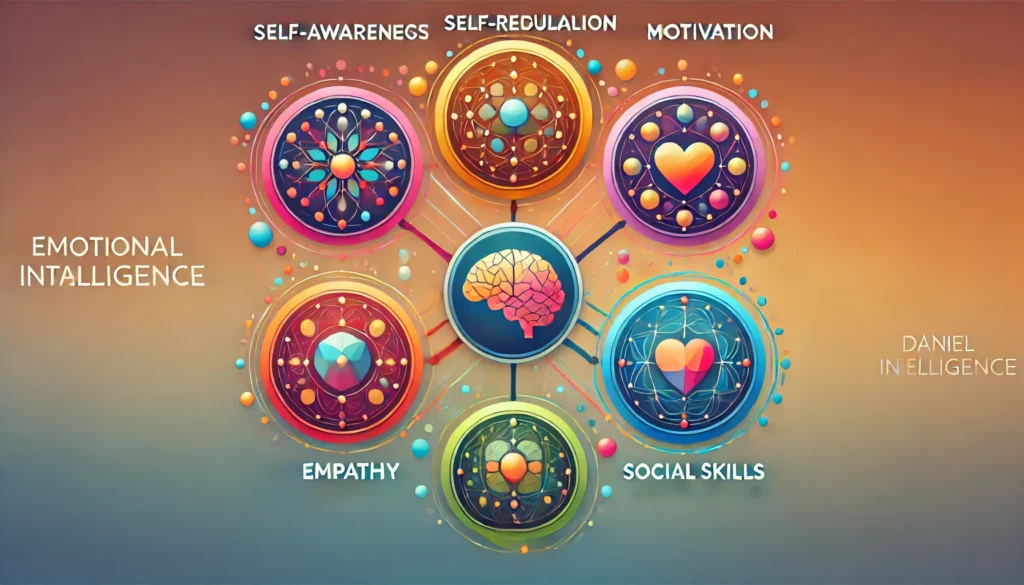
The Five Pillars of Goleman’s Emotional Intelligence Framework

1. Self-Awareness

Self-awareness is the cornerstone of emotional intelligence. It’s all about understanding your emotions and how they affect your thoughts and actions. Imagine you’re a captain steering a ship—without awareness of the weather (your emotions), you risk losing direction.

How to Develop Self-Awareness

Practice mindfulness and journaling.
Reflect on emotional triggers.
Seek feedback from trusted friends or mentors.

“Knowing yourself is the beginning of all wisdom.”

Aristotle

2. Self-Regulation


Emotions can be like wild horses—if left unchecked, they can lead to impulsive decisions. Self-regulation helps you rein in those impulses and maintain control even in stressful situations.

Tips for Mastery in Self-Regulation

Practice deep breathing techniques.
Cultivate patience by pausing before responding.
Develop a mantra for stressful moments, like “This too shall pass.”

3. Motivation


Motivation within the EI framework refers to intrinsic drive—the internal desire to achieve goals for personal satisfaction, not external rewards. It’s the fuel that powers perseverance.

Ways to Boost Motivation

Set meaningful goals and break them into smaller milestones.
Celebrate progress, not just outcomes.
Align your actions with your values.

4. Empathy


Empathy is your ability to step into someone else’s shoes and truly understand their feelings. It’s the heart of emotional intelligence, building bridges of connection and trust.

How to Cultivate Empathy

Actively listen to others without judgment.
Ask open-ended questions to understand perspectives.
Read books or watch stories that offer diverse viewpoints.

5. Social Skills


Strong social skills allow you to build rapport, resolve conflicts, and lead effectively. Whether networking or managing teams, these skills can turn interactions into lasting relationships.

Practical Tips for Strong Social Skills

Practice active listening and maintain eye contact.
Learn conflict resolution strategies.
Be approachable—smile and show genuine interest in others.


Why Emotional Intelligence Matters More Than Ever

In today’s fast-paced world, technology connects us more than ever before, but it also leaves room for miscommunication. EI fills this gap, ensuring clarity, compassion, and collaboration. Whether you’re leading a team, building a family, or chasing dreams, emotional intelligence is your secret weapon for resilience and growth.


Applications of Goleman’s Framework in Everyday Life

  • Workplace Success:
    Employees with high EI excel in teamwork, leadership, and adaptability. They turn conflicts into opportunities and inspire others to perform better.
  • Personal Relationships:
    Emotional intelligence deepens connections, builds trust, and enhances communication. It’s the glue that holds meaningful relationships together.
  • Mental Well-Being:
    Practicing EI reduces stress, promotes mindfulness, and fosters a positive mindset.

Resources to Explore Further

To gain a deeper understanding of Goleman’s framework, check out:

  1. MindTools: Emotional Intelligence Framework
  2. Psychology Today: Understanding Emotional Intelligence

How to Develop Emotional Intelligence Using Goleman’s Framework

Understanding the principles of emotional intelligence is just the beginning; developing these skills requires consistent effort and intentional practice. Let’s explore actionable strategies for enhancing each pillar of Goleman’s EI framework.


1. Building Self-Awareness

To truly grow in self-awareness, you must learn to tune into your emotional state, much like fine-tuning a radio station. Here are some techniques to strengthen your emotional insight:

  • Keep a Daily Journal: Spend 5-10 minutes jotting down your emotions, what triggered them, and how you reacted. Over time, patterns will emerge, helping you recognize recurring emotional themes.
  • Meditate: Mindfulness meditation is a powerful tool for observing your thoughts and emotions without judgment.
  • Ask for Honest Feedback: People close to you can often see aspects of your emotional reactions that you may overlook. Seek their input and reflect on it constructively.

Everything that irritates us about others can lead us to an understanding of ourselves.”

Carl Gustav Jung

2. Mastering Self-Regulation

Self-regulation is like learning to ride the waves of emotion without letting them crash over you. It doesn’t mean suppressing emotions; it means managing them effectively.

  • Pause Before Reacting: In tense situations, count to ten before speaking. This simple act can prevent impulsive outbursts.
  • Adopt a Growth Mindset: View challenges and setbacks as opportunities to learn rather than threats.
  • Practice Gratitude: When emotions feel overwhelming, focus on things you’re grateful for. Gratitude shifts your perspective and helps calm the storm.

3. Cultivating Intrinsic Motivation

Intrinsic motivation keeps you going even when external rewards are absent. Think of it as the spark that ignites your passion and fuels your perseverance.

  • Define Your ‘Why’: Take time to clarify your purpose. Why do you wake up each day? Aligning your actions with your core values creates lasting motivation.
  • Visualize Success: Picture yourself achieving your goals. This technique can make your aspirations feel more tangible and within reach.
  • Celebrate Small Wins: Recognize and reward yourself for progress, no matter how minor. Small victories keep the momentum alive.

4. Strengthening Empathy

Empathy is the bridge that connects your world to someone else’s. When practiced, it can transform relationships and foster genuine human connections.

  • Listen to Understand, Not to Reply: Most of us listen with the intent to respond. Instead, focus on truly understanding the other person’s perspective.
  • Mirror Emotions: Acknowledge what the other person is feeling by reflecting their emotions. For example, say, “It sounds like you’re feeling frustrated.”
  • Volunteer or Engage in Diverse Communities: Stepping outside your comfort zone and engaging with people from different walks of life broadens your understanding of their experiences.

“Kindness is a language which the deaf can hear and the blind can see.”

Mark Twain

5. Refining Social Skills

Social skills encompass the art of communication, collaboration, and conflict resolution. Strong social skills turn conversations into connections and colleagues into allies.

  • Practice Empathetic Communication: Use phrases like “I understand how you feel” to show you value the other person’s perspective.
  • Learn Nonverbal Communication: Body language, tone of voice, and facial expressions often speak louder than words. Pay attention to these cues during interactions.
  • Master the Art of Feedback: Provide constructive feedback that encourages growth. Instead of saying, “You did this wrong,” try, “Here’s how we can improve next time.”

The Role of Emotional Intelligence in Leadership

Leaders with high emotional intelligence stand out because they inspire trust, adapt to challenges, and nurture their teams. In Goleman’s framework, EI is not just a “nice-to-have” for leaders—it’s essential.

  • Inspire Through Empathy: A leader who understands their team’s emotions can better motivate and support them.
  • Promote Collaboration: Strong social skills allow leaders to mediate conflicts and foster a culture of cooperation.
  • Adapt and Thrive: Self-awareness and regulation equip leaders to handle crises with grace, making them role models for resilience.

Real-World Applications of Emotional Intelligence

In the Workplace:
Imagine a workplace conflict where two employees disagree over a project deadline. A manager with strong EI would empathize with both perspectives, mediate a solution, and ensure that both employees feel heard and valued.

In Personal Relationships:
Consider a situation where a friend is upset but hesitant to talk about it. By tuning into their nonverbal cues and expressing empathy, you create a safe space for them to open up.

In Parenting:
Parents who practice emotional intelligence raise emotionally resilient children. Teaching kids to identify and manage their emotions sets them up for lifelong success.


Challenges in Developing Emotional Intelligence

While the benefits of EI are undeniable, the journey to mastering it isn’t always smooth. Common challenges include:

  • Overcoming deeply ingrained habits, like reacting impulsively.
  • Balancing empathy with assertiveness to avoid emotional burnout.
  • Consistently practicing self-awareness in a busy world.

Remember

Growth in EI is a marathon, not a sprint. The key is persistence.


Conclusion

Goleman’s Emotional Intelligence Framework is more than just a theory; it’s a roadmap for personal and professional success. By mastering self-awareness, self-regulation, motivation, empathy, and social skills, you can elevate every aspect of your life. Emotional intelligence is not a talent reserved for the few—it’s a skill anyone can learn. As Goleman wisely said, “The rules for work are changing. We’re being judged by a new yardstick: not just how smart we are, but also how well we handle ourselves and others.”

Call to Action:
Thank you for exploring this comprehensive guide to Goleman’s Emotional Intelligence Framework. If you’re eager to learn more, check out our other engaging articles. Dive into our blog to uncover more tips and strategies for personal and professional growth. Ready to transform your life? Click Our Blog and How-to Guide to begin your journey. Happy reading!

FAQs on Daniel Goleman’s Emotional Intelligence Framework

1. What is emotional intelligence (EI)?

Emotional intelligence refers to the ability to recognize, understand, manage, and influence emotions in oneself and others.

2. What are the five pillars of Daniel Goleman’s Emotional Intelligence Framework?

The five pillars are:
1. Self-Awareness: Recognizing and understanding your own emotions.
2. Self-Regulation: Managing your emotions and impulses effectively.
3. Motivation: Using emotional factors to achieve goals and stay focused.
4. Empathy: Understanding and sharing the feelings of others.
5. Social Skills: Building and maintaining healthy interpersonal relationships.

3. Why is emotional intelligence important?

Emotional intelligence helps individuals improve communication, build better relationships, manage stress, and make thoughtful decisions, making it crucial for personal and professional success.

4. How does self-awareness improve emotional intelligence?

Self-awareness allows individuals to understand their emotional triggers, strengths, and weaknesses, enabling better decision-making and emotional control.

5. Can emotional intelligence be learned or improved?

Yes, emotional intelligence is not fixed and can be developed through self-reflection, practice, and emotional skill-building exercises.

6. How is emotional intelligence different from IQ?

While IQ measures cognitive abilities like problem-solving and reasoning, EI focuses on understanding and managing emotions, making it a complementary skill set.

7. What role does empathy play in emotional intelligence?

Empathy allows individuals to connect with others on an emotional level, fostering trust and improving communication in personal and professional relationships.

8. Why is self-regulation important in the workplace?

Self-regulation helps individuals manage stress, control impulsive behaviors, and maintain professionalism, enhancing teamwork and productivity.

9. How does emotional intelligence impact leadership?

Leaders with high EI are better at inspiring teams, resolving conflicts, and adapting to change, making them more effective and respected.

10. What are practical ways to enhance social skills within the emotional intelligence framework?

Improving social skills involves active listening, effective communication, conflict resolution, and showing genuine interest in others’ perspectives.

Johari Window: Unlock The Power of Self-Awareness

Unlocking the Power of the Johari Window: A Guide to Self-Awareness and Connection

Your Attractive Heading

Ever felt like there’s a gap between how you see yourself and how others perceive you? The Johari Window is a fascinating framework that bridges this gap, unveiling the hidden facets of your personality and fostering better communication. Whether you’re striving to strengthen relationships, excel in your career, or simply understand yourself better, this tool holds the key to unlocking your potential.

Let’s dive deep into the Johari Window—your guide to building trust, boosting self-awareness, and achieving meaningful personal growth.

“Knowing yourself is the beginning of all wisdom.”

Aristotle

What is the Johari Window?

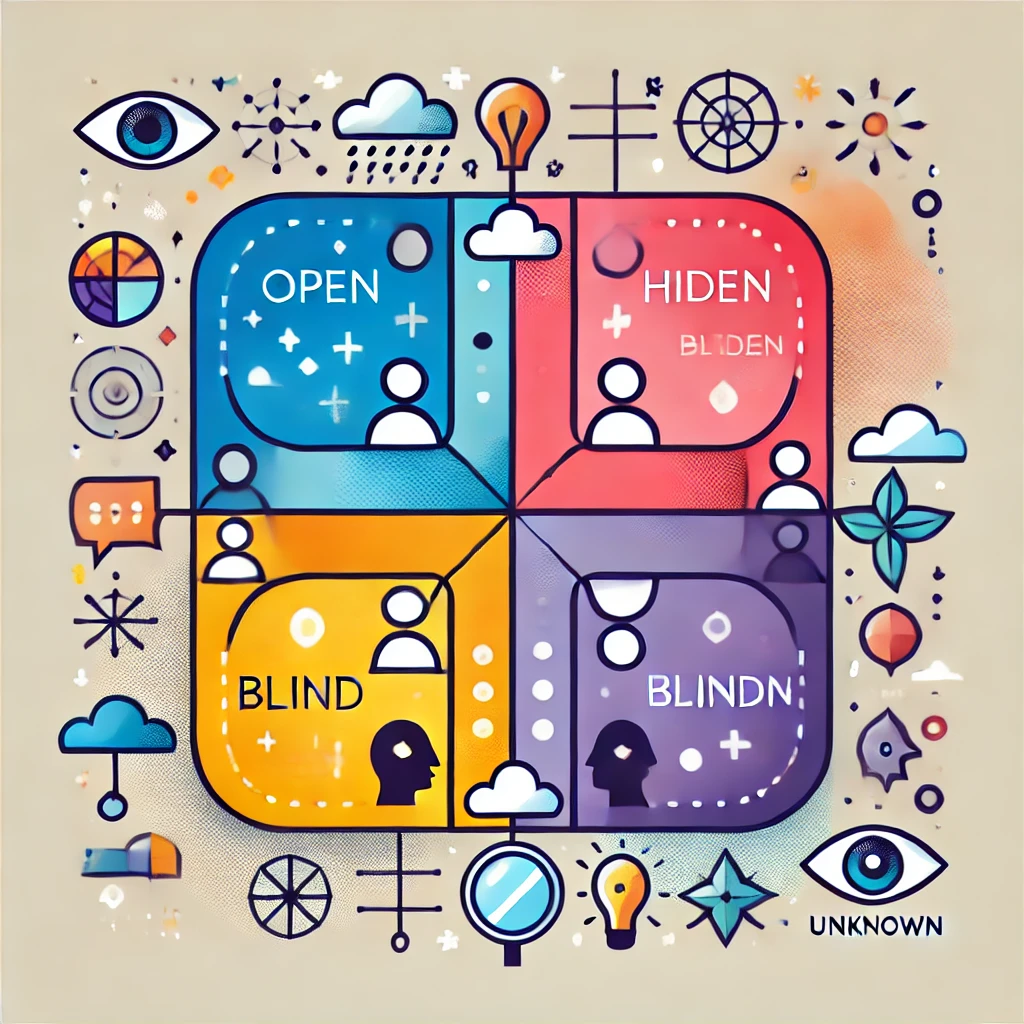
The Johari Window is a simple yet profound psychological tool designed to enhance self-awareness and improve interpersonal relationships. Created by psychologists Joseph Luft and Harrington Ingham in 1955, it emphasizes the importance of open communication and mutual understanding. Think of it as a mirror and window rolled into one—a way to see yourself more clearly and let others see the real you.


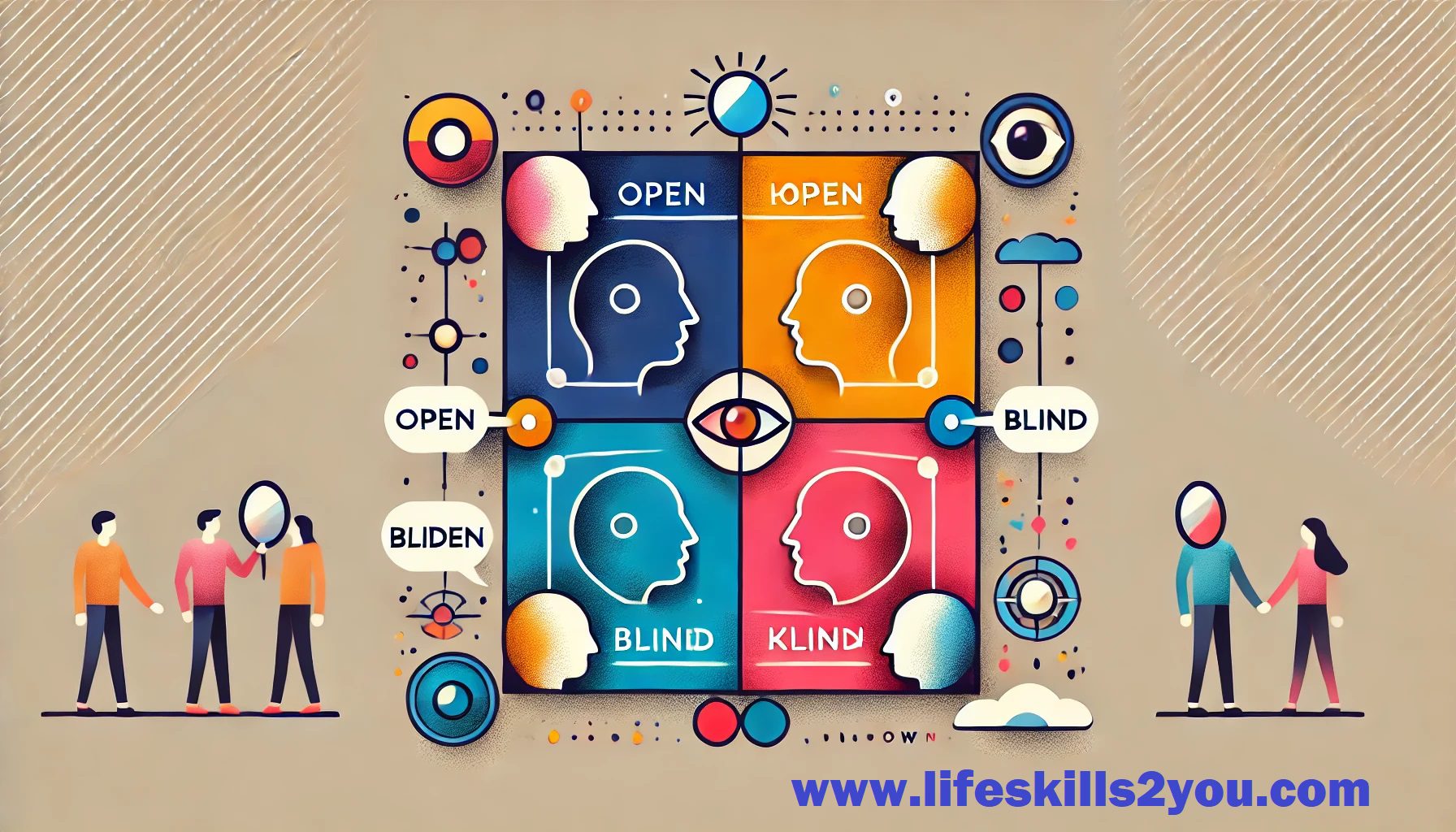
The Four Quadrants of the Johari Window

The Open Area

This quadrant represents the parts of yourself that are known both to you and others. It’s the space where trust thrives and collaboration flourishes. Expanding this area is vital for authentic connections.

The Blind Spot

Ever been surprised by feedback? This quadrant includes traits others see in you but you might be unaware of. Addressing your blind spots can be a game-changer for personal growth.

The Hidden Area

Your private thoughts, feelings, and secrets reside here. Sharing selectively can deepen relationships and foster mutual trust.

The Unknown Area

This mysterious quadrant holds untapped potential and traits that neither you nor others recognize yet. Exploring this area can lead to incredible self-discovery.

“Until you make the unconscious conscious, it will direct your life, and you will call it fate.”

Carl Jung

The Origins of the Johari Window

The Johari Window was born out of a need to simplify complex interpersonal dynamics. Its creators, Luft and Ingham, aimed to provide a tool that promotes openness, collaboration, and growth. Over the decades, it has become a cornerstone in psychology, leadership training, and team development.


Why Self-Awareness is a Superpower

Self-awareness isn’t just about knowing your strengths and weaknesses; it’s about understanding your impact on others. Like a lighthouse guiding ships, self-awareness helps you navigate life with purpose and clarity.


How to Use the Johari Window in Daily Life

  1. Invite Honest Feedback: Ask trusted friends or colleagues for insights about your behavior.
  2. Practice Vulnerability: Share aspects of your hidden self to build trust.
  3. Reflect Regularly: Take time to uncover the unknown areas through introspection and exploration.

Applications of the Johari Window in Relationships

The Johari Window can transform relationships by fostering open communication and mutual understanding. Imagine a relationship where assumptions are replaced with clarity and trust—sounds amazing, right?


Johari Window and Team Dynamics

In teams, the Johari Window helps bridge gaps, align goals, and enhance collaboration. Teams that understand each other’s strengths and blind spots perform better and communicate more effectively.


The Role of Feedback in Expanding the Open Area

Feedback is the cornerstone of growth. It’s like polishing a diamond—sometimes uncomfortable, but always rewarding. Regular, constructive feedback widens your open area, making you more relatable and effective.


Building Trust Using the Johari Window

Trust is the foundation of any meaningful relationship. By gradually sharing your hidden self and acknowledging feedback, you pave the way for stronger connections.


Self-Reflection Strategies for Personal Growth

  • Journaling: Write about your daily experiences and emotions.
  • Meditation: Quiet your mind to uncover hidden insights.
  • Mentorship: Seek guidance from someone who sees your potential.

Overcoming Barriers to Self-Discovery

Fear of vulnerability and resistance to feedback can hinder self-awareness. But remember, growth begins at the edge of your comfort zone.


The Johari Window in Leadership Development

Great leaders understand their blind spots and leverage feedback to improve. The Johari Window helps leaders build trust, inspire teams, and make informed decisions.


Tips for Facilitating a Johari Window Exercise

  1. Set Clear Objectives: Define what you want to achieve through the exercise.
  2. Create a Safe Environment: Ensure participants feel comfortable sharing.
  3. Encourage Open Dialogue: Foster an atmosphere of respect and empathy.

Real-Life Examples of Johari Window in Action

  • Corporate Training: Teams using the Johari Window report higher efficiency and morale.
  • Personal Relationships: Couples who explore their open and hidden areas build deeper connections.

Transforming Challenges into Opportunities with Johari Window

Every blind spot is an opportunity waiting to be discovered. Embrace feedback and self-reflection as tools for transformation.


Conclusion

The Johari Window isn’t just a tool; it’s a journey to understanding yourself and others better. By embracing this framework, you unlock the potential to build meaningful relationships, enhance communication, and grow into the best version of yourself. Remember, self-awareness is the first step to self-mastery.

Call to Action

Thank you for exploring this insightful article! If you’re hungry for more knowledge, don’t miss out on our other engaging articles waiting for you. Dive into our treasure trove of wisdom and discover new perspectives on related topics. Click ‘Our Blog’ or ‘How to Guide’ to embark on your next adventure. Happy reading!

1. What is the main purpose of the Johari Window?

It’s designed to improve self-awareness and interpersonal communication.

2. How does the Johari Window improve relationships?

By fostering trust, openness, and mutual understanding.

3. Can the Johari Window be used in the workplace?

Absolutely! It’s a powerful tool for team building and leadership development.

4. How do I expand my open area?

Through feedback, self-reflection, and sharing.

5. What’s the significance of the unknown area?

It represents untapped potential and unexplored traits.

6. Is the Johari Window only for individuals?

No, it’s equally effective for teams and organizations.

7. What are common barriers to self-discovery?

Fear of vulnerability and resistance to feedback.

8. How can I facilitate a Johari Window exercise?

Create a safe environment, define objectives, and encourage openness.

9. Can children benefit from the Johari Window?

Yes, it’s a great way to teach self-awareness and communication skills.

10. Where can I learn more about the Johari Window?

Check out resources like MindTools or PositivePsychology.

Exit mobile version