Table of Contents
Introduction to Time Management and Productivity
Time management is not just about doing more in less time—it’s about doing the right things at the right time. We all have the same 24 hours, but why do some people seem to accomplish far more while others struggle to keep up? The secret often lies in how effectively we prioritize tasks. Productivity is not about staying busy; it’s about focusing on what truly matters and contributes to long-term goals. Unfortunately, many people find themselves trapped in the chaos of deadlines, emergencies, and constant “firefighting.” This is where the concept of the “Important and Urgent Quadrant” comes into play.
Time management experts often stress the importance of distinguishing between tasks that are “urgent” and those that are “important.” Urgent tasks demand immediate attention and often come with deadlines. Important tasks, on the other hand, are those that contribute significantly to our goals, values, and long-term success. The problem arises when we fail to separate these two categories, leading to stress, burnout, and lack of progress.
In the modern world, we are constantly bombarded by notifications, emails, and requests that seem urgent. But not all urgent things are important. For example, a ringing phone is urgent—it demands attention right now—but whether it is important depends on who is calling and why. On the other hand, exercising regularly is important, but it often doesn’t feel urgent until health issues arise. This simple example shows why understanding the balance between urgency and importance is critical to living a productive, meaningful life.
The concept of the “Important and Urgent Quadrant” gives us a practical framework for managing our time and energy. It helps us recognize which tasks deserve immediate attention and which ones should be planned, delegated, or eliminated. Before diving deep into this quadrant, let’s first understand the framework it comes from: the Eisenhower Matrix.
What is the Important and Urgent Quadrant?
The “Important and Urgent Quadrant” refers to one of the four categories in the Eisenhower Matrix, a time management tool named after U.S. President Dwight D. Eisenhower, who famously said, “What is important is seldom urgent, and what is urgent is seldom important.”
This quadrant represents tasks that are both:
- Important – They align with your goals, values, and responsibilities.
- Urgent – They require immediate attention, often because of deadlines or pressing circumstances.
Examples include:
- Meeting a project deadline that is due today.
- Attending to a medical emergency.
- Fixing a major system breakdown at work.
- Preparing for an unplanned but critical presentation.
Living in this quadrant is inevitable at times because emergencies and deadlines will always exist. However, constantly staying in this quadrant creates stress and reduces the ability to focus on long-term goals. The key is not to avoid Quadrant I completely, but to manage it efficiently while preventing tasks from unnecessarily escalating into this category.
Tasks that land in this quadrant are often the result of procrastination or poor planning. For instance, if you delay preparing for an exam until the night before, what was once an “important but not urgent” task suddenly becomes both important and urgent. Similarly, neglecting regular maintenance on your car can turn into an urgent repair when it breaks down on the highway. Recognizing this pattern helps us take preventive action and reduce the number of urgent crises we face.

The Eisenhower Matrix: A Foundation for Decision-Making
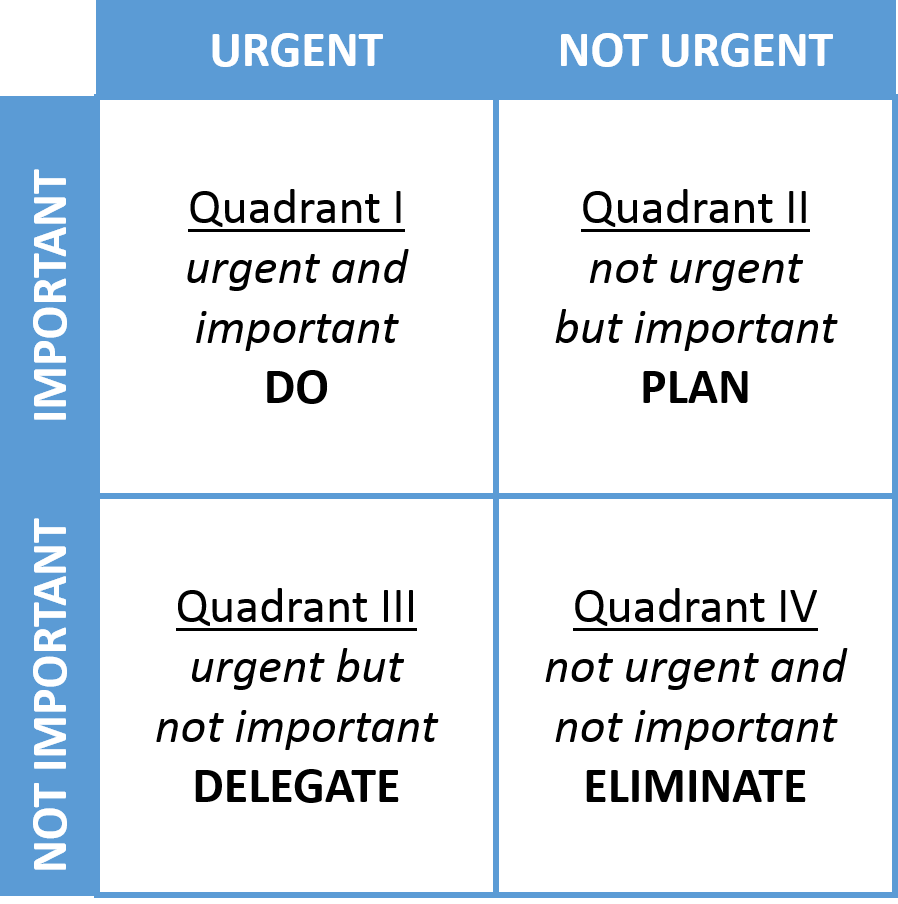
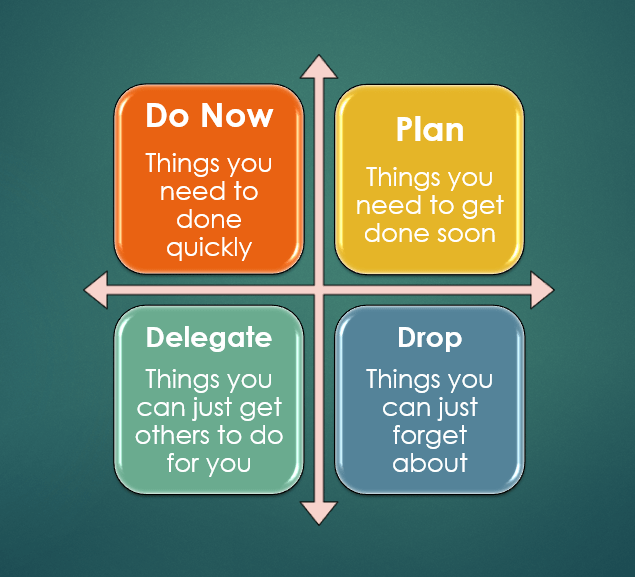
To fully understand the Important and Urgent Quadrant, we need to look at the broader framework: the Eisenhower Matrix, also known as the Urgent-Important Matrix. This tool divides tasks into four quadrants:
- Quadrant I: Important and Urgent (Do First)
- Tasks that require immediate attention and have serious consequences if delayed.
- Example: Meeting critical deadlines, responding to emergencies.
- Quadrant II: Important but Not Urgent (Plan)
- Tasks that contribute to long-term goals and personal growth but don’t require immediate action.
- Example: Exercise, strategic planning, relationship-building.
- Quadrant III: Urgent but Not Important (Delegate)
- Tasks that demand immediate attention but don’t contribute significantly to long-term goals.
- Example: Some emails, unnecessary meetings, minor interruptions.
- Quadrant IV: Not Important and Not Urgent (Eliminate)
- Activities that waste time and provide little to no value.
- Example: Excessive social media browsing, binge-watching TV.
The brilliance of this matrix lies in its simplicity. By categorizing tasks based on importance and urgency, individuals can prioritize effectively. Most productivity experts agree that the goal is to spend more time in Quadrant II (important but not urgent) because it helps prevent crises and reduces stress. However, reality forces us into Quadrant I more often than we’d like.
The danger comes when people confuse Quadrant III (urgent but not important) with Quadrant I. For example, a colleague asking you to review a non-essential document immediately may feel urgent but doesn’t necessarily contribute to your goals. Without awareness, you may spend too much time in Quadrant III, thinking you’re being productive, while actually neglecting tasks that truly matter.
By using the Eisenhower Matrix regularly, individuals and organizations can make better decisions, reduce stress, and focus on tasks that bring the most value. Now that we’ve laid this foundation, let’s break down the four quadrants further to see where the Important and Urgent Quadrant fits in.
Breaking Down the Four Quadrants
Quadrant I: Important and Urgent (Do First)
Quadrant I is where crises, pressing problems, and deadline-driven projects live. It’s the place for things that must be done now, and if ignored, the consequences are often immediate and severe. Unlike other quadrants, procrastination is not an option here—action is mandatory.
Examples of Quadrant I tasks include:
- Paying overdue bills to avoid penalties.
- Preparing for a critical presentation tomorrow.
- Handling an unexpected family emergency.
- Responding to a security breach in a company system.
These are tasks that no one can afford to ignore. However, the risk lies in becoming addicted to urgency. Some people thrive on adrenaline and feel more productive when under pressure. While this may work in the short term, constantly operating in crisis mode can lead to burnout, poor decision-making, and even health issues.
When too many tasks fall into this quadrant, it often signals poor planning or failure to act on Quadrant II activities earlier. For instance, regular exercise and health checkups (Quadrant II) can prevent medical emergencies (Quadrant I). Similarly, consistent project management can reduce last-minute deadline rushes.
While Quadrant I is unavoidable, the goal should be to minimize time spent here. Handling crises efficiently is important, but preventing them is even better. That’s why balancing Quadrant I with Quadrant II is crucial for sustainable productivity.
Quadrant II: Important but Not Urgent (Plan)
Quadrant II is often referred to as the “sweet spot” of time management. These are activities that don’t demand immediate attention but hold immense value for personal and professional growth. They are proactive, preventive, and strategic in nature.
Examples include:
- Strategic business planning.
- Learning new skills or pursuing education.
- Regular exercise and healthy eating.
- Nurturing relationships with family and friends.
- Personal development activities like journaling or meditation.
Unfortunately, these tasks are the easiest to neglect because they don’t scream for attention. A missed workout doesn’t create immediate consequences, but over time, neglecting health leads to serious issues. Similarly, ignoring relationship-building may not hurt today but can cause long-term regret.
Quadrant II is where successful people spend most of their time. By investing in important but not urgent activities, they reduce the number of crises in Quadrant I. It’s like sharpening an axe before chopping wood—it takes time upfront, but it makes the work much more effective in the long run.
The challenge is discipline. It’s easy to get distracted by urgent tasks or fall into Quadrant IV activities like endless scrolling on social media. Developing habits, setting clear goals, and scheduling Quadrant II tasks in advance are effective strategies for prioritizing this quadrant.
Quadrant III: Urgent but Not Important (Delegate)
Quadrant III is deceptive. Tasks in this quadrant demand attention now, but they don’t significantly contribute to long-term goals. They are often interruptions disguised as important.
Examples include:
- Phone calls or messages that don’t require immediate response.
- Attending meetings without a clear purpose.
- Responding to low-priority emails.
- Helping colleagues with non-essential tasks.
The danger here is that people often confuse urgency with importance. Just because someone else wants something done quickly doesn’t mean it aligns with your priorities. Spending too much time in Quadrant III creates the illusion of productivity while actually draining time and energy from tasks that truly matter.
The best strategy for Quadrant III tasks is delegation. If a task is urgent but not important to your personal goals, see if someone else can handle it. If delegation isn’t possible, then set boundaries and limit the time spent here. Saying “no” politely or redirecting requests is a skill that protects your productivity.
Quadrant IV: Not Important and Not Urgent (Eliminate)
Quadrant IV is the productivity trap. These are activities that provide little to no value, often used as escapes or distractions. While occasional relaxation is healthy, overindulging in this quadrant leads to wasted time and regret.
Examples include:
- Endless scrolling on social media.
- Watching TV for hours with no purpose.
- Playing video games excessively.
- Engaging in gossip or unproductive conversations.
The problem is that Quadrant IV feels easy and comfortable. After dealing with stressful urgent tasks, people often turn to these activities as a way to relax. However, instead of truly recharging, they end up wasting valuable time that could be invested in Quadrant II activities like rest, hobbies, or personal growth.
The best approach is not to eliminate all leisure, but to distinguish between recreation and time-wasting. Recreation is intentional and refreshing (like going for a walk or reading a good book). Time-wasting, on the other hand, is mindless and unplanned. By being intentional about downtime, you can recharge without falling into Quadrant IV.
Deep Dive into the Important and Urgent Quadrant
Characteristics of Quadrant I Tasks
Quadrant I tasks have some unique characteristics that set them apart from the other quadrants. The first and most obvious trait is time sensitivity. These tasks require immediate attention, and delaying them can lead to serious consequences. Deadlines, emergencies, and crises often fall into this category. Unlike Quadrant II, which is about proactive planning, Quadrant I is reactive by nature.
Another defining characteristic is the high stakes involved. Missing a Quadrant I task doesn’t just mean mild inconvenience—it can lead to penalties, losses, or missed opportunities. For example, if you miss a work deadline, it could affect your company’s revenue or your own reputation. If you ignore a sudden health issue, the problem could worsen drastically. This is why people often prioritize Quadrant I above everything else—it feels like survival mode.
Quadrant I tasks also tend to create stress and pressure. Since they demand immediate action, they often push people into high-adrenaline situations. While some individuals perform well under pressure, constantly living in this state leads to exhaustion and reduced effectiveness over time. A person who spends most of their time in Quadrant I may feel productive but often burns out because there’s little room for rest or long-term planning.
Interestingly, many Quadrant I tasks are avoidable if handled earlier in Quadrant II. For example, regular car maintenance prevents breakdowns. Preparing for exams in advance avoids last-minute cramming. Creating contingency plans in business reduces the impact of sudden crises. Unfortunately, because people neglect Quadrant II, small issues grow into urgent crises, pushing them into Quadrant I.
In short, Quadrant I tasks are unavoidable but should be managed wisely. They are the fires that must be put out, but if life is constantly filled with fires, something is wrong with the system. Successful individuals learn to deal with Quadrant I effectively while ensuring they spend more time in Quadrant II to prevent recurring crises.
Why People Struggle with Urgent and Important Tasks
Despite knowing that Quadrant I tasks are both urgent and important, many people still struggle to handle them effectively. The struggles often arise from psychological, behavioral, and systemic reasons.
One major reason is procrastination. Many people delay important tasks until they become urgent. A student may ignore assignments until the night before submission. An employee may put off preparing a report until hours before the deadline. By procrastinating, tasks that were once manageable in Quadrant II suddenly escalate into Quadrant I emergencies.
Another struggle is overcommitment. In today’s fast-paced world, people often say “yes” to too many things. The result? Overloaded schedules filled with deadlines and urgent demands. Without boundaries, individuals end up drowning in Quadrant I tasks, constantly feeling overwhelmed.
There’s also the issue of poor prioritization. Some people don’t clearly distinguish between urgent and important, leading to confusion. For instance, responding to every email immediately may feel urgent, but not all emails are important. This lack of clarity causes people to waste time on tasks that don’t truly belong in Quadrant I.
Additionally, there’s the adrenaline effect. Some individuals thrive on urgency. They enjoy the rush of racing against the clock, feeling more alive when working under pressure. While this can occasionally boost performance, it creates unhealthy work patterns. They may subconsciously create crises to fuel their adrenaline, keeping themselves stuck in Quadrant I unnecessarily.
Finally, systemic issues in workplaces contribute to Quadrant I overload. Poor leadership, unclear communication, lack of planning, or unrealistic expectations can all create a culture where everything becomes urgent. Employees in such environments are constantly firefighting instead of engaging in meaningful long-term work.
Understanding these struggles is the first step toward overcoming them. By addressing procrastination, setting clear priorities, learning to say no, and building better systems, individuals and organizations can reduce the constant stress of Quadrant I and create space for more sustainable productivity.
Short-Term Crisis Management vs. Long-Term Growth
Quadrant I is all about crisis management. It demands immediate action, quick decisions, and fast problem-solving. However, living only in crisis mode prevents long-term growth. This creates a dangerous imbalance: while you may feel productive handling emergencies, you’re actually sacrificing future stability and progress.
Short-term crisis management focuses on immediate solutions. For example:
- Fixing a technical issue that’s disrupting business operations.
- Meeting a client deadline to avoid losing a contract.
- Resolving a sudden conflict between team members.
These actions are necessary, but they don’t necessarily build a better future. They solve the problem at hand but rarely prevent it from happening again.
Long-term growth, on the other hand, comes from Quadrant II activities. Instead of just fixing problems, you build systems that reduce emergencies. For example:
- Implementing regular system checks to avoid future breakdowns.
- Creating clear project timelines to prevent last-minute rushes.
- Training employees in conflict resolution to avoid repeated disputes.
The difference is like putting out fires versus fireproofing the house. If all your energy goes into firefighting (Quadrant I), you’ll never have time to strengthen the foundation. True success comes from balancing both—handling crises when necessary but investing more energy into prevention and long-term growth.
A practical example can be seen in health. If you only focus on treating illnesses (Quadrant I), you’re always in crisis mode—doctor visits, medications, emergency care. But if you invest in preventive care—exercise, diet, sleep—you reduce the likelihood of emergencies. Similarly, in business, companies that only react to problems rarely grow sustainably. Those that invest in strategy, innovation, and systems thrive in the long run.
The key takeaway is this: Quadrant I cannot be ignored, but it should not dominate. By shifting focus toward Quadrant II, you reduce crises and free yourself from the endless cycle of firefighting, opening the door to real growth and success.
Strategies to Handle the Important and Urgent Quadrant
Identifying True Urgency
One of the biggest challenges in Quadrant I is distinguishing between tasks that are truly urgent and those that merely feel urgent. In a world filled with constant notifications, messages, and demands, it’s easy to get caught up in false urgency.
To identify true urgency, ask yourself these questions:
- What are the consequences of delaying this task?
- If delaying it leads to serious damage, financial loss, or missed opportunities, it’s truly urgent.
- Does this align with my core goals and responsibilities?
- If it’s urgent but doesn’t align with your goals, it might belong in Quadrant III instead.
- Who defines the urgency?
- Sometimes, urgency is imposed by others who don’t understand your priorities. A colleague’s “urgent” request may not be urgent for you.
- Can this be planned in advance?
- If a task keeps becoming urgent, maybe it should be scheduled earlier as a Quadrant II activity.
A classic example is email. Many people treat every email as urgent, responding instantly. But in reality, most emails are not true Quadrant I tasks. They may be urgent to the sender, but not important to your goals. By treating them as emergencies, you waste valuable time and energy.
Another example is workplace interruptions. A colleague asking for “just a minute” might derail your focus from a truly urgent task. Learning to filter requests and set boundaries ensures you don’t mistake distractions for genuine emergencies.
Developing the ability to identify true urgency is like sharpening your radar. It helps you focus on real crises while ignoring unnecessary noise. This skill alone can dramatically reduce stress and improve productivity.
Prioritization Frameworks to Stay Focused
Once you’ve identified true Quadrant I tasks, the next step is to prioritize effectively. Since these tasks often pile up, you need frameworks to decide what to handle first.
Some proven prioritization methods include:
- The ABCD Method:
- A: Must-do tasks with severe consequences if ignored.
- B: Important but slightly less urgent tasks.
- C: Nice-to-do tasks with minimal consequences.
- D: Delegate or eliminate.
- Applying this method ensures you tackle the most critical Quadrant I tasks first.
- The 80/20 Rule (Pareto Principle):
- Focus on the 20% of tasks that create 80% of the results.
- For example, out of multiple urgent tasks, one or two may have the biggest impact. Prioritize those first.
- MIT (Most Important Task):
- Each day, identify your top 1–3 most important urgent tasks and focus on completing them before anything else.
- Time Blocking:
- Allocate specific chunks of time for Quadrant I tasks without distractions. This prevents constant task-switching and helps maintain focus.
These frameworks provide clarity and reduce decision fatigue. Instead of feeling overwhelmed by multiple urgent demands, you create a structured approach. This not only improves efficiency but also reduces stress, as you know you’re working on the most critical tasks first.
Avoiding Burnout While Managing Urgent Demands
While Quadrant I tasks are unavoidable, constantly living in crisis mode can quickly lead to exhaustion, stress, and burnout. The irony is that even though these tasks are important, overloading yourself with too many urgent responsibilities eventually lowers performance and makes it harder to handle emergencies effectively. That’s why managing energy is just as crucial as managing time.
One of the most effective ways to avoid burnout is to build recovery time into your schedule. Just like athletes rest between intense training sessions, professionals need downtime between handling crises. Simple practices such as short breaks, power naps, stretching, or even deep breathing exercises can help reset your energy levels and keep you sharp.
Another important strategy is setting boundaries. Not every urgent task belongs to you. Many people burn out because they take on responsibilities that should have been delegated. If a task doesn’t align with your core role or goals, delegate it or negotiate deadlines instead of automatically saying “yes.”
Additionally, managing Quadrant I requires emotional control. When urgent tasks pile up, it’s easy to panic, which leads to poor decision-making. Instead of reacting impulsively, practice pausing before acting. Ask: “What’s the most critical step I need to take right now?” Breaking large urgent tasks into smaller, manageable steps reduces anxiety and creates a sense of progress.
Lastly, the best way to prevent burnout is to spend more time in Quadrant II. By investing in preventive activities—exercise, sleep, learning, and strategic planning—you build resilience. This makes you better prepared when Quadrant I crises inevitably arise. In other words, Quadrant II is your defense against Quadrant I overload.
Burnout happens when urgency becomes your lifestyle instead of an occasional necessity. By balancing urgent demands with rest, boundaries, and proactive planning, you can handle crises effectively without sacrificing your health or long-term productivity.
Balancing Quadrant I with Quadrant II for Success
The ultimate goal of time management is not to eliminate Quadrant I but to minimize it. Success comes from finding the right balance between handling urgent crises (Quadrant I) and building long-term stability (Quadrant II).
Think of Quadrant I as firefighting and Quadrant II as fire prevention. If all you do is put out fires, you’ll always be busy but never feel in control. However, if you invest time in prevention—maintaining systems, improving skills, and planning ahead—you drastically reduce the number of fires that occur.
Practical ways to balance both include:
- Scheduling Quadrant II activities first. Treat exercise, learning, and planning as non-negotiable appointments, not optional extras. By doing so, you protect them from being overtaken by Quadrant I crises.
- Reviewing your week regularly. Reflect on which Quadrant I tasks could have been prevented with better planning. This awareness helps shift future time into Quadrant II.
- Using buffers. Don’t pack your schedule too tightly. Leave extra time for unexpected urgent tasks. This way, you can handle crises without completely derailing your priorities.
- Building habits. Long-term success depends on consistency. Habits like daily goal-setting, weekly planning, or morning routines help you stay proactive instead of reactive.
When you strike the right balance, something powerful happens: Quadrant I shrinks, Quadrant II expands, and Quadrants III and IV almost disappear. You move from constantly reacting to emergencies to proactively shaping your future.
In short, Quadrant I is a reality of life, but Quadrant II is where real success lives. Mastering the balance between the two is the secret to productivity, growth, and peace of mind.
Practical Applications in Daily Life
Applying the Quadrant in the Workplace
The workplace is one of the environments where the Important and Urgent Quadrant plays out most clearly. From tight deadlines to unexpected crises, employees and leaders are often forced into Quadrant I. The challenge is to manage these situations without letting them dominate.
For employees, Quadrant I often looks like last-minute reports, urgent client requests, or technical issues that stop operations. To manage these effectively, workers need to prioritize communication. Informing supervisors and teammates about urgent issues ensures better collaboration and faster solutions. Clear communication also prevents misunderstandings that could create additional crises.
For leaders, Quadrant I is often about decision-making during crises. A manager may need to resolve conflicts, handle financial emergencies, or deal with sudden staff shortages. Leaders who thrive in Quadrant I are those who stay calm under pressure and make decisions based on facts rather than panic.
Workplace cultures also play a role. In poorly managed organizations, everything becomes “urgent,” creating unnecessary stress. But in well-managed companies, systems are in place to prevent constant firefighting. For example, project management tools, regular check-ins, and risk assessments reduce the likelihood of emergencies.
One of the most effective ways to apply the quadrant at work is through task delegation. Not every urgent issue should reach the manager. By empowering employees to handle smaller urgent tasks, leaders can focus on truly critical matters. Similarly, employees can delegate or automate repetitive urgent-but-not-important tasks (Quadrant III), keeping more energy for genuine Quadrant I responsibilities.
When workplaces apply the Eisenhower Matrix, teams become more efficient, stress levels drop, and long-term goals remain on track—even when crises arise.
Using the Quadrant in Personal Life and Relationships
The Important and Urgent Quadrant doesn’t only apply to work—it also shapes our personal lives. Emergencies at home, health issues, and family responsibilities often fall into Quadrant I. How we handle these determines whether our personal lives feel chaotic or balanced.
In family life, Quadrant I might mean dealing with a sick child, fixing a burst water pipe, or rushing to resolve a financial issue. These tasks require immediate action, but they often become overwhelming if preventive steps weren’t taken earlier. For example, financial planning (Quadrant II) can reduce sudden money-related crises, and home maintenance prevents costly emergencies.
In relationships, Quadrant I appears as urgent conflicts. An argument that escalates without resolution becomes a crisis that requires urgent repair. But just like in work, focusing on Quadrant II—regular communication, quality time, and emotional investment—reduces the number of relationship “fires” that need to be put out.
Personal health is another area where Quadrant I often takes over. Ignoring regular exercise, sleep, and diet leads to health emergencies like illness or burnout. But by prioritizing preventive care in Quadrant II, people can avoid many urgent medical crises.
Even household management benefits from the quadrant approach. Instead of waiting until groceries run out (Quadrant I), planning meals and shopping ahead (Quadrant II) avoids unnecessary stress.
Ultimately, applying the quadrant to personal life helps create balance. Instead of living in constant reaction mode, you can design a lifestyle where crises are rare, and important aspects of life—health, family, and relationships—receive consistent attention before they become emergencies.
Tools and Apps to Manage Quadrant I Tasks
Managing the Important and Urgent Quadrant becomes much easier when you have the right tools and systems in place. In today’s digital world, technology can act as your personal assistant, reminding you of deadlines, helping you prioritize, and keeping chaos under control. Let’s look at some of the most effective tools and apps for handling Quadrant I tasks efficiently.
1. Task Management Apps
- Todoist and Microsoft To Do allow you to categorize tasks by priority. You can label tasks as urgent and important, set deadlines, and receive reminders before they become emergencies.
- Trello and Asana use boards and lists to visualize projects. This helps you spot tasks that are nearing deadlines and prevents them from turning into last-minute crises.
2. Calendar and Scheduling Tools
- Google Calendar and Outlook Calendar let you block time specifically for urgent tasks. By assigning deadlines and reminders, you ensure that Quadrant I tasks don’t sneak up on you unexpectedly.
- Time-blocking within these apps also creates buffer time for handling unexpected emergencies.
3. Project Management Platforms
- For teams, Monday.com and ClickUp are excellent for tracking urgent deliverables. They provide dashboards where managers can see which tasks are overdue and which ones need immediate attention.
- These tools reduce the chances of miscommunication, which is often a root cause of Quadrant I overload in workplaces.
4. Communication Tools
- Slack and Microsoft Teams help keep urgent messages organized. Creating separate channels for urgent issues ensures that true emergencies don’t get lost in the noise of casual communication.
- Notifications can be customized so that only truly urgent messages break your focus.
5. Note-Taking and Organization Apps
- Evernote and Notion allow you to capture urgent ideas, tasks, and reminders before they slip your mind. This is especially useful when emergencies arise suddenly and you need to quickly record details.
6. Automation Tools
- Zapier and IFTTT can automate repetitive urgent-but-not-important tasks, freeing up time for real emergencies. For example, automating invoice reminders prevents financial tasks from turning into last-minute problems.
The key to using tools effectively is consistency. Simply downloading an app won’t solve your time management issues. You need to integrate these tools into daily routines. For example, reviewing your task list every morning helps you spot which tasks have crossed into Quadrant I, giving you enough time to address them calmly instead of frantically.
By combining digital tools with disciplined habits, you can reduce stress, stay organized, and manage urgent tasks without feeling overwhelmed.
Case Studies: Real-Life Examples of Urgency Management
To better understand how the Important and Urgent Quadrant works in practice, let’s explore a few real-life case studies that show both the struggles and the solutions of managing urgency.
Case Study 1: The Last-Minute Student
Maria, a university student, often procrastinated on her assignments. What started as Quadrant II tasks (important but not urgent) quickly turned into Quadrant I crises when deadlines loomed. She stayed up all night before exams, feeling stressed and unprepared. After learning about the Eisenhower Matrix, she began scheduling study sessions weeks in advance. By investing in Quadrant II, she drastically reduced Quadrant I stress and improved her academic performance.
Case Study 2: The Overwhelmed Manager
David, a project manager, constantly felt like he was firefighting. Team members brought him every urgent issue, and he found himself working late nights to meet deadlines. Most of these issues, however, were urgent but not important (Quadrant III). After adopting a prioritization system, David delegated non-critical tasks to team members and focused only on true Quadrant I responsibilities. This reduced his workload and improved his leadership effectiveness.
Case Study 3: The Health Wake-Up Call
Lisa, a corporate employee, ignored her health for years while focusing on urgent work tasks. Eventually, she faced a health emergency—landing in Quadrant I. This crisis forced her to realize that neglecting Quadrant II (exercise, diet, preventive checkups) had consequences. She began scheduling workouts and doctor visits as “non-negotiable appointments,” reducing future health risks and avoiding constant emergencies.
Case Study 4: The IT Crisis
An IT company faced repeated system crashes, each time becoming an urgent Quadrant I issue. The team always rushed to fix problems, but the cycle kept repeating. Finally, leadership invested in preventive maintenance, upgraded outdated systems, and trained staff in proactive monitoring. By focusing on Quadrant II, the number of urgent breakdowns dropped significantly, saving both time and money.
These case studies highlight a simple truth: Quadrant I cannot be avoided completely, but it can be managed and minimized. Whether it’s in academics, work, health, or business, shifting focus toward prevention and planning reduces crises and creates stability.
Conclusion and Final Thoughts
Key Takeaways from the Important and Urgent Quadrant
The Important and Urgent Quadrant teaches us a vital lesson: urgency is not always a sign of productivity. While Quadrant I tasks are unavoidable, living in constant crisis mode is unsustainable. True success lies in recognizing urgency, handling it effectively, and preventing future emergencies through long-term planning.
Here are the key takeaways:
- Quadrant I is about survival, not growth. Handle emergencies efficiently but don’t let them dominate your life.
- Most Quadrant I tasks start in Quadrant II. Preventive action—planning, learning, maintaining—reduces crises.
- Balance is essential. Use Quadrant II to prepare, Quadrant III to delegate, and Quadrant IV to eliminate waste.
- Tools and habits matter. Digital apps, time-blocking, and prioritization frameworks help keep Quadrant I under control.
- Success = Less firefighting, more prevention. Leaders, students, professionals, and families all thrive when they minimize unnecessary urgency.
If you find yourself always stressed and racing against the clock, it may be a sign that Quadrant I has taken over your life. The solution isn’t to work harder—it’s to work smarter by moving tasks into Quadrant II before they become emergencies.
Building a Balanced and Productive Life
Life will always throw unexpected challenges our way, and Quadrant I will always exist. The question is: do you want to live in constant crisis mode, or do you want to build a balanced, proactive lifestyle?
A balanced life comes from intentionally designing your time. It means prioritizing health before illness, building relationships before conflicts, and preparing for work deadlines before they become last-minute sprints. It’s about trading stress for strategy.
When you master the Important and Urgent Quadrant, you gain more than productivity—you gain peace of mind. You stop reacting to life and start directing it. You build a system where emergencies don’t control you, because you’ve already prepared for them.
The Eisenhower Matrix isn’t just a time management tool—it’s a life philosophy. By using it consistently, you’ll not only accomplish more but also live with greater clarity, focus, and balance.
Embark on Your Journey of Transformation
Thank you for embarking on this insightful exploration of the ‘Urgent and Important Matrix.’ If you hunger for more knowledge and seek to unlock your full potential, don’t miss out on our other engaging articles awaiting your discovery. Our blog is a treasure trove of wisdom, offering fresh perspectives on a range of topics. Take the next step in your journey of transformation – Click How to Guide explore more!
Remember, your time is a precious resource. Invest it wisely in activities that align with your dreams, and witness the remarkable shifts that unfold. Happy reading and here’s to a future of empowered success!
FAQ’s on Important and Urgent Quadrant
What’s the difference between urgent and important tasks?
Urgent tasks require immediate attention, while important tasks contribute to long-term goals. Something can be urgent without being important (like interruptions), and important without being urgent (like self-care and planning).
How can I avoid always being stuck in Quadrant I?
Focus on Quadrant II—planning, prevention, and personal growth. By acting early, you prevent tasks from escalating into emergencies.
What tools are best for managing urgent and important tasks?
Tools like Todoist, Trello, Google Calendar, and Asana help you prioritize and set reminders. The key is using them consistently and aligning them with your goals.
Is it possible to eliminate Quadrant I tasks completely?
No, emergencies will always exist. But you can reduce their frequency by investing in prevention, preparation, and better systems.
How do successful leaders handle urgent priorities?
Great leaders stay calm under pressure, delegate effectively, and focus only on true Quadrant I tasks. They also invest heavily in Quadrant II to reduce future crises.