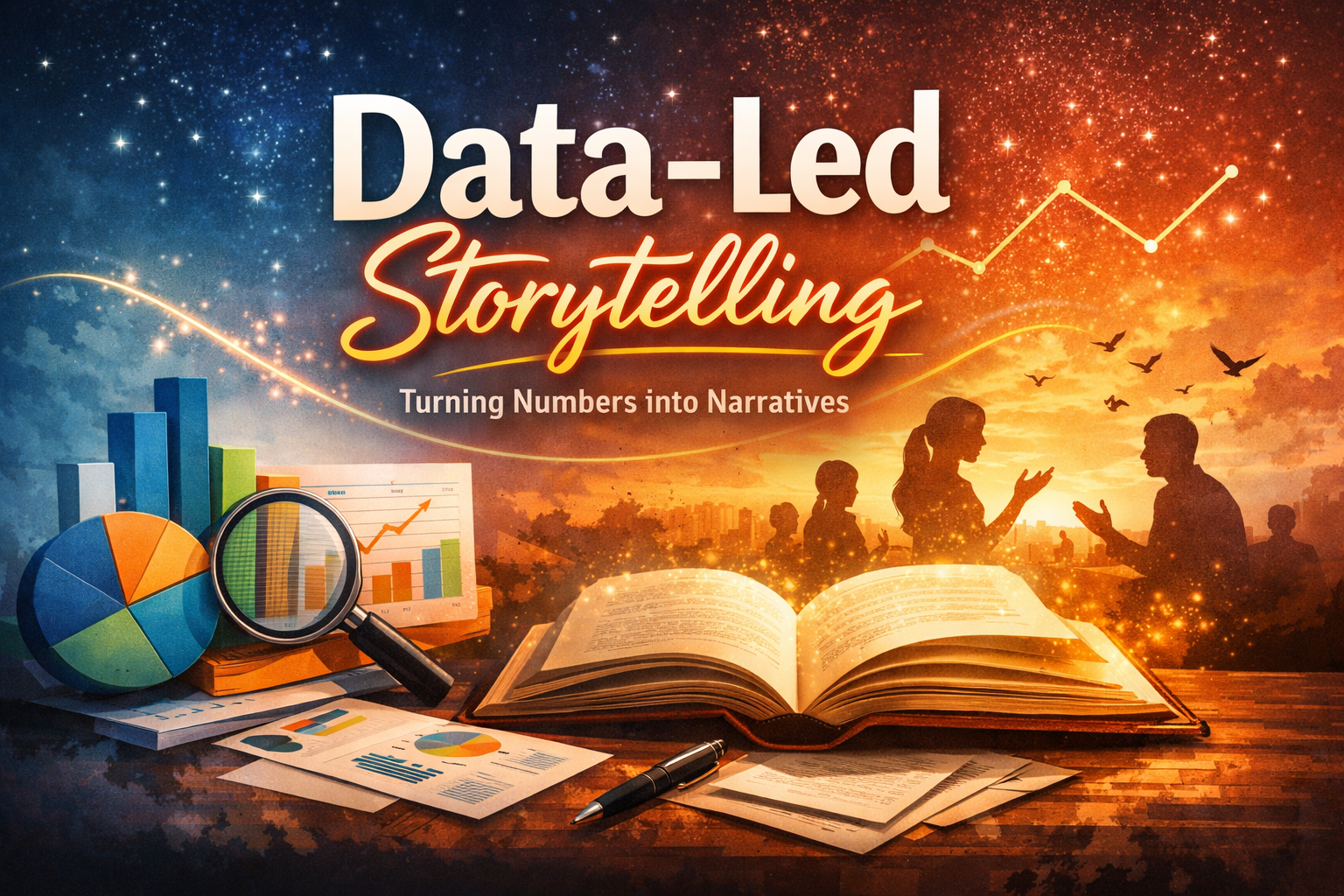
A few years ago, during a training session with rural women entrepreneurs, I showed a simple chart: “Income growth over 6 months.”
No reaction.
Then I asked one participant, Sunita, to share her journey. She spoke about how she went from earning ₹2,000 to ₹8,000 per month. Her voice trembled with pride.
I displayed the same chart again.
This time, the room felt different.
The data hadn’t changed. The story had.
That’s when I realized: 👉 Data informs… but storytelling transforms.
Welcome to the world of Data-Led Storytelling—where logic meets emotion, and insights become impact.
🚀 What is Data-Led Storytelling?
Data-led storytelling is the art of combining data, narrative, and visuals to communicate insights in a way that is meaningful, memorable, and actionable.
Stanford Research shows stories are 22x more memorable than facts alone
Google’s People-First Content Guidelines (2026) prioritize content that demonstrates real experience and usefulness
❓ FAQs on Data-Led Storytelling
1. What is data storytelling?
Data storytelling is the process of combining data, narrative, and visuals to communicate insights in a clear, engaging, and actionable way.
2. What are the 4 types of storytelling?
The four key types are: 1. Personal storytelling 2. Data storytelling 3. Vision storytelling 4. Customer/impact storytelling
3. What does it mean to be data-led?
Being data-led means making decisions based on data insights and evidence, rather than assumptions or intuition.
4. What is purpose-led storytelling?
Purpose-led storytelling focuses on communicating a clear mission or meaningful impact, answering the question: “Why does this matter?”
5. What are some data-led storytelling examples?
Example include: 1. Business reports combining sales data with strategy insights 2. NGO impact reports linking statistics with real-life stories 3. Training sessions using data to explain real outcomes
6. What are data storytelling examples?
Examples include: 1. Marketing campaigns explained through customer data 2. Employee feedback data shared with narratives 3. Educational progress shown through student success stories
7. What is a data storytelling PPT?
A data storytelling PPT is a presentation that uses charts, visuals, and a narrative flow (problem → insight → solution) to communicate data effectively.
8. What are data visualization storytelling examples?
Examples include: 1. Line graphs showing trends with key highlights 2. Bar charts explaining comparisons with context 3. Infographics combining visuals and insights
9. Are there courses for data storytelling?
Yes, courses are available on platforms like Coursera, Udemy, and LinkedIn Learning, focusing on storytelling, visualization, and data communication skills.
💡 Final Thought: Data + Emotion = Impact
Data tells you what is happening. Stories tell you why it matters.
And in a world full of information…
👉 The people who succeed are not those who have data 👉 But those who can move people with it
✍️ Author Bio
Sharad Pawar Freelance Trainer | Life Skills Coach | Founder of lifeskills2you.com
Sharad specializes in communication, leadership, and personal development training. With years of on-ground experience working with communities, professionals, and organizations, Brings a unique blend of real-life insights and practical frameworks into his writing and training sessions.
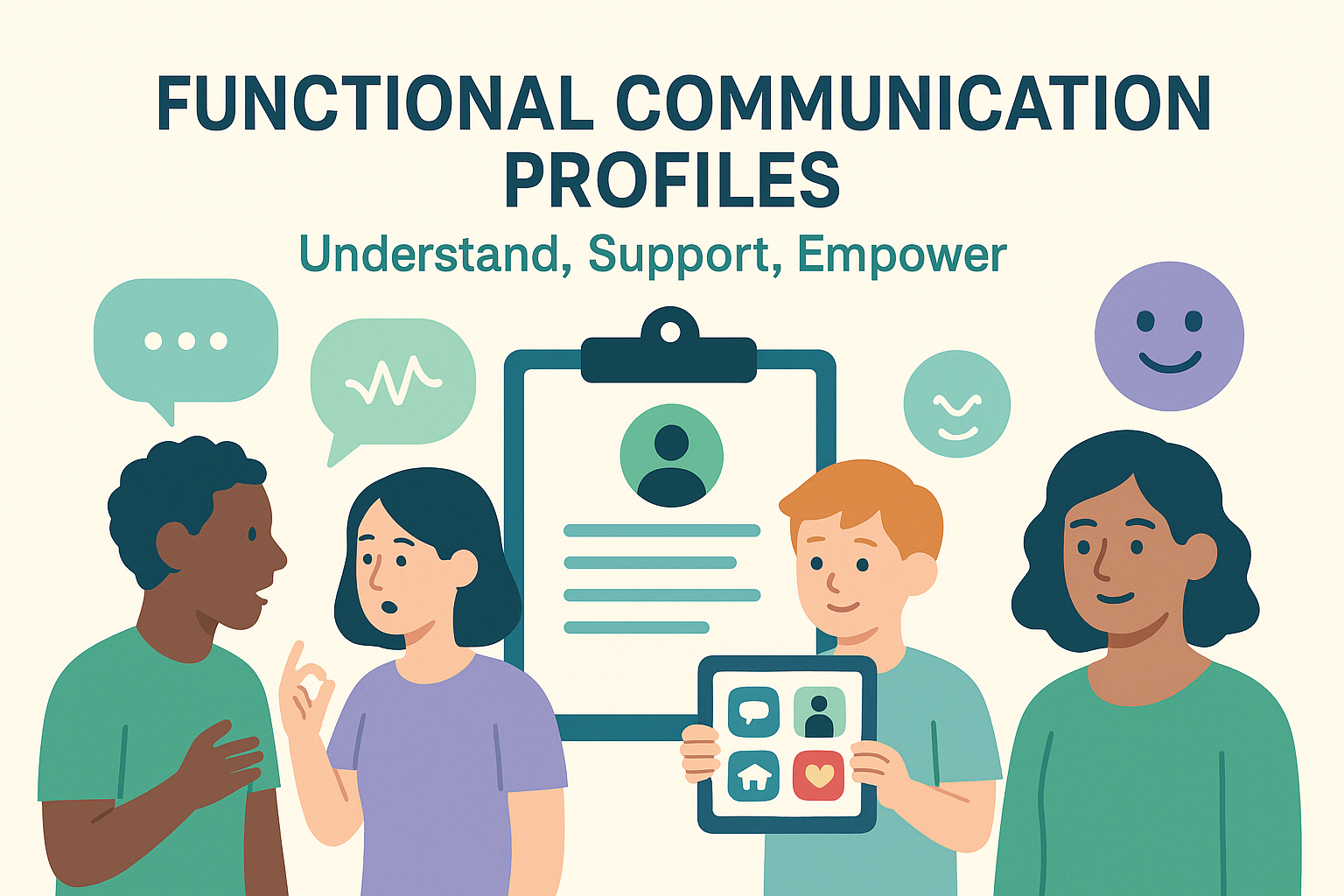
Introduction: Master the art of understanding and utilizing Functional Communication Profiles to boost personal and professional growth. Learn how to decode communication styles and create more meaningful connections.
Have you ever felt like you’re speaking, but nobody is really hearing you? Or maybe you’ve struggled to connect with someone who just doesn’t seem to “get” what you’re saying? Don’t worry—you’re not alone. Communication isn’t just about talking; it’s about being understood. That’s where Functional Communication Profiles come in. In this blog, we’re diving deep into this game-changing tool and showing you how it can transform your relationships, your confidence, and even your career.
What Are Functional Communication Profiles?
Before we jump into the how-to, let’s tackle the “what.” A Functional Communication Profile (FCP) is essentially a personalized map of someone’s communication style, strengths, and areas for improvement. It focuses on how someone expresses needs, understands others, responds to different situations, and uses both verbal and non-verbal cues.
Think of it as a blueprint for effective interaction—especially useful in personal development, education, therapy, leadership, and team dynamics.
Why Do Functional Communication Profiles Matter?
Imagine trying to navigate a foreign country without a map. That’s what communication feels like when you don’t understand the other person’s style. Here’s why these profiles are so important:
They promote understanding: You learn not just what someone is saying, but why and how they say it.
They foster empathy: When you understand someone’s communication style, you become more patient and flexible.
They improve collaboration: Whether at work, home, or school, better communication leads to smoother teamwork.
You might be wondering—how do you create an FCP? Great question. Here’s a simplified guide:
Step 1: Observation
Start by watching how the individual communicates in different settings. Take notes on behaviors, preferences, and struggles.
Step 2: Interviews and Surveys
Speak with caregivers, teachers, or colleagues to gather more context.
Step 3: Formal Assessments
Use tools like the Functional Communication Profile–Revised (FCP-R) or Social Communication Questionnaire (SCQ).
Step 4: Analyze and Document
Summarize findings in a clear, structured format that highlights strengths, needs, and strategies.
Step 5: Action Plan
Use the profile to design personalized strategies for enhancing communication.
Practical Applications in Real Life
Now, let’s bring theory to life. Here’s how understanding and utilizing Functional Communication Profiles can make a real difference:
In Education
Teachers can tailor their teaching methods to suit students’ communication styles, leading to improved learning outcomes.
In Therapy
Therapists can use FCPs to design interventions that truly meet a client’s needs—especially for those with autism, ADHD, or speech delays.
In the Workplace
Managers can create better teams by understanding how employees best give and receive feedback.
In Relationships
Couples and families can resolve conflicts faster when they understand each other’s communication profiles.
Signs That You Need a Functional Communication Profile
Still unsure if this applies to you or someone you know? Here are a few signs:
Frequent misunderstandings
Difficulty expressing needs or emotions
Trouble following directions
Avoidance of conversations
Social withdrawal
Sound familiar? Then it’s time to dive into understanding and utilizing Functional Communication Profiles.
Tips to Use Functional Communication Profiles Effectively
1. Start Small
Focus on one or two areas first—like improving receptive skills or using more eye contact.
2. Be Patient
Communication habits don’t change overnight. Progress takes time.
3. Use Visual Aids
For some people, pictures or gestures work better than words.
4. Practice Regularly
Set daily communication goals and stick to them.
5. Celebrate Wins
Even small improvements are worth acknowledging.
Tools and Resources You Can Use
If you want to take things a step further, there are plenty of resources out there to help:
The Hanen Centre (www.hanen.org) offers great tools for speech and communication development.
The American Speech-Language-Hearing Association (ASHA) (www.asha.org) has free resources for communication disorders and strategies.
Conclusion: Your Communication Superpower Awaits
In a world buzzing with noise, clarity is the real superpower. By truly committing to understanding and utilizing Functional Communication Profiles, you don’t just decode how others communicate—you unlock your own ability to connect deeply, lead effectively, and grow intentionally.
Functional Communication Profiles aren’t just for speech therapists or educators. They’re tools that anyone—yes, you—can use to transform conversations, build stronger relationships, and thrive in personal and professional settings.
So, whether you’re coaching a team, teaching a class, parenting a child, or simply striving to be heard and understood better—this is your chance to step up your communication game. Start small. Stay curious. And remember: “Communication is the bridge between confusion and clarity.”
Call to Action
Thank you for exploring this insightful article on understanding and utilizing Functional Communication Profiles. If you’re hungry for more knowledge, don’t miss out on our other engaging articles waiting for you. Dive into our treasure trove of wisdom and discover new perspectives on related topics. Click Our Blog and How to Guide to embark on your next adventure.
Happy reading—and even happier communicating! 💬✨
10 Unique FAQs About Functional Communication Profiles
1. What exactly is a Functional Communication Profile?
It’s a detailed assessment of an individual’s communication skills, including how they express, receive, and respond to messages in different contexts.
2. Who can benefit from using Functional Communication Profiles?
Everyone—from children with learning difficulties to professionals in leadership roles—can benefit by improving self-awareness and interpersonal skills.
3. Is this tool only for people with speech or language disorders?
Not at all. While commonly used in therapy and education, FCPs are also valuable in everyday communication and team dynamics.
4. How often should a Functional Communication Profile be updated?
Ideally, every 6 to 12 months, or whenever there’s a noticeable change in communication ability or context (like a new job or life phase).
5. Can parents create a Functional Communication Profile for their child?
Yes! With observation, feedback, and available resources, parents can start forming a basic profile to better support their child.
6. What tools are used to assess Functional Communication?
Common tools include the FCP-R (Functional Communication Profile–Revised), informal checklists, interviews, and observations.
7. How does understanding an FCP help in conflict resolution?
It helps identify miscommunication triggers, enabling more tailored and empathetic responses during disagreements.
8. Can FCPs be integrated into workplace communication training?
Absolutely. Many HR and leadership development programs now include communication profiling to build stronger teams.
9. How do I know if my communication profile is affecting my relationships?
If you frequently feel misunderstood, unheard, or experience repetitive conflicts, a communication profile can offer clarity.
10. Are there apps or tech tools that support communication profiling?
Yes, tools like Proloquo2Go (for AAC users), communication style quizzes, and even AI-based interaction analytics are making profiling more accessible.
According to a 2023 report by Grammarly Business, ineffective communication costs U.S. businesses an estimated $1.2 trillion annually. That’s not just a dent in the budget—it’s a communication crisis. Whether it’s missed deadlines, unclear messaging, or disengaged teams, the ripple effects are massive. And yet, most companies still don’t have a communication strategist in place.
What Is Communication Strategy?
Communication strategy is more than a buzzword—it’s a roadmap. It’s the process of crafting, delivering, and managing messages to achieve specific goals. Whether you’re launching a product, managing a brand, or leading a social movement, strategy makes communication intentional and impactful.
A communication strategist is the mastermind behind that roadmap. Their job is to ensure the right message reaches the right audience at the right time using the right platform. They bring clarity to chaos, turning complex goals into compelling narratives that resonate.
Thesis Statement
In this article, we’ll unpack what a communication strategist really does, the skills they need, and the game-changing impact they can have on businesses, organizations, and society as a whole.
II. What Exactly Does a Communication Strategist Do? (Key Responsibilities)
A. Goal Setting and Alignment
One of the first tasks a communication strategist tackles is understanding the organization’s goals. Are you looking to build brand awareness? Increase sales? Change public perception? They translate these broad objectives into measurable communication goals. From there, they define Key Performance Indicators (KPIs) like engagement rates, brand sentiment, or media reach to track progress.
B. Audience Analysis and Segmentation
Great communication starts with listening. Strategists dive deep into audience demographics, psychographics, and behavior patterns. They create audience personas to ensure messaging hits the mark. They also decide which channels—email, social media, webinars, etc.—are most effective for each segment.
C. Message Development and Framing
Every brand has a story. Strategists craft messages that reflect an organization’s mission while also being relatable and actionable. They frame key messages in ways that trigger emotional responses and drive behavior. Consistency is key—across platforms, departments, and even time zones.
D. Channel Selection and Management
A strategist is like a DJ spinning the right records at the right time. They choose the most impactful communication channels and orchestrate multi-channel campaigns. Whether it’s an Instagram campaign or an internal Slack announcement, they manage execution while ensuring tone and timing are spot on.
E. Crisis Communication Planning
When things go south—product recalls, PR issues, or internal conflict—strategists are the first responders. They develop crisis communication protocols, prepare holding statements, and guide leadership on how to maintain transparency and trust.
F. Measurement and Evaluation
No plan is complete without performance tracking. Strategists use analytics tools to evaluate what’s working and what’s not. They provide insightful reports that help teams adapt and evolve.
III. Essential Skills of a Successful Communication Strategist
1. Strong Communication Skills (Written and Verbal)
📢 Crafting persuasive copy, delivering compelling presentations, and facilitating cross-functional meetings are a must.
2. Strategic Thinking and Planning
🧠 They must be visionaries who understand long-term objectives and can map out how communication helps achieve them.
3. Analytical and Research Skills
📊 From studying audience behavior to analyzing campaign results, data is a strategist’s best friend. They must be comfortable with tools like Google Analytics, HubSpot, or Tableau.
4. Interpersonal and Collaboration Skills
🤝 Strategists work with creatives, executives, marketers, and more. They must navigate diverse personalities and priorities with finesse.
5. Adaptability and Problem-Solving
🌀 Markets shift. Crises happen. Trends evolve. Strategists need a calm, creative mindset to pivot without panic.
6. Understanding of Communication Technologies and Trends
📱 From AI-powered chatbots to TikTok trends, they stay ahead of the curve.
7. Ethical Considerations
⚖️ Transparency and authenticity are non-negotiables. Strategists must communicate with integrity and protect audience trust.
IV. The Impact and Importance of a Communication Strategist
💬 Stakeholder Engagement: Strong communication nurtures relationships with investors, employees, and customers.
👥 Internal Productivity: Employees perform better when they understand the ‘why’ behind their work.
🚨 Crisis Management: A quick, honest response can save a brand’s reputation.
🎯 Goal Alignment: Strategy-driven communication ensures teams are rowing in the same direction.
In Other Contexts (e.g., Non-profits, Government)
📢 Public Awareness: Campaigns led by strategists can educate communities and shift societal behaviors.
🏛️ Transparency: Open communication builds trust in public institutions.
🌍 Community Engagement: Strategists foster collaboration and dialogue, especially in grassroots efforts.
V. The Future of Communication Strategy
1. The Role of Emerging Technologies (AI, Automation)
AI tools are transforming how messages are crafted and delivered. Chatbots, predictive analytics, and content automation streamline communication—but strategists ensure it stays human.
2. The Increasing Importance of Data-Driven Communication
Gone are the days of guesswork. Strategists now rely on data-backed insights to fine-tune every campaign.
3. The Evolving Media Landscape
From influencer marketing to voice search, platforms are shifting. A good strategist adapts quickly and embraces innovation.
4. The Growing Need for Authentic and Transparent Communication
In a skeptical, digitally-savvy world, people crave honesty. Strategists must lead with integrity and purpose.
“Communication is no longer just a skill—it’s a strategy for survival.”
VI. Conclusion
So, what have we discovered? A communication strategist isn’t just a glorified writer or social media planner. They’re visionaries, analysts, and storytellers rolled into one. Their job is to bring structure to chaos, strategy to spontaneity, and purpose to every message.
In today’s hyper-connected, fast-paced world, communication can’t be an afterthought—it must be a core component of your growth strategy. With the right strategist by your side, your message won’t just reach your audience—it will move them.
Thank you for exploring this insightful article. If you’re hungry for more knowledge, don’t miss out on our other engaging articles waiting for you. Dive into our treasure trove of wisdom and discover new perspectives on related topics. Click ‘Our Blog‘ and ‘How to Guide‘ to embark on your next adventure. Happy reading!
FAQs About Communication Strategists
1. What industries hire communication strategists?
Almost every industry—from tech and healthcare to nonprofits and government—needs them to align messaging with goals.
2. What’s the difference between a communication strategist and a PR professional?
PR focuses on media relations; strategists look at the bigger picture, including internal comms, brand messaging, and digital.
3. Do communication strategists need a background in marketing?
It helps, but more important are skills in analysis, storytelling, and audience research.
4. Can small businesses benefit from a communication strategist?
Absolutely! Clear messaging can help startups stand out and build loyal audiences early on.
5. How does a communication strategist work with leadership?
They advise leaders on how to communicate effectively with stakeholders and during times of crisis.
6. Is AI replacing communication strategists?
Nope. AI assists with data and automation, but strategists provide the creativity and empathy machines can’t.
7. What are some common tools used by communication strategists?
Canva, Google Analytics, Hootsuite, Mailchimp, Trello, and CRM platforms like HubSpot.
8. Do communication strategists need to know design or video editing?
Not necessarily, but understanding visual storytelling helps collaborate better with creative teams.
9. What education or certification is best for this role?
Degrees in communication, PR, or marketing are common. Certifications from HubSpot, Coursera, or AMA can boost credibility.
10. Where can I learn more about communication strategy?
Check out resources like HubSpot Blog, Content Marketing Institute, or forbes.com for insights and trends.
In the contemporary bustling realm of professional engagements, the paramount importance of effective communication skills cannot be overstated. Amidst these vital competencies, the practice of active listening emerges as a foundational skill, exerting a profound influence on the trajectory of one’s career. The mastery of active listening not only serves to augment interpersonal dynamics but also assumes the role of a catalyst in positioning individuals as invaluable assets within the fabric of any given team or organization. Within the confines of this discourse, we shall embark upon an exploration of the transformative potency inherent in the act of active listening, discerning its potential to propel one’s career trajectory onto a trajectory of unprecedented growth and development.
Understanding the Essence of Active Listening
Active listening is more than just hearing words; it involves a deep level of engagement and understanding between individuals. At its core, active listening is about being fully present and attuned to the speaker, both verbally and non-verbally. It requires not only hearing what is being said but also comprehending the underlying emotions, intentions, and perspectives behind the words.
Engaging Fully with the Speaker
Active listening begins with giving the speaker your undivided attention. This means putting aside distractions, such as smartphones or internal thoughts, and focusing solely on the person speaking. By maintaining eye contact, nodding, and using affirmative gestures, you signal to the speaker that you are actively engaged and receptive to their message.
Understanding Verbal and Non-Verbal Cues
Effective active listening goes beyond listening to words; it involves interpreting non-verbal cues such as facial expressions, body language, and tone of voice. These cues provide valuable insights into the speaker’s emotions and attitudes, allowing you to grasp the full meaning behind their words.
Demonstrating Empathy and Understanding
Empathy lies at the heart of active listening. It involves putting yourself in the speaker’s shoes, acknowledging their feelings, and responding with compassion and understanding. By demonstrating empathy, you create a supportive and non-judgmental environment where the speaker feels valued and validated.
Responding Thoughtfully
Active listening is a two-way process that requires thoughtful responses from the listener. This may involve paraphrasing or summarizing what the speaker has said to ensure mutual understanding. Asking clarifying questions and providing feedback also demonstrate your commitment to fully comprehending the speaker’s message.
Creating Meaningful Connections
Ultimately, active listening is about building meaningful connections and fostering trust and rapport with others. When individuals feel heard, understood, and respected, they are more likely to open up and engage in meaningful dialogue. This paves the way for productive collaborations, effective problem-solving, and stronger relationships both in the workplace and beyond.
Cultivating a Culture of Listening
In organizations, fostering a culture of active listening is essential for promoting teamwork, innovation, and employee satisfaction. Leaders play a crucial role in modeling and reinforcing active listening behaviors, creating an environment where every voice is heard and valued.
active listening is a fundamental skill that transcends mere hearing; it is a dynamic and transformative process that enriches communication, fosters understanding, and strengthens relationships. By mastering the essence of active listening, individuals can unlock a wealth of opportunities for personal and professional growth.
Techniques for Practicing Active Listening
Active listening is a skill that can be honed through consistent practice and dedication. By employing specific techniques, you can enhance your ability to engage deeply with others and foster meaningful connections. Here are some actionable strategies to help you master the art of active listening:
Give Your Full Attention
In today’s digital age, distractions abound, making it challenging to stay fully present in conversations. When practicing active listening, make a conscious effort to eliminate distractions and focus entirely on the speaker. Put away your phone, close unnecessary tabs on your computer, and create a conducive environment for attentive listening. Maintain eye contact with the speaker, nod occasionally to signal understanding, and use affirmative gestures to convey your engagement. By giving your undivided attention, you demonstrate respect and appreciation for the speaker’s message.
Listen Without Judgment
One of the cornerstones of active listening is suspending judgment and approaching conversations with an open mind. Avoid jumping to conclusions or formulating responses prematurely. Instead, strive to create a safe and non-judgmental space where the speaker feels comfortable expressing themselves authentically. Practice empathy by putting yourself in the speaker’s shoes and striving to understand their perspective without bias. Remember that everyone has their own unique experiences and viewpoints, and true understanding requires empathy and acceptance.
Reflect and Clarify
Effective communication hinges on mutual understanding, which can be facilitated through reflection and clarification. After the speaker has shared their thoughts, take a moment to paraphrase what you’ve heard in your own words. This demonstrates active engagement and allows the speaker to confirm or clarify their message if necessary. Additionally, use open-ended questions to delve deeper into the speaker’s thoughts and feelings. Avoid interrogative or leading questions that may inhibit open dialogue. Instead, aim to foster a collaborative exchange of ideas through thoughtful inquiry.
Empathize with Empathy
Empathy lies at the heart of active listening, enabling you to connect with others on a deeper emotional level. As you listen to the speaker’s words, pay attention to their tone of voice, body language, and facial expressions. Practice active empathy by acknowledging the speaker’s feelings and validating their experiences. You don’t have to agree with everything they say, but demonstrating empathy fosters trust and strengthens the interpersonal bond. Remember that empathy is not just about understanding; it’s about showing compassion and support for the speaker’s journey.
To get more insights like this article put your email and subscribe.
Give Your Full Attention: In today’s digital age, distractions abound, making it challenging to stay fully present in conversations. When practicing active listening, make a conscious effort to eliminate distractions and focus entirely on the speaker. Put away your phone, close unnecessary tabs on your computer, and create a conducive environment for attentive listening. Maintain eye contact with the speaker, nod occasionally to signal understanding, and use affirmative gestures to convey your engagement. By giving your undivided attention, you demonstrate respect and appreciation for the speaker’s message.
Listen Without Judgment: One of the cornerstones of active listening is suspending judgment and approaching conversations with an open mind. Avoid jumping to conclusions or formulating responses prematurely. Instead, strive to create a safe and non-judgmental space where the speaker feels comfortable expressing themselves authentically. Practice empathy by putting yourself in the speaker’s shoes and striving to understand their perspective without bias. Remember that everyone has their own unique experiences and viewpoints, and true understanding requires empathy and acceptance.
Reflect and Clarify: Effective communication hinges on mutual understanding, which can be facilitated through reflection and clarification. After the speaker has shared their thoughts, take a moment to paraphrase what you’ve heard in your own words. This demonstrates active engagement and allows the speaker to confirm or clarify their message if necessary. Additionally, use open-ended questions to delve deeper into the speaker’s thoughts and feelings. Avoid interrogative or leading questions that may inhibit open dialogue. Instead, aim to foster a collaborative exchange of ideas through thoughtful inquiry.
Empathize with Empathy: Empathy lies at the heart of active listening, enabling you to connect with others on a deeper emotional level. As you listen to the speaker’s words, pay attention to their tone of voice, body language, and facial expressions. These non-verbal cues offer valuable insights into their emotions and underlying concerns. Practice active empathy by acknowledging the speaker’s feelings and validating their experiences. You don’t have to agree with everything they say, but demonstrating empathy fosters trust and strengthens the interpersonal bond. Remember that empathy is not just about understanding; it’s about showing compassion and support for the speaker’s journey.
By incorporating these techniques into your daily interactions, you can cultivate a reputation as a skilled and empathetic communicator. Active listening not only enriches your personal relationships but also enhances your professional effectiveness. Invest time and effort into mastering these techniques, and watch as your communication skills flourish, opening doors to new opportunities and deeper connections.
Active listening is more than just hearing words; it’s about tuning into the speaker’s emotions, intentions, and unspoken messages. It’s a dance of empathy, curiosity, and genuine connection.
Integrating Active Listening into Your Career Growth Strategy
Your career growth strategy is like a roadmap guiding you towards your professional goals. Integrating active listening into this strategy enhances every aspect of your journey, from building relationships to problem-solving and leadership development. Let’s delve into the details of how you can effectively incorporate active listening into your career growth plan:
1. Seek Feedback and Self-Reflection
One of the first steps in integrating active listening into your career strategy is to actively seek feedback on your listening skills. Request input from colleagues, supervisors, or mentors about how effectively you engage in conversations and understand others’ perspectives. Reflect on this feedback and identify areas where you can improve. Self-awareness is key to personal and professional growth, and acknowledging areas for development sets the foundation for improvement.
2. Lead by Example
As you progress in your career, your actions speak volumes. By exemplifying active listening in your interactions with others, you set a positive example for your colleagues and team members. Practice attentive listening during meetings, one-on-one discussions, and brainstorming sessions. Demonstrate empathy, ask clarifying questions, and show genuine interest in others’ viewpoints. Your commitment to active listening fosters a culture of collaboration and mutual respect within your workplace.
3. Invest in Training and Development
Just as you invest time and effort into honing technical skills relevant to your profession, consider allocating resources to enhance your communication and listening abilities. Attend workshops, seminars, or online courses focused on communication, emotional intelligence, and active listening. These opportunities provide valuable insights, practical strategies, and opportunities for hands-on practice. By continuously investing in your professional development, you sharpen your competitive edge and expand your skill set.
4. Practice Curiosity and Open-Mindedness
An integral part of active listening is maintaining a curious and open-minded attitude towards others’ perspectives. Approach conversations with a genuine desire to learn and understand, rather than to simply respond or assert your own opinions. Ask open-ended questions that encourage dialogue and exploration of ideas. Embrace diversity of thought and be receptive to viewpoints that differ from your own. Cultivating a mindset of curiosity and openness fosters innovation, creativity, and meaningful connections in your professional relationships.
5. Implement Feedback Loops and Continuous Improvement
Integrating active listening into your career growth strategy is an ongoing process that requires consistent effort and reflection. Establish feedback loops within your professional network to solicit input on your communication and listening skills regularly. Actively seek opportunities to apply feedback and refine your approach to active listening. Celebrate successes and learn from challenges, using each experience as a stepping stone towards becoming a more effective communicator and leader.
By incorporating these strategies into your career growth plan, you harness the transformative power of active listening to propel your professional journey forward. From building strong relationships to fostering innovation and leadership development, active listening serves as a cornerstone skill that amplifies your impact and unlocks new opportunities for success. Embrace the journey of self-discovery and continuous improvement, and watch as your career flourishes with each attentive ear and open heart.
Additional Strategies for Integrating Active Listening into Your Career Growth Plan
In addition to the foundational strategies outlined earlier, there are several additional tactics you can incorporate into your career growth plan to further enhance your active listening skills and maximize their impact on your professional journey:
1. Cultivate Empathy and Emotional Intelligence
Empathy is the ability to understand and share the feelings of others, and it is closely intertwined with active listening. By cultivating empathy and emotional intelligence, you deepen your connections with colleagues, clients, and stakeholders. Practice putting yourself in others’ shoes, acknowledging their emotions, and responding with compassion and understanding. Recognize that effective communication is not just about conveying information but also about acknowledging and validating others’ feelings and experiences.
2. Develop Non-Verbal Communication Awareness
Active listening extends beyond verbal communication; it also involves attentively observing and interpreting non-verbal cues such as body language, facial expressions, and tone of voice. Develop your awareness of non-verbal communication signals to gain deeper insights into others’ thoughts and feelings. Pay attention to subtle cues such as posture shifts, eye contact, and gestures, which can provide valuable context and enhance your understanding of the speaker’s message.
3. Practice Mindfulness and Presence
Mindfulness involves being fully present in the moment without judgment or distraction, and it is a powerful tool for enhancing active listening. Incorporate mindfulness practices into your daily routine, such as meditation, deep breathing exercises, or simply taking moments of intentional pause throughout your day. Cultivate a mindset of presence and attentiveness in your interactions, allowing you to engage more fully with others and respond thoughtfully to their needs and concerns.
4. Foster a Culture of Psychological Safety
Psychological safety refers to the belief that one can speak up, take risks, and express ideas or concerns without fear of reprisal or judgment. As you integrate active listening into your career growth plan, strive to create an environment of psychological safety within your workplace or team. Encourage open communication, respect diverse perspectives, and actively solicit input from all members. By fostering a culture where everyone feels valued and heard, you create fertile ground for collaboration, innovation, and collective success.
5. Leverage Technology for Enhanced Communication
In today’s digital age, technology offers a plethora of tools and platforms that can facilitate and enhance communication. Explore technological solutions such as video conferencing, instant messaging, or collaboration software that support active listening and engagement. Use features such as chat functions, polling tools, or virtual whiteboards to encourage participation and feedback in virtual meetings or remote work environments. Embrace technology as a means to connect and communicate effectively, regardless of geographical or logistical barriers.
6. Engage in Active Listening Exercises and Role-Playing
To strengthen your active listening skills, engage in purposeful exercises and role-playing scenarios that simulate real-life communication challenges. Partner with colleagues or mentors to practice active listening techniques in a safe and supportive environment. Experiment with different listening styles, such as reflective listening or empathetic listening, and solicit feedback on your effectiveness. Incorporate active listening exercises into team meetings, training sessions, or professional development workshops to promote skill-building and collaborative learning.
7. Commit to Lifelong Learning and Growth
Finally, recognize that active listening, like any skill, requires ongoing practice and refinement. Commit to lifelong learning and growth by seeking out opportunities to expand your knowledge, deepen your understanding, and refine your communication abilities. Stay curious, stay humble, and stay open to feedback and new perspectives. Embrace challenges as opportunities for growth, and approach each interaction as a chance to learn and improve. By fostering a mindset of continuous learning and development, you position yourself for long-term success and fulfillment in your career.
Incorporating these additional strategies into your career growth plan will further amplify the impact of active listening on your professional journey. By cultivating empathy, developing non-verbal communication awareness, practicing mindfulness, fostering psychological safety, leveraging technology, engaging in active listening exercises, and committing to lifelong learning, you position yourself as a dynamic and influential communicator and leader. Embrace these strategies as catalysts for personal and professional growth, and watch as your career flourishes with each attentive ear and open heart.
Attention Readers!
As you dive into our blog post on active listening techniques, we encourage you to remember that mastering this skill requires practice. Just as a musician hones their craft through consistent rehearsal, active listening improves with dedicated effort. So, as you absorb the insights and strategies shared here, consider how you can apply them in your daily interactions. Take the time to actively engage with others, listen attentively, and strive to understand deeply. Remember, like any skill worth mastering, the more you practice active listening, the more proficient you’ll become
Conclusion: Unlock Your Career Potential with Active Listening
In conclusion, mastering active listening is not just a valuable skill; it’s a catalyst for career advancement and personal growth. By honing your ability to listen attentively, empathize deeply, and communicate effectively, you position yourself as a dynamic and influential presence in any professional setting. Embrace the strategies outlined in this article and embark on a journey of self-discovery and professional success.
Thank you for exploring this insightful article. If you’re hungry for more knowledge, don’t miss out on our other engaging articles waiting for you. Dive into our treasure trove of wisdom and discover new perspectives on related topics. Click ‘Our Blog‘ and ‘How to Guide‘ to embark on your next adventure. Happy reading!
Welcome to a transformative journey where the power of words meets the art of destiny shaping. In today’s fast-paced world, effective communication skills, especially public speaking, are not just valuable—they are indispensable. As a freelance trainer deeply passionate about empowering individuals and organizations, I invite you to dive into the realm of public speaking mastery.
Table of Contents
Unveiling the Transformative Potential of Public Speaking Skills
The Crucial Role of Confidence in Mastering Public Speaking
Public speaking, often hailed as an art form, is not merely about words—it’s about confidence. The ability to stand before an audience and speak with conviction is a skill that can transform lives. In the realm of public speaking, confidence isn’t just a desirable trait; it’s your staunchest ally. Confident speakers possess the remarkable ability to captivate audiences, leaving a lasting impact on listeners.
Embrace a powerful mantra: “Confidence is not contingent on others liking me. It’s the unwavering belief that I’ll be just fine even if they don’t.” This profound shift in perspective can work wonders, revolutionizing your approach to public speaking. By nurturing this self-assurance, you’re not just delivering speeches; you’re shaping your destiny with every word spoken.
Conquering Stage Fright: A Journey Toward Self-Discovery
Stage fright, a universal experience, can be paralyzing. However, it’s crucial to recognize that courage isn’t the absence of fear; it’s the triumph over it. Conquering stage fright is more than overcoming nerves; it’s a transformative journey toward self-discovery and empowerment.
In this section, we’ll delve into practical techniques designed to help you conquer stage fright. By mastering these techniques, you allow your authentic voice to resonate, unhindered by anxiety. This journey isn’t just about overcoming fear; it’s about embracing your true self and allowing your inner confidence to shine. As you navigate through this process, you’re not just overcoming an obstacle; you’re moving closer to your destined success.
In the realm of public speaking, confidence and the ability to conquer stage fright are not mere skills; they are catalysts for personal and professional growth. As you continue to refine these abilities, you’re not just honing your communication skills; you’re sculpting a future where your voice reverberates with impact and purpose. Embrace the journey, for within it lies the power to transform not just your speeches, but your entire life’s trajectory.
Mastering the Art of Effective Communication: Unleashing the Power of Storytelling and Non-Verbal Mastery
The Profound Impact of Storytelling: A Journey into the Heart of Communication
Storytelling, a timeless art, possesses an extraordinary ability to captivate, inspire, and ignite change. It’s not merely about narrating events; it’s about crafting narratives that resonate deep within the human soul. Imagine stories as stepping stones leading you towards your destined future. Each tale is a transformative elixir, a potion of wisdom waiting to be consumed. To truly grasp its essence, embrace this philosophy: “In the world of words, the story is a powerful elixir—sip it slowly and let it transform you.”
Dive into the intricacies of storytelling, where characters come alive, emotions are palpable, and messages are woven seamlessly into the fabric of narratives. Through storytelling, you don’t just convey information; you create experiences, forging connections that endure in the hearts and minds of your audience. As you embark on this storytelling journey, you’re not just mastering an art form; you’re harnessing a force that can shape perspectives, evoke empathy, and influence destinies.
The Language of the Body and Voice: Unveiling the Secrets of Non-Verbal Communication
In the realm of effective communication, words are only a fraction of the story. Your body language and tone of voice are silent speakers, communicating messages as powerful as any spoken language. Understanding and mastering non-verbal communication is akin to deciphering an ancient, mystical language—one that holds the keys to meaningful connections and profound understanding.
Discover the nuances of non-verbal communication, where gestures, facial expressions, and vocal modulation become your allies. Your body, with its subtle movements, conveys confidence, sincerity, and empathy. Your voice, when modulated with finesse, carries nuances of emotion, emphasis, and conviction. As you delve into these skills, you’re not just refining your communication; you’re embarking on a journey where every gesture, every intonation, becomes a brushstroke on the canvas of your message.
With these skills honed, you don’t merely communicate; you express, connect, and influence. Your destiny unfolds with newfound opportunities as you navigate the world armed with the profound understanding that effective communication isn’t just about the words you choose—it’s about the entire symphony of expression, where every element harmonizes to create an impact that resonates far beyond the spoken moment.
Thank you for embarking on this empowering journey with me. Remember, your destiny lies not just in what you say, but how you say it. Embrace the art of public speaking, for within its realm, you’ll discover the transformative power to shape your future.
Thank you for exploring this insightful article! If you’re hungry for more knowledge, don’t miss out on our other engaging articles waiting for you. Dive into our treasure trove of wisdom and discover new perspectives on related topics. Click ‘Our Blog‘ and ‘How to Guide‘ to embark on your next adventure. Happy reading!
Frequently Asked Questions (FAQs) About Mastering Public Speaking Skills:
1. What is the significance of mastering public speaking skills in personal and professional development?
Ans. Mastering public speaking skills is crucial for personal and professional growth. It enhances your confidence, improves communication abilities, and opens doors to various opportunities in both personal and career spheres. Effective public speaking can boost self-esteem, leadership skills, and influence, paving the way for a successful future.
2. How can confidence be cultivated in public speaking, especially for those who struggle with stage fright?
Ans. Confidence in public speaking can be cultivated through practice, preparation, and positive self-talk. Embracing the mindset that it’s okay to make mistakes and focusing on the message rather than personal judgment can significantly boost confidence. Techniques like visualization, deep breathing, and desensitization to the audience can help overcome stage fright.
Ans. Storytelling is a fundamental aspect of effective communication because it engages emotions, captures attention, and makes information memorable. Stories create a connection between the speaker and the audience, making the message relatable and impactful. Through stories, complex ideas can be simplified, and messages can be communicated in a compelling and persuasive manner.
Ans. Non-verbal communication, including body language and vocal modulation, adds depth and sincerity to a speech. It conveys confidence, empathy, and authenticity, enhancing the audience’s understanding and trust. Positive body language, such as maintaining eye contact and using open gestures, creates a sense of connection, while vocal modulation adds emphasis and emotion, making the message more engaging and persuasive.
5. Are there any recommended resources, such as books or online courses, for further improving public speaking skills?
Ans. Yes, there are numerous resources available for individuals looking to enhance their public speaking skills. Books like “Talk Like TED” by Carmine Gallo and online platforms like Toastmasters International offer valuable insights and practical tips. Additionally, there are various online courses and YouTube channels dedicated to public speaking, providing tutorials, speech examples, and techniques to improve communication abilities.
6. How can mastering public speaking skills contribute to shaping one’s destiny in various aspects of life?
Ans. Mastering public speaking skills empowers individuals to express themselves effectively, influencing their personal and professional relationships, career opportunities, and overall life trajectory. Confident communicators can inspire change, build meaningful connections, and lead others, shaping their destiny by seizing opportunities and overcoming challenges with eloquence and conviction.