Meeting Equity Leadership: The Ultimate Guide

Introduction: Why Some Voices Still Stay Muted

Have you ever sat in a meeting where a few people dominate while others quietly disappear into the background?

Maybe you’ve seen it in online calls—cameras off, mics muted, ideas unspoken. Or in physical rooms where hierarchy silently decides who gets heard. You nod along, but deep inside, you wonder—Is this really collaboration?

This is exactly where Meeting Equity Leadership comes in.

In today’s rapid fire age, hybrid work culture, meetings are everywhere. Yet, most of them fail to create equal participation, psychological safety, and shared ownership. According to research from Harvard Business School, up to 70% of meeting time is dominated by a few individuals. That means the majority of voices remain unheard.

As a trainer working with teams across corporate and community sectors, I’ve personally seen how small changes in meeting culture can completely transform team energy. One rural women’s group I worked with went from silent participation to active decision-making—simply by restructuring how meetings were facilitated.

That’s the power of Meeting Equity Leadership.

This guide is not just theory. It’s a deep, practical roadmap backed by behavioral science, real-life experiences, and actionable tools you can start using today.

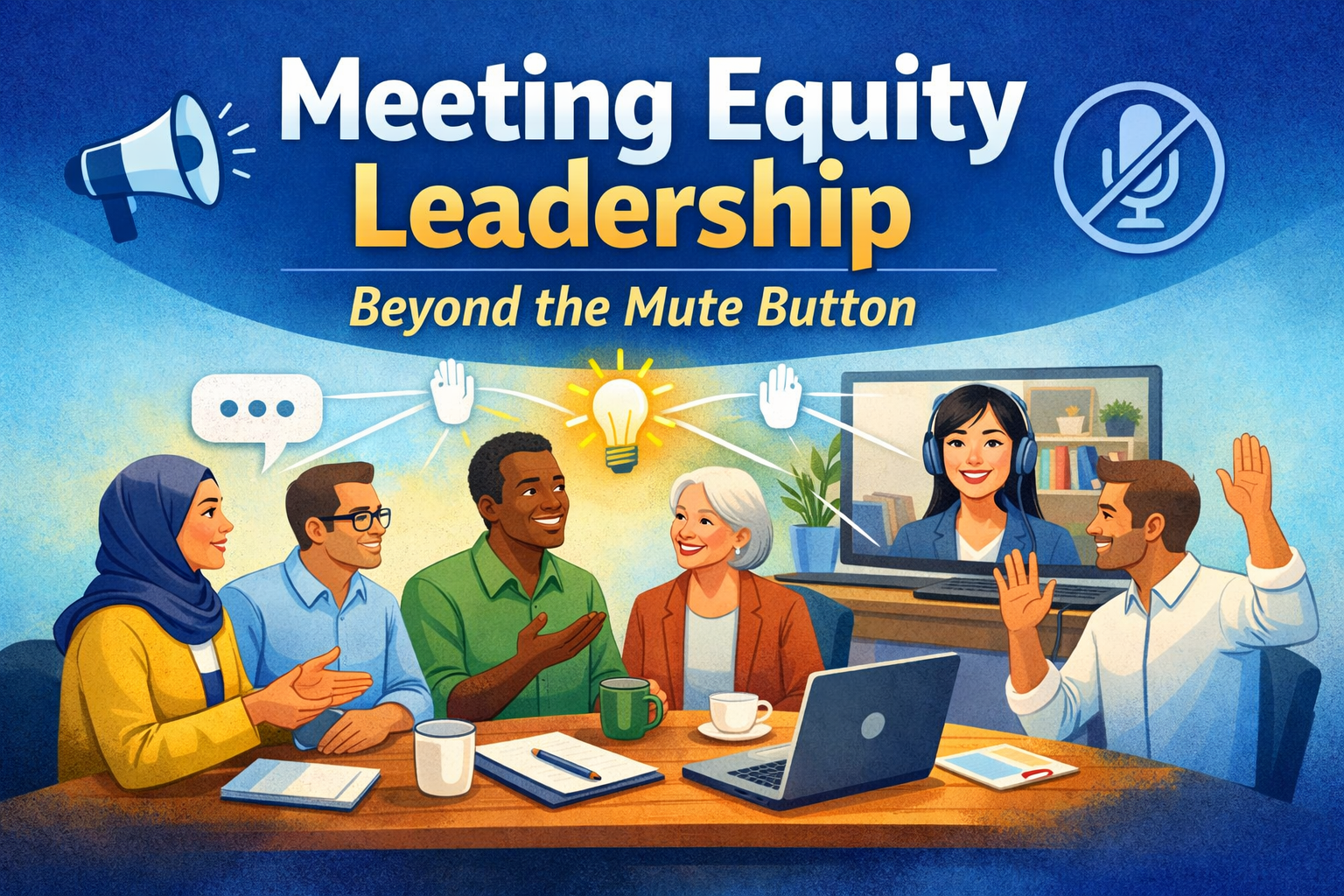
Let’s move beyond the mute button—and create meetings where every voice counts.


What Is Meeting Equity Leadership?

Meeting Equity Leadership is the practice of designing and facilitating meetings where every participant has a fair opportunity to contribute, influence, and be heard.

It combines principles from:

Key Elements of Meeting Equity Leadership

  • Equal speaking opportunities
  • Respect for diverse perspectives
  • Psychological safety
  • Structured participation
  • Conscious facilitation

👉 In simple words:
“It’s not about who speaks the loudest, but who gets the space to speak.”


Why Do Most Meetings Fail to Be Inclusive?

Let’s be honest—most meetings are not designed for equity.

Common Problems

  • Dominant personalities take over
  • Introverts remain silent
  • Hierarchy blocks honest input
  • Virtual fatigue reduces engagement
  • No clear facilitation structure

Real Example from Training

During a leadership workshop, I asked a team:

“Who speaks the most in your meetings?”

Everyone laughed—and pointed at the same two people.

When I asked, “Who has ideas but doesn’t speak?”
Almost half the room raised their hands.

That’s the hidden cost of poor Meeting Equity Leadership—lost innovation.


What Are the Benefits of Meeting Equity Leadership?

When you implement Meeting Equity Leadership, everything changes.

1. Better Decision-Making

Diverse perspectives lead to smarter decisions.

2. Increased Engagement

People feel valued—and they show up fully.

3. Stronger Team Trust

Psychological safety builds deeper connections.

4. Innovation Boost

New ideas come from unheard voices.

5. Reduced Conflict

Everyone feels included, reducing resentment.

👉 According to research from Google’s Project Aristotle, psychological safety is the #1 factor for high-performing teams.


How to Practice Meeting Equity Leadership (Step-by-Step)

Let’s get practical.

Step 1: Set Clear Meeting Intentions

Before the meeting, ask:

  • What is the goal?
  • Who needs to speak?
  • What decisions are expected?

👉 Without clarity, meetings become chaotic.


Step 2: Design Participation, Don’t Leave It to Chance

Use structured methods:

  • Round-robin sharing
  • Breakout discussions
  • Anonymous input tools

Pro Tip:
Use digital tools like
👉 Mentimeter
👉 Mural

These encourage equal participation.


Step 3: Create Psychological Safety

People speak when they feel safe.

How to build it:

  • Acknowledge all ideas
  • Avoid interrupting
  • Encourage dissent
  • Appreciate contributions

👉 “No idea is a bad idea” is not just a phrase—it’s a culture.


Step 4: Manage Dominant Voices

As a leader, you must gently balance participation.

Techniques:

  • “Let’s hear from someone who hasn’t spoken yet.”
  • Time limits for responses
  • Redirecting conversation

Step 5: Use Inclusive Language

Replace:

  • “Does anyone have anything?” ❌
    With
  • “Let’s hear from each person briefly.” ✅

Language shapes behavior.


Step 6: Rotate Facilitation Roles

Don’t always lead yourself.

Let others:

  • Facilitate
  • Take notes
  • Summarize

👉 This builds ownership and confidence.


Step 7: Close with Reflection

End meetings with:

  • What worked?
  • What can improve?

This creates continuous improvement in Meeting Equity Leadership.


What Are the Best Tools for Meeting Equity Leadership?

Here are some powerful tools:

ToolPurpose
MentimeterAnonymous input
Zoom PollsQuick engagement
MiroVisual collaboration
Google DocsShared note-taking

👉 Explore more tools at Atlassian Team Playbook


Real-Life Case Study: Transformation Through Meeting Equity Leadership

Case: Rural Women SHG Group

I worked with a Self-Help Group where:

  • Only leaders spoke
  • Others stayed silent
  • Decisions were one-sided

Intervention:

  • Introduced round-robin sharing
  • Used visual voting
  • Encouraged storytelling

Result:

  • 80% participation increase
  • Better financial decisions
  • Stronger group trust

This is the real impact of Meeting Equity Leadership.


What Psychological Theories Support Meeting Equity Leadership?

1. Social Loafing Theory

People disengage when they feel invisible.

2. Psychological Safety (Amy Edmondson)

Teams perform better when people feel safe to speak.

3. Equity Theory

Fairness drives motivation and satisfaction.

👉 Read more at Harvard Business Review


How Does Meeting Equity Leadership Work in Virtual Meetings?

Virtual meetings need extra care.

Challenges:

  • Camera fatigue
  • Silent participants
  • Multitasking

Solutions:

  • Use chat actively
  • Polls and reactions
  • Smaller breakout rooms

👉 Always ask:
“Who hasn’t had a chance to speak?”


Common Mistakes in Meeting Equity Leadership

Avoid these:

  • Assuming silence means agreement
  • Ignoring introverts
  • Over-structuring meetings
  • Not following up

Meeting Equity Leadership vs Traditional Leadership

TraditionalMeeting Equity Leadership
Leader speaks mostEveryone participates
Hierarchy-drivenInclusion-driven
Passive attendeesActive contributors
Fixed rolesShared ownership

Powerful Quotes to Remember

“Inclusion is not bringing people into what already exists—it’s creating something new.”

“A meeting is successful when everyone feels heard—not just when decisions are made.”


Practical Exercises to Build Meeting Equity Leadership

Exercise 1: 1-Minute Voice Round

Everyone speaks for 1 minute.

Exercise 2: Silent Brainstorming

Write ideas before speaking.

Exercise 3: Rotate Leader

New facilitator every meeting.


How Leaders Can Build Meeting Equity Culture

  • Model inclusive behavior
  • Reward participation
  • Train teams regularly
  • Use feedback loops

Conclusion: The Future of Meetings Is Equitable

Meetings are not just about agendas—they are about people.

When you practice Meeting Equity Leadership, you unlock:

  • Hidden ideas
  • Untapped potential
  • Stronger teams

You move from control → collaboration
From silence → expression
From hierarchy → humanity

👉 And that’s where real transformation begins.


Thank you for exploring this insightful article.
If you’re hungry for more knowledge, don’t miss out on our other engaging articles waiting for you. Dive into our treasure trove of wisdom and discover new perspectives on related topics.
Click Our Blog and How to Guide to embark on your next adventure.
Happy reading!


FAQs: Meeting Equity Leadership

1. What is Meeting Equity Leadership in simple terms?

It means creating meetings where everyone gets a fair chance to speak, share ideas, and influence decisions. It focuses on inclusion, fairness, and participation rather than hierarchy or dominance.

2. Why is Meeting Equity Leadership important?

Because many meetings silence valuable voices. When everyone participates, decisions improve, engagement increases, and teams become more innovative and collaborative.

3. How can I implement Meeting Equity Leadership quickly?

Start with simple steps—use round-robin speaking, encourage quieter members, and set clear rules for participation. Small changes create big impact.

4. What are the biggest barriers to Meeting Equity Leadership?

Hierarchy, dominant personalities, lack of facilitation skills, and poor meeting design are the main barriers that prevent equitable participation.

5. Is Meeting Equity Leadership only for corporate teams?

No. It works in community groups, NGOs, classrooms, and even family discussions—anywhere people come together to make decisions.

6. How does Meeting Equity Leadership improve productivity?

By reducing wasted time, increasing engagement, and ensuring better decisions, meetings become more efficient and outcome-focused.

7. Can introverts benefit from Meeting Equity Leadership?

Absolutely. It creates structured opportunities for introverts to share ideas without pressure or interruption.

8. What tools support Meeting Equity Leadership?

Tools like Mentimeter, Miro, Zoom polls, and shared documents help ensure equal participation and engagement.

9. How can leaders measure Meeting Equity Leadership success?

By tracking participation levels, feedback scores, and quality of decisions made during meetings.

10. What is the future of Meeting Equity Leadership?

With hybrid work rising, equitable meetings will become essential for effective collaboration and team success.
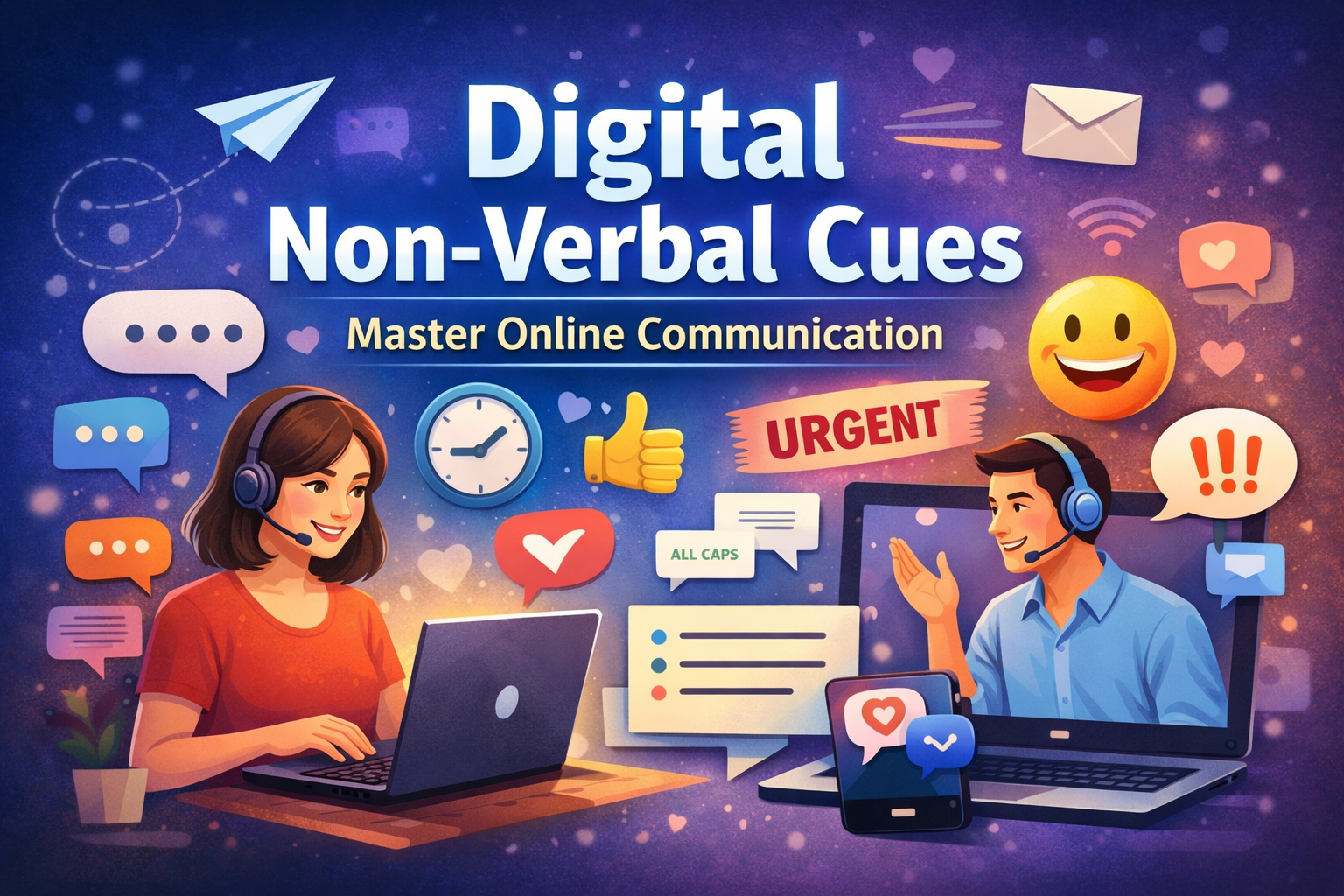
Your Guide to Digital Non-Verbal Cues

The Silent Language of the Digital World

Have you ever sent a simple message like “Okay.” and instantly worried… Did I sound rude? Was I too cold?

Welcome to the world of Digital Non-Verbal Cues—the invisible signals that shape how your words are felt, not just read.

In face-to-face communication, we rely heavily on body language, tone of voice, eye contact, and gestures. But what happens when communication shifts to screens? Emails, WhatsApp messages, Zoom calls, Slack chats—suddenly, the physical cues disappear. Yet, communication doesn’t become neutral. Instead, it evolves.

That’s where Digital Non-Verbal Cues come into play.

These cues include typing speed, punctuation, emoji use, message timing, capitalization, formatting, and even silence. They silently convey emotions, intent, authority, and relationship dynamics. In fact, according to research in communication psychology, over 60% of perceived meaning in communication comes from non-verbal elements—even in digital spaces, our brains try to fill in the gaps.

As a trainer and communication coach, I’ve seen countless professionals struggle not because of what they said—but how it was interpreted digitally. One corporate leader I worked with nearly damaged a key client relationship simply because his short, abrupt emails were perceived as dismissive.

This guide will help you understand, decode, and master Digital Non-Verbal Cues so you can:

  • Build stronger relationships online
  • Avoid misunderstandings
  • Communicate with clarity and emotional intelligence
  • Increase your professional influence

“In the digital world, how you say it matters more than what you say.”

Let’s dive into this powerful, often overlooked skill.


Step1: Understanding Digital Non-Verbal Communication

What Are Digital Non-Verbal Cues?

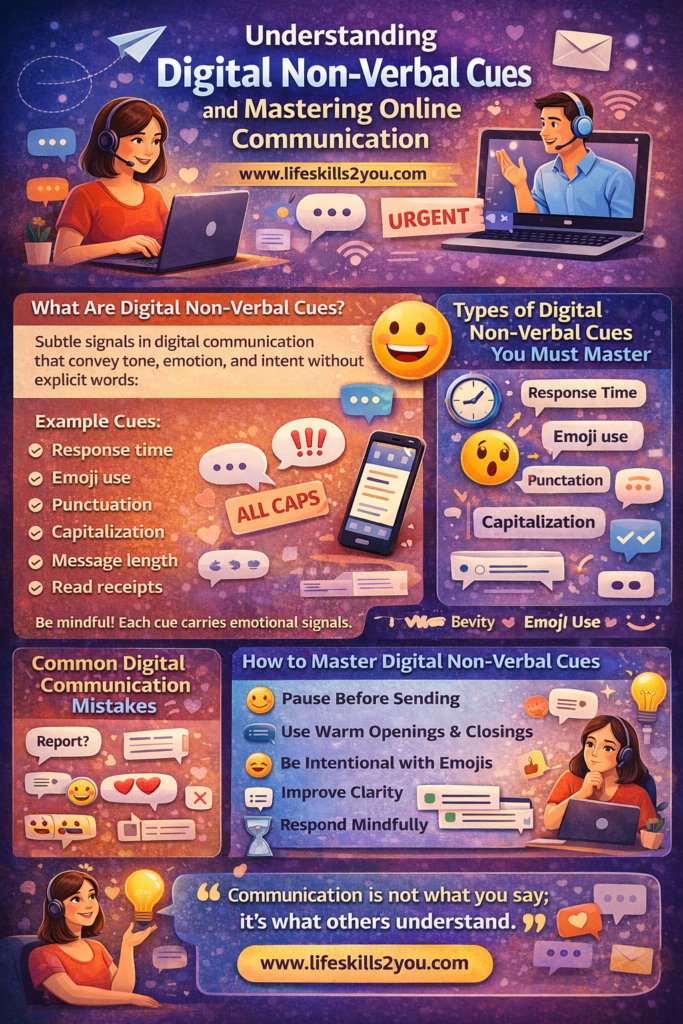
Digital Non-Verbal Cues are the subtle signals embedded in digital communication that convey tone, emotion, and intent without explicit words.

Examples of Digital Non-Verbal Cues

  • Message length (short vs detailed)
  • Response time
  • Use of emojis 😊
  • Punctuation (!!! vs .)
  • Capitalization (ALL CAPS = shouting)
  • Formatting (bold, spacing, bullet points)
  • Read receipts and seen indicators

These are part of digital body language, a concept widely discussed in modern communication psychology and highlighted in research from platforms like Harvard Business Review on virtual communication effectiveness.


Why Digital Non-Verbal Cues Matter More Than Ever

In today’s remote and hybrid work culture, Digital Non-Verbal Cues are often the only signals people rely on.

Psychological Impact

Our brains are wired to interpret tone and emotion. When cues are missing, we:

  • Assume negative intent
  • Misinterpret neutrality as rudeness
  • Fill gaps based on past experiences
Key Insight

Silence in digital communication is not neutral—it is interpreted.


Step2: Types of Digital Non-Verbal Cues You Must Master

1. Timing as a Communication Signal

Response Time Matters

  • Immediate reply → Interest, urgency
  • Delayed reply → Disinterest or disrespect

Real-Life Example 1

A manager I coached delayed responses to team messages. Employees assumed he was ignoring them, leading to disengagement. Once he improved response timing, team morale improved significantly.


2. Punctuation and Tone

The Power of a Period

  • “Thanks.” → Cold
  • “Thanks!” → Warm
  • “Thanks 😊” → Friendly
Micro-differences, massive impact

These subtle Digital Non-Verbal Cues can completely change emotional interpretation.


3. Emojis and Emotional Context

Emotional Amplifiers

Emojis act as tone indicators:

  • 😊 → Friendly
  • 👍 → Agreement (or sometimes passive acknowledgment)
  • 😐 → Neutral or awkward

Real-Life Example 2

A client used “👍” frequently. His team perceived it as dismissive. Switching to short responses improved clarity and connection.


4. Message Length and Structure

Short vs Long Messages

  • Short → Efficient or rude
  • Long → Detailed or overwhelming

Best Practice

Use:

  • Bullet points
  • Clear spacing
  • Logical flow

These improve clarity in communication and reduce misinterpretation.


5. Capitalization and Formatting

Hidden Emotional Signals

  • ALL CAPS → Aggressive
  • lowercase → casual
  • Bold text → emphasis

Use formatting intentionally

Formatting is a strong Digital Non-Verbal Cue that signals importance.


Step 3: Common Mistakes in Digital Communication

Mistake 1: Overusing Brevity

Short messages often lack warmth.

Example

“Send report.”
vs
“Hi, could you please send the report when you get a chance?”


Mistake 2: Ignoring Emotional Tone

Many professionals focus only on content, ignoring emotional intelligence in communication.


Mistake 3: Misusing Emojis

Too many emojis can reduce professionalism.


Mistake 4: Delayed Responses

Silence can damage trust faster than criticism.


Step 4: Applying Digital Non-Verbal Cues in Real Life

Case Study 1: Corporate Leader Transformation

A senior executive struggled with team engagement. His emails were:

  • Short
  • Direct
  • Emotionally flat

Intervention

We improved his Digital Non-Verbal Cues:

  • Added greetings
  • Used positive tone
  • Included appreciation

Result

  • 40% increase in team satisfaction
  • Better collaboration

Case Study 2: Freelancer Client Communication

A freelancer lost clients due to poor messaging tone.

Fix

  • Used structured messages
  • Added polite language
  • Improved response time

Outcome

  • Increased repeat clients

Case Study 3: Remote Team Miscommunication

A global team faced conflicts due to tone misunderstandings.

Solution

Training on Digital Non-Verbal Cues.

Result

  • Reduced conflicts
  • Improved clarity

Step 5: Science Behind Digital Non-Verbal Cues

Behavioural Psychology Perspective

According to communication studies and WHO-backed emotional intelligence frameworks:

  • Humans rely on contextual cues
  • Absence of cues increases cognitive load

You can explore more about emotional communication at WHO Emotional Wellbeing Resources.


The “Negativity Bias” Effect

People tend to interpret neutral messages negatively.

Example

“Noted.” → Often perceived as passive-aggressive


Step 6: How to Master Digital Non-Verbal Cues (Action Plan)

1. Pause Before Sending

Ask:

  • How will this be interpreted?
  • Is my tone clear?

2. Use Warm Openings and Closings

Examples:

  • “Hope you’re doing well”
  • “Appreciate your help”

3. Match Tone with Context

  • Formal → Emails
  • Casual → Chats

4. Be Intentional with Emojis

Use sparingly in professional settings.


5. Improve Clarity

Use:

  • Bullet points
  • Clear instructions

6. Respond Mindfully

Even a quick acknowledgment helps.


Step 7: Motivational Insight

“Communication is not what you say; it’s what others understand.”

Mastering Digital Non-Verbal Cues is not just a skill—it’s a competitive advantage in the modern world.


Conclusion

In a world dominated by screens, Digital Non-Verbal Cues are your hidden language of influence. They shape perception, build trust, and define relationships.

By becoming aware of these subtle signals, you can:

  • Communicate with clarity
  • Avoid misunderstandings
  • Build stronger professional and personal connections

Remember, every message you send carries more than words—it carries you.

Thank you for exploring this insightful article.
If you’re hungry for more knowledge, don’t miss out on our other engaging articles waiting for you. Dive into our treasure trove of wisdom and discover new perspectives on related topics.
Click Our Blog and How to Guide to embark on your next adventure.
Happy reading!


FAQs: Digital Non-Verbal Cues

1. What are Digital Non-Verbal Cues?

They are subtle signals like emojis, timing, punctuation, and formatting that convey tone and emotion in digital communication.

2. Why are Digital Non-Verbal Cues important?

They help prevent misunderstandings and improve clarity, especially in remote communication.

3. Can emojis be used professionally?

Yes, but in moderation. They should match the context and audience.

4. How does response time affect communication?

Quick responses show engagement, while delays may signal disinterest.

5. What is digital body language?

It refers to how tone and intent are expressed through digital behavior.

6. Why do people misinterpret messages online?

Because of lack of physical cues and the brain’s tendency toward negative assumptions.

7. How can I improve my digital communication?

Focus on clarity, tone, structure, and timely responses.

8. Are short messages always bad?

No, but they can seem abrupt if not balanced with politeness.

9. What role does emotional intelligence play?

It helps you understand how your message will be perceived.

10. Can Digital Non-Verbal Cues impact career growth?

Absolutely. Strong communication skills improve leadership, teamwork, and influence.

Building Trust and Rapport for Personal and Professional Growth

Introduction

Trust is invisible—but its absence is loud.

Have you ever worked with someone highly skilled, yet something felt “off”? Or met a person briefly and instantly felt safe, understood, and open around them? That invisible force shaping those experiences is trust—and its close companion, rapport.

In my two decades as a life skills trainer and personality development coach, I’ve seen careers stall not due to lack of talent, but due to lack of trust. I’ve also seen ordinary professionals rise rapidly because people believed in them. The difference was never IQ or credentials—it was their ability in Building Trust and Rapport for Personal and Professional Growth.

In today’s hyper-connected yet emotionally distant world, trust has become a rare currency. Remote work, digital communication, fast-paced lives, and rising stress have made genuine human connection both more difficult—and more valuable—than ever before.

Whether you are:

  • a leader managing teams
  • a professional navigating workplace politics
  • an entrepreneur building client relationships
  • or an individual seeking deeper personal bonds

Your growth depends on one skill more than any other: your ability to build trust and rapport consistently and authentically.

Psychology confirms this. Harvard research shows that high-trust workplaces experience 50% higher productivity, 76% more engagement, and significantly lower burnout. In personal relationships, trust is the strongest predictor of long-term satisfaction, according to relationship science.

This article is not theory-heavy fluff.

It is a practical, psychology-backed, experience-driven roadmap to mastering Building Trust and Rapport for Personal and Professional Growth—step by step, story by story, skill by skill.

Let’s begin.

What Does Trust and Rapport Really Mean?

Trust vs Rapport – Understanding the Difference

Although often used interchangeably, trust and rapport are not the same.

AspectTrustRapport
NatureLong-term beliefImmediate connection
Built ThroughConsistency & integrityEmpathy & similarity
TimeDevelops over timeCan form quickly
OutcomeReliabilityComfort & openness
  • Rapport is the door opener
  • Trust is the relationship sustainer

True mastery lies in Building Trust and Rapport for Personal and Professional Growth together—not separately.


The Psychology Behind Trust Formation

Trust is not emotional guesswork. It is neurological.

According to social neuroscience:

  • Trust activates oxytocin, the bonding hormone
  • Rapport reduces amygdala threat response
  • Consistency strengthens prefrontal cortex prediction

This means people trust you when:

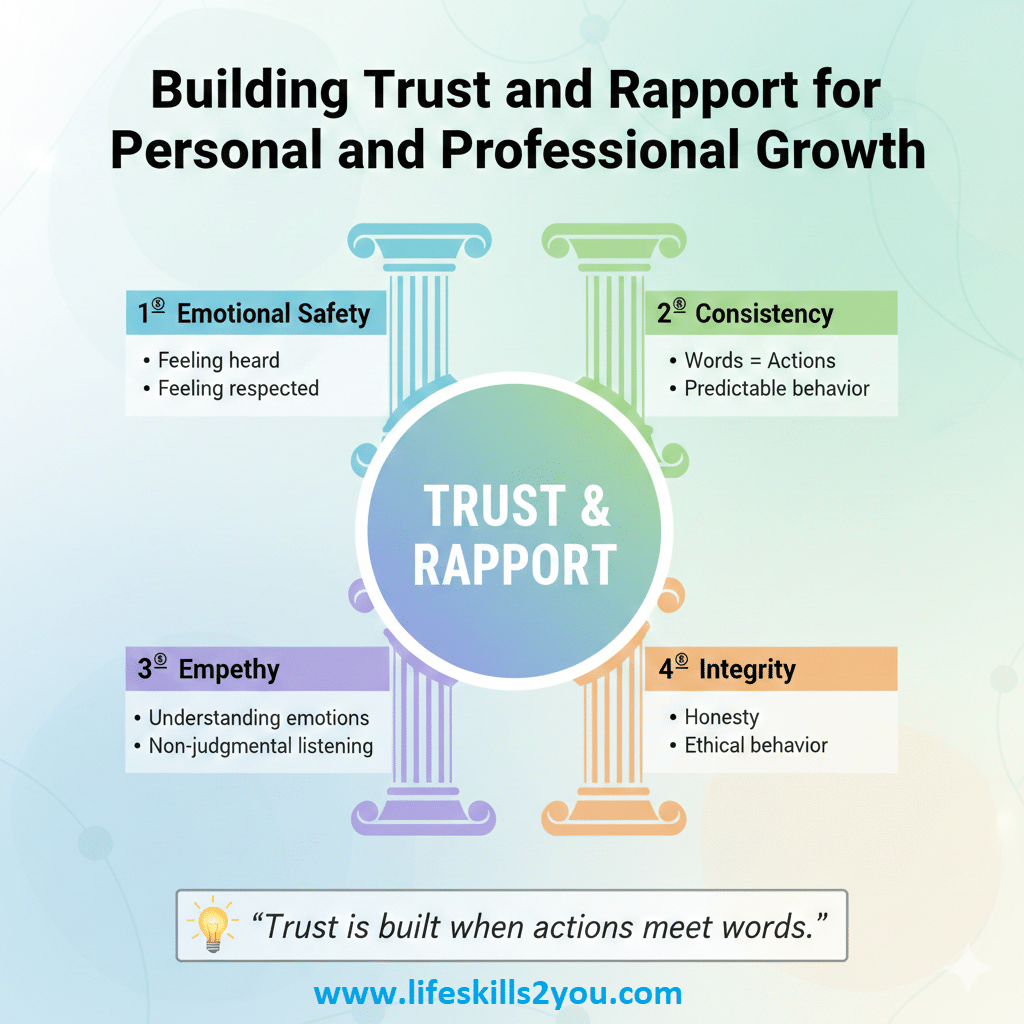
  • You feel emotionally safe
  • You behave predictably
  • You align words with actions

“People don’t trust words. They trust patterns.”


Why Building Trust and Rapport Is Non-Negotiable Today

In Professional Growth

In coaching corporate teams, I often ask:

“Who here trusts their manager enough to speak openly?”

Only 30–40% raise their hands.

Lack of trust leads to:

  • Silent disengagement
  • Fear-driven compliance
  • Innovation shutdown

Whereas Building Trust and Rapport for Personal and Professional Growth leads to:

  • Psychological safety
  • Ownership mindset
  • Faster collaboration

Google’s Project Aristotle confirmed psychological safety as the #1 factor behind high-performing teams.


In Personal Growth

Trust impacts:

Clients struggling with boundaries often don’t lack confidence—they lack trust literacy.

When you trust yourself and others:

  • You communicate clearly
  • You attract healthier relationships
  • You grow emotionally secure

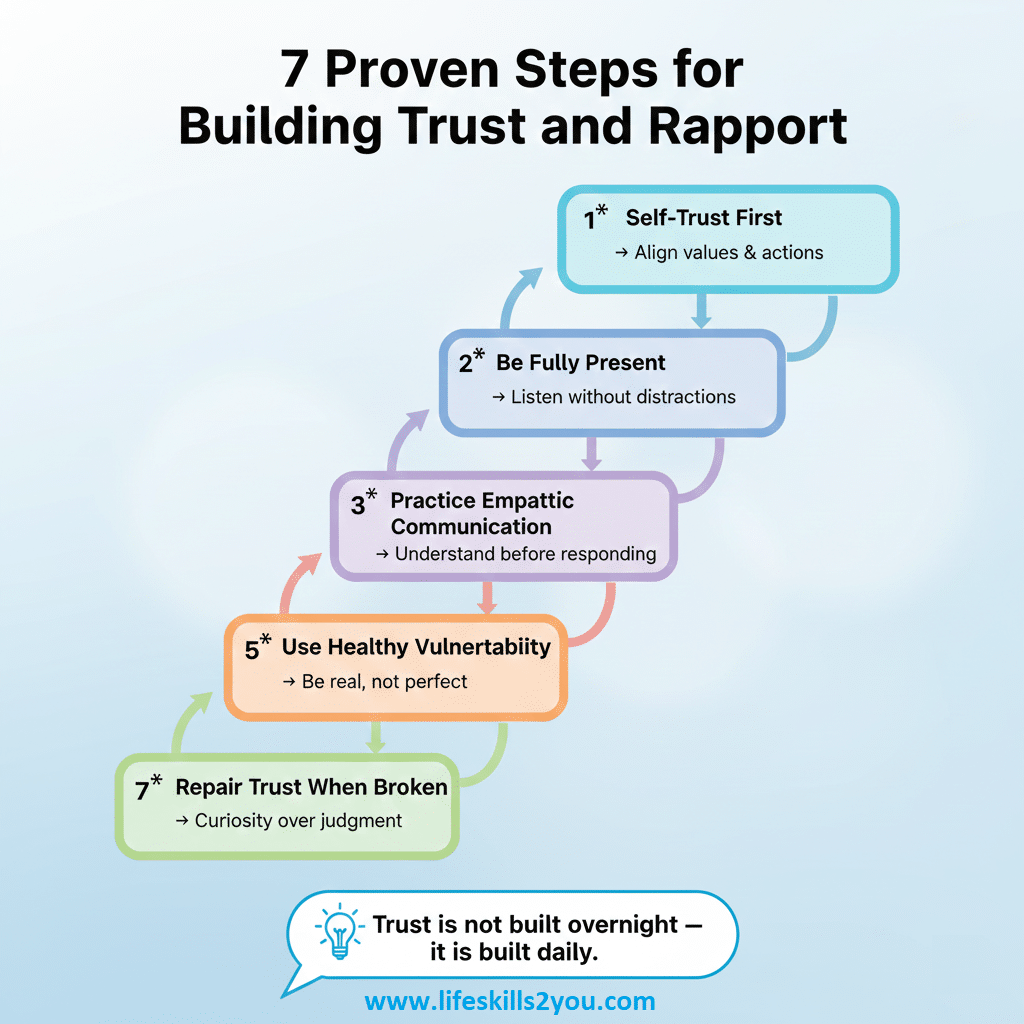
The 7-Step Framework for Building Trust and Rapport


Step 1 – Self-Trust Comes First

You cannot build trust externally if you don’t trust yourself internally.

Self-trust means:

  • Keeping promises to yourself
  • Acting in alignment with values
  • Managing emotions responsibly

🔍 Coaching Insight:
A senior manager once told me, “People don’t listen to me.” After reflection, we discovered he didn’t listen to himself—he ignored boundaries and overcommitted. Once self-trust improved, external trust followed.

Self-awareness, Emotional Intelligence, Authentic Leadership


Step 2 – Presence Over Performance

Rapport is built when people feel felt.

Be fully present:

  • Maintain natural eye contact
  • Avoid multitasking
  • Listen without planning replies

According to Harvard Business Review, leaders who practice active listening are rated as more trustworthy and competent.

“Attention is the rarest and purest form of generosity.”


Step 3 – Master Empathic Communication

Empathy is not agreement. It is understanding.

Use:

  • “I understand how that feels”
  • “That makes sense given the situation”

Avoid:

  • Immediate advice
  • Dismissive positivity

This strengthens Building Trust and Rapport for Personal and Professional Growth faster than any technique.

Empathic Listening, Non-verbal Communication

Related : The Ultimate Guide to Communication Skills, The Ultimate Guide to Emotional Entelligence


Step 4 – Consistency Builds Credibility

Trust grows when actions match words—repeatedly.

In organizations I’ve trained:

  • Managers who followed through built loyalty
  • Those who didn’t lost respect permanently

Consistency includes:

  • Timelines
  • Tone
  • Emotional reactions

People forgive mistakes—but not unpredictability.


Step 5 – Vulnerability with Boundaries

Contrary to myths, vulnerability strengthens trust.

Share:

  • Lessons learned
  • Honest limitations
  • Real challenges

Avoid:

  • Oversharing trauma
  • Emotional dumping

Brené Brown’s research shows vulnerability is the birthplace of trust and connection.


Step 6 – Respect Differences Without Judgment

Trust collapses when people feel judged.

Practice:

  • Curiosity over correction
  • Inclusion over ego
  • Dialogue over debate

This is essential in multicultural teams and relationships.

Inclusive Communication, Psychological Safety


Step 7 – Repair Trust When Broken

Trust will break—it’s human.

What matters is repair.

Effective repair includes:

  • Ownership without excuses
  • Timely apology
  • Changed behavior

According to relationship psychology, repaired trust becomes stronger than untouched trust.


Real-Life Examples of Trust in Action

Example 1: Corporate Leadership Transformation

A mid-level leader reduced team attrition by 40% in 6 months by practicing transparency and listening circles.

Example 2: Coaching Client – Relationship Repair

A client rebuilt a strained marriage by shifting from defensiveness to empathy.

Example 3: Sales Professional

Trust-based selling increased repeat clients without aggressive pitching.

Example 4: Entrepreneur

Building trust online through value-driven content created loyal audiences.


Common Mistakes That Destroy Trust

  • Overpromising
  • Inconsistency
  • Emotional manipulation
  • Fake empathy

Avoid these to protect Building Trust and Rapport for Personal and Professional Growth.


Research & Credible References


Conclusion

Trust is not a soft skill—it is a life skill.

In every role you play—leader, partner, parent, professional—your growth accelerates when trust is strong and rapport is real.

Building Trust and Rapport for Personal and Professional Growth is not about manipulation or charm. It is about integrity, empathy, consistency, and courage.

Build it daily. Protect it fiercely. Repair it humbly.

Your relationships—and your future—depend on it.


Thank you for exploring this insightful article.
If you’re hungry for more knowledge, don’t miss out on our other engaging articles waiting for you. Dive into our treasure trove of wisdom and discover new perspectives on related topics.
Click Our Blog and How to Guide to embark on your next adventure.
Happy reading!


FAQs: Building Trust and Rapport for Personal and Professional Growth

1. Why is trust important for growth?

Trust enables collaboration, openness, and emotional safety—essential for learning and performance.

2. Can rapport be built quickly?

Yes, through empathy, mirroring, and presence—but trust needs time and consistency.

3. How long does trust take to build?

It varies, but consistent behavior over weeks creates credibility.

4. Can trust be rebuilt after betrayal?

Yes, with accountability, transparency, and changed actions.

5. Is trust more important than skills?

Often yes—skills open doors, trust keeps them open.

6. How does body language affect rapport?

Open posture, eye contact, and tone strongly influence trust perception.

7. Can introverts build rapport effectively?

Absolutely—authentic listening often builds deeper trust.

8. What role does honesty play?

Honesty builds credibility, even when messages are uncomfortable.

9. How do leaders create trust fast?

By listening, following through, and modeling vulnerability.

10. Is trust measurable?

Yes—through engagement, retention, and feedback patterns.

Exit mobile version