In the hustle and bustle of our modern lives, where distractions are abundant and demands are unceasing, the age-old adage “Take charge of your thoughts, or they’ll take charge of you – Power of Mind” holds an ever-relevant significance. This timeless wisdom emphasizes the importance of mastering one’s mental landscape to navigate life’s challenges with clarity, purpose, and resilience.
The Influence of Thoughts:
Our thoughts are the building blocks of our reality. They shape our emotions, decisions, actions, and ultimately, the outcomes we experience. Whether positive or negative, our thoughts have a profound impact on our overall well-being. Uncontrolled, negative thoughts can breed anxiety, stress, and a sense of powerlessness, while positive thoughts can uplift our spirits and motivate us to achieve our goals.
Mindfulness and Self-Awareness:
Taking charge of our thoughts begins with mindfulness and self-awareness. Mindfulness involves being present in the moment, observing our thoughts without judgment, and recognizing the patterns that govern our thinking. Through self-awareness, we can identify self-limiting beliefs, biases, and negative thought cycles that hold us back from reaching our potential.
Reframing Negative Thoughts:
Negative thoughts are a natural part of human cognition, but they need not dictate our actions. By acknowledging negative thoughts and challenging their validity, we can reframe them into more constructive perspectives. For instance, transforming “I can’t do this” into “I can learn and improve with effort” empowers us to take action rather than succumb to defeat.
Cultivating a Positive Mental Attitude:
Cultivating a positive mental attitude involves consciously nurturing optimistic and empowering thoughts. This process includes practicing gratitude, focusing on strengths, and envisioning success. Positive affirmations and visualizations can rewire our brains, boosting confidence and fostering a proactive mindset.
The Power of Choice:
Taking charge of our thoughts rests on the principle of choice. We have the power to choose our responses to situations, even when circumstances are beyond our control. This autonomy empowers us to navigate challenges with grace and resilience. By choosing thoughts that align with our values and goals, we pave the way for growth and personal development.
Creating Healthy Mental Habits:
Consistency is key to establishing healthy mental habits. Incorporating practices such as meditation, journaling, and regular self-reflection can strengthen our ability to manage our thoughts. Over time, these practices become ingrained, enabling us to effortlessly redirect our thinking towards positivity and empowerment.
In a world inundated with information and stimuli, taking charge of our thoughts remains a fundamental skill for personal growth and well-being. By embracing mindfulness, self-awareness, and a positive mental attitude, we can transcend the limitations of negative thinking and cultivate a mindset that empowers us to lead fulfilling and purpose-driven lives. As we master the art of controlling our thoughts, we harness the true potential of our minds and pave the way for a brighter future.
Life is a journey filled with both joys and sorrows, successes and failures, and moments of immense happiness as well as deep pain. The phrase “Pain is Inevitable but Suffering is Optional” encapsulates a profound truth about human existence. It reflects the idea that while we cannot always control the challenges and difficulties that come our way, we do have the power to choose how we respond to them. This concept invites us to explore the nature of pain, suffering, and the resilience of the human spirit.
Understanding Pain and Suffering
Pain is a universal experience. It can manifest in physical, emotional, or psychological forms, stemming from various sources such as loss, illness, disappointment, heartbreak, and more. Pain, in its essence, is a response to the inevitable difficulties of life, a natural mechanism that alerts us to potential threats and motivates us to take corrective actions. It is an essential aspect of being human, an experience that connects us through our shared vulnerability.
Suffering, on the other hand, extends beyond the initial pain. It is an emotional response, a state of distress that lingers long after the initial source of pain has subsided. Suffering often arises from the stories we tell ourselves about the pain – the narratives that we create and cling to. These narratives can trap us in a cycle of negative emotions, preventing us from moving forward and embracing the present moment.
The Power of Perception and Choice
The adage “suffering is a choice” does not mean that one should deny or suppress their pain. Rather, it emphasizes the power of perception and the choices we make in interpreting and responding to that pain. Our thoughts and beliefs play a significant role in determining whether pain evolves into suffering. It is within our control to choose how we perceive and process our experiences, thereby influencing the emotional impact they have on us.
Cultivating Resilience and Growth
Resilience, the ability to bounce back from adversity, is closely tied to the idea that suffering is a choice. Resilience involves acknowledging pain and discomfort, yet refusing to let them define our existence. By reframing our perspective and consciously choosing to focus on growth, learning, and positive aspects, we can transform suffering into an opportunity for personal development.
Practical Steps towards Choosing Non-Suffering
1. Mindfulness: Practicing mindfulness helps in staying present and observing thoughts and emotions without judgment, reducing the tendency to create suffering-inducing narratives.
2. Acceptance: Accepting pain as a part of life’s natural ebb and flow can lessen resistance and reduce suffering.
3. Reframing: Viewing challenges as opportunities for growth can change our perception of suffering, shifting the focus from victimhood to empowerment.
4. Letting Go: Releasing attachments to the stories we create about pain can free us from prolonged suffering.
The aphorism “Pain is Inevitable but Suffering is Optional” is a reminder of the agency we possess in navigating life’s trials. It underscores the fact that, while we cannot control all circumstances, we have the power to shape our emotional responses and perspectives. By recognizing that suffering often stems from our interpretations of pain, we can embark on a journey towards resilience, growth, and a more fulfilling existence. In making the conscious choice to let go of unnecessary suffering, we open ourselves to the beauty and potential that life holds, even amidst the inevitable challenges.
Clarity in Communication: The Key to Effective Interactions
Clarity in communication is essential for fostering strong relationships, enhancing productivity, and achieving success in both personal and professional settings. Clarity in Communication ensures that messages are understood as intended, minimizing confusion and improving interactions. 😊📢✅
“The most important thing in communication is to hear what isn’t being said.”
Peter Drucker
Table of Contents
The Importance of Clarity in Communication 🎯💡🗣️
Strengthening Relationships ❤️🤝💬
Clear communication nurtures healthy relationships by reducing misunderstandings and conflicts. Whether in personal or professional interactions, articulating thoughts and emotions effectively builds trust and mutual understanding.
Boosting Productivity 📈🚀🛠️
In workplaces, Communication Clarity accelerates productivity by ensuring that employees understand their tasks, objectives, and expectations. When instructions are precise, teams work efficiently, reducing errors and delays.
Enhancing Leadership 👑🎤🌟
Great leaders excel in Clarity in Communication. Their ability to convey vision, strategies, and expectations in a concise manner motivates teams, fosters collaboration, and drives success.
Aiding Decision-Making 🧠📊✅
Clarity in Communication plays a vital role in decision-making by presenting information succinctly. When facts and options are well-structured, individuals can make informed choices without unnecessary complexity.
The 7 C’s of Communication 🏆📝🔍
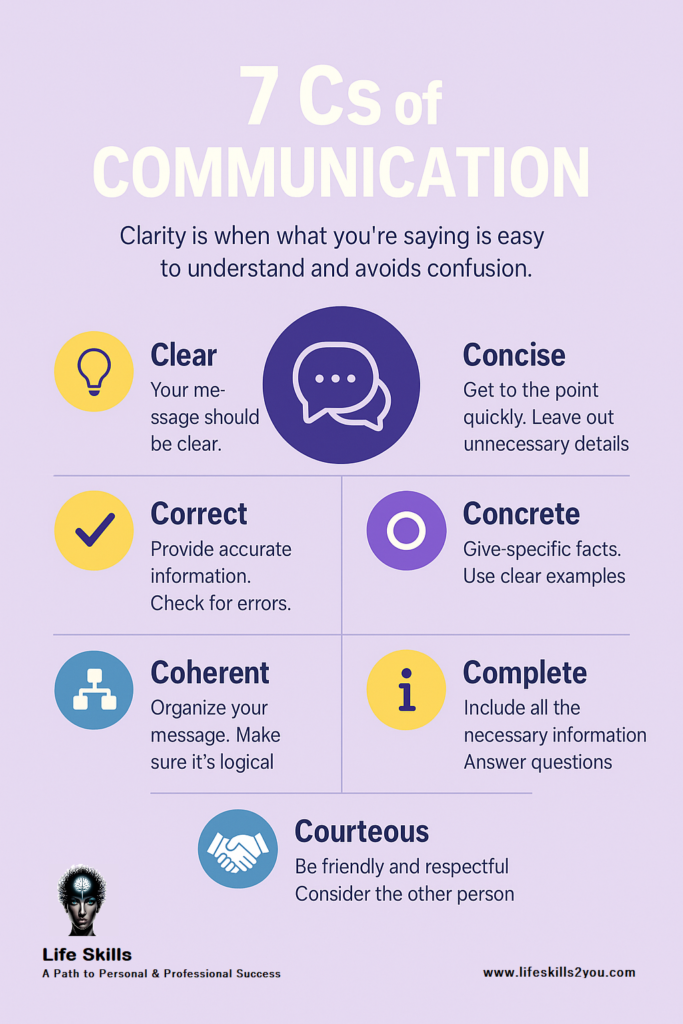
Effective communication is guided by seven fundamental principles known as the 7 C’s. These principles help ensure that messages are clear, concise, and impactful.
1. Clarity 🌟💡✔️
Messages should be clear and easy to understand, leaving no room for misinterpretation.
2. Conciseness ✂️📌📢
Keep communication brief and to the point, avoiding unnecessary words or details.
3. Correctness ✅📖✍️
Ensure that the information shared is accurate, error-free, and grammatically correct.
4. Completeness 📋✔️📊
Provide all necessary information so that the recipient has everything required to understand and respond.
5. Coherence 🔄🔗📚
Structure messages logically, maintaining a smooth flow of ideas.
6. Courtesy 😊🙏💬
Use polite language and consider the recipient’s perspective to maintain a respectful tone.
7. Consideration ❤️🤔👂
Understand the needs, emotions, and background of the audience while communicating.
3. Achieving Clarity in Communication: Techniques and Strategies 🎯🛠️📢
Mastering Clarity in Communication requires consistent practice and the application of effective techniques. Here are some key strategies to enhance clarity in communication:
Simplify Complex Concepts 🧩📖🔍
Break down intricate ideas into easily digestible components. Use relatable examples and analogies to bridge the gap between complexity and comprehension.
Organize Your Thoughts 🗂️🧠📌
Before communicating, structure your thoughts logically. A well-organized message ensures that each point seamlessly leads to the next, improving overall coherence.
Choose Your Words Wisely 🗣️✏️📢
Word choice significantly impacts Clarity in Communication. Use precise and concise language while avoiding jargon and technical terms when speaking to non-experts.
Practice Active Listening 👂🎯🤝
Effective communication is a two-way process. Active listening—focusing on the speaker, asking clarifying questions, and paraphrasing—ensures mutual understanding.
Use Visual Aids 📊📌🎨
In presentations, visuals such as slides, charts, and diagrams reinforce messages and enhance audience comprehension.
How I Learned to Speak With More CLARITY
Clarity in Professional Communication 💼📢✅
In professional environments, Clarity in Communication fosters collaboration, efficiency, and workplace success.
Providing Clear Instructions 📜✅📌
When giving instructions, be specific and detailed to eliminate ambiguity. Clearly outline steps and expectations to ensure smooth execution.
Effective Email Communication ✉️📖📌
Written workplace communication demands Clarity in Communication. Structure emails logically, use bullet points for easy readability, and highlight key takeaways.
Offering Transparent Feedback 🎯🗣️📊
Constructive feedback should be clear and actionable. Avoid vague comments and focus on specific areas for improvement.
Conflict Resolution ⚖️🤝💬
Clarity in Communication is essential when resolving conflicts. Clearly articulate concerns, listen actively, and propose solutions that all parties can understand and accept.
Clarity in Personal Relationships ❤️🗣️💡
Applying Clarity in Communication in personal interactions strengthens connections and minimizes misinterpretations.
Expressing Emotions Clearly 💖🗣️😊
Openly communicating emotions fosters deeper relationships. Clearly articulating feelings and concerns ensures messages are received as intended.
Navigating Conflict Effectively 💭⚖️📢
During disagreements, prioritize Clarity in Communication. Express your viewpoint clearly, listen attentively, and collaborate to find common ground.
Bridging Cultural Differences 🌍👂💬
Cross-cultural communication requires heightened clarity. Be mindful of language barriers and adapt communication styles to enhance mutual understanding.
The Role of Clarity in Public Speaking 🎤📢✨
Public speaking demands Clarity in Communication to captivate audiences and convey messages effectively.
Structuring Speeches Properly 📝🎯📢
Organize speeches with a clear introduction, well-defined key points, and smooth transitions to ensure audience engagement.
Delivering Messages Effectively 🎙️🔊😊
Beyond words, delivery plays a crucial role. Maintain steady pacing, use expressive gestures, and modulate your voice for emphasis.
Connecting with the Audience 🤝👂📢
Tailor speeches to align with the audience’s understanding. Use relatable language and examples to make messages more impactful.
References: For further insights on communication skills, I recommend exploring articles on reputable website like Udemy. Additionally, you can enrich your understanding by watching empowering YouTube videos from channels like TED Talks.
In a world flooded with information, achieving clarity in communication is paramount. It transcends verbal exchanges, touching every aspect of our lives – from personal relationships to professional success. By understanding the essence of clarity and implementing effective strategies, you empower yourself to be a better communicator. Embrace clarity and watch as your interactions flourish, connections deepen, and your influence grows.
Frequently Asked Questions (FAQs) about the concept of clarity in communication
Q1: How does clarity in communication impact interpersonal relationships?
Ans: Clarity minimizes misunderstandings, fostering trust and deeper connections between individuals.
Q2: Can clarity in communication be achieved in non-verbal communication?
Ans: Yes, clarity extends to non-verbal cues such as body language and facial expressions.
Q3: What’s the connection between clarity in communication and effective leadership?
Ans: Effective leaders communicate clearly, inspiring and motivating their teams toward success.
Q4: How can I improve clarity in my writing?
Ans: Simplify complex ideas, organize your content logically, and choose precise vocabulary to enhance clarity.
Q5: Is clarity more important than brevity in communication?
Ans: While brevity is valuable, clarity should never be compromised. Clear communication trumps all
Q6: How does clarity contribute to conflict resolution?
Ans: Clear communication during conflicts helps parties understand each other’s perspectives and find common ground.
In a world driven by constant change and evolving aspirations, setting and achieving goals has become a fundamental aspect of realizing personal growth and achieving success. Whether you’re striving for professional advancement, improving your health and well-being, or pursuing a passion, the journey begins with defining clear and SMART goals, fostering personal growth, and nurturing unwavering motivation.
The Power of SMART Goals
Setting goals is an art that requires careful planning, dedication, and an understanding of the SMART framework – Specific, Measurable, Achievable, Relevant, and Time-bound. By incorporating these elements, you create a roadmap that outlines your objectives, making them more manageable and attainable.
Specific: Clearly defining what you want to achieve is the cornerstone of effective goal setting. Rather than vaguely aiming to “get fit,” you might set the specific goal of “losing 15 pounds within six months through a combination of regular exercise and a balanced diet.”
Measurable: Quantifying your progress allows you to track your achievements and stay motivated. In our fitness example, measuring your weight loss progress each month provides tangible evidence of your success.
Achievable: Goals should be challenging yet realistic. Losing 50 pounds in a month might be unattainable, but aiming for 15 pounds is more achievable, promoting sustained effort.
Relevant: Your goals should align with your values, aspirations, and overall life plan. If career growth is your focus, setting a goal to complete a relevant certification is more aligned than pursuing unrelated endeavors.
Time-bound: Setting a timeframe creates a sense of urgency and prevents procrastination. In our weight loss scenario, having a six-month timeframe pushes you to take consistent action.
Nurturing Personal Growth Through Goal Pursuit
Personal growth is the essence of continuous development and self-improvement. The pursuit of meaningful goals fuels this growth, propelling you forward on your path to success.
By embarking on the journey of setting and achieving goals, you expose yourself to new experiences, challenges, and learning opportunities. Each milestone achieved brings a sense of accomplishment, boosting your confidence and encouraging you to tackle even more ambitious objectives.
Motivation is the driving force behind sustained goal pursuit. It’s what keeps you going when the initial excitement fades and challenges arise. To maintain unwavering motivation, it’s essential to understand the sources of motivation and employ effective strategies.
Intrinsic Motivation: This type of motivation comes from within and is fueled by personal values, passions, and a sense of purpose. When your goals align with your core beliefs, you’re more likely to stay committed and enthusiastic.
Extrinsic Motivation: External factors like rewards, recognition, or praise from others can also fuel motivation. While effective, it’s important to strike a balance between intrinsic and extrinsic motivation to avoid dependency on external validation.
Visualization and Affirmations: Visualizing your success and using positive affirmations can reinforce your commitment and keep your goals at the forefront of your mind. Envisioning yourself achieving your objectives creates a powerful mental image that boosts motivation.
Accountability Partnerships: Sharing your goals with a trusted friend or mentor holds you accountable and provides valuable support. Regular check-ins and discussions about progress can reignite motivation during challenging times.
The Synergy of Personal Growth and Success
As you embark on your journey of setting and achieving goals, you’ll notice a beautiful synergy between personal growth and success. The pursuit of meaningful goals fosters qualities such as resilience, adaptability, determination, and discipline – attributes that are not only crucial for achieving success but also for sustaining it.
Personal growth equips you with the mindset and skills needed to navigate the ever-changing landscape of life. The challenges you overcome and the lessons you learn along the way become invaluable tools that enhance your overall success, both personally and professionally.
In essence, the process of setting and achieving goals is a transformative experience that not only leads to tangible outcomes but also cultivates a stronger, wiser, and more accomplished version of yourself.
Conclusion
In the pursuit of personal growth and success, setting and achieving goals serve as guiding stars, lighting up the path ahead. The journey is transformative, propelling you toward a more empowered and accomplished version of yourself. By harnessing the power of SMART goals, nurturing personal growth, and cultivating unwavering motivation, you pave the way for a future brimming with triumph and fulfillment.
In today’s fast-paced and ever-changing world, adaptability has become a crucial skill that can significantly impact both personal and professional success. As the digital landscape evolves, individuals and businesses must develop the ability to adapt to new challenges, technologies, and trends. In this comprehensive guide, we delve deep into the concept of adaptability, its importance, and practical strategies to enhance your adaptability quotient.
Understanding Adaptability: A Foundation for Success
Adaptability can be defined as the capacity to adjust and thrive in changing environments, circumstances, and situations. It’s about being open to learning, embracing uncertainty, and swiftly acclimating to the demands of the modern world. In a rapidly evolving landscape, adaptability has shifted from being a desirable trait to an essential skill.
The Importance of Enhancing Adaptability
In an era of constant innovation and disruption, individuals who possess high levels of adaptability are better equipped to navigate challenges and seize opportunities. Whether you’re an entrepreneur, professional, or student, cultivating adaptability can lead to:
1. Improved Problem-Solving
Adaptable individuals are more adept at analyzing problems from various angles and devising innovative solutions. They can swiftly assess changing situations and make informed decisions.
2. Increased Resilience
Enhancing adaptability fosters resilience, allowing individuals to bounce back from setbacks and failures. Resilient people view challenges as opportunities for growth and development.
3. Seamless Skill Acquisition
Adaptable individuals embrace continuous learning. They are eager to acquire new skills and knowledge, which is crucial in a world where technologies and industries evolve rapidly.
4. Enhanced Interpersonal Relationships
Adaptability nurtures effective communication and collaboration. People who can adapt to different communication styles and work approaches are more likely to succeed in diverse social and professional settings.
Strategies to Boost Your Adaptability Quotient
Now that we’ve established the significance of adaptability, let’s explore actionable strategies to enhance your adaptability quotient:
1. Embrace Lifelong Learning
Commit to ongoing education and skill development. Attend workshops, webinars, and courses to stay updated with the latest trends in your field. This proactive approach ensures you’re well-prepared for changes.
2. Step Out of Your Comfort Zone
Push yourself to try new experiences and take on challenges that stretch your abilities. Stepping out of your comfort zone fosters adaptability by exposing you to unfamiliar situations.
3. Develop Cognitive Flexibility
Cognitive flexibility involves being open to different perspectives and approaches. Engage in activities that require you to think creatively and consider alternative solutions.
4. Practice Stress Management
Effective stress management is essential for adaptability. Techniques such as mindfulness, meditation, and deep breathing can help you remain calm and composed in the face of change.
5. Foster a Growth Mindset
Cultivate a growth mindset by believing in your ability to develop and improve. Embrace failures as learning opportunities and maintain a positive outlook on challenges.
6. Cultivate Interpersonal Skills
Strong interpersonal skills are crucial for adapting to various social and professional scenarios. Focus on active listening, empathy, and effective communication to build meaningful relationships.
7. Stay Tech-Savvy
In today’s digital age, technological advancements play a pivotal role in shaping industries. Stay updated with technological trends relevant to your field to remain adaptable in a tech-driven environment.
Final Thoughts
In a world characterized by rapid change and innovation, adaptability has become a non-negotiable skill for success. Those who can navigate uncertainty with resilience and open-mindedness are poised to thrive in any situation. By embracing lifelong learning, stepping out of your comfort zone, and fostering a growth mindset, you can enhance your adaptability quotient and position yourself for a future of endless possibilities.
Remember, adaptability is not a trait reserved for the elite few; it’s a skill that can be developed and honed over time. So, embark on this journey of self-improvement and discover the transformative power of adaptability in your personal and professional life.