Introduction to Procrastination and Kaizen
Procrastination is something most of us are guilty of, whether it’s putting off an important task, delaying a workout, or ignoring that project until the last possible minute. We all know the cycle: “I’ll do it tomorrow,” which turns into the next day, then the next week, until the deadline hits us like a storm. But what if there was a simple and gentle way to break this cycle? This is where the Kaizen method comes into play.
Kaizen, a Japanese philosophy rooted in the idea of continuous, incremental improvement, has transformed industries and organizations worldwide. But beyond business, Kaizen can be a life-changing approach to personal growth and productivity. By focusing on small, manageable steps, it helps individuals gradually overcome procrastination without overwhelming themselves.
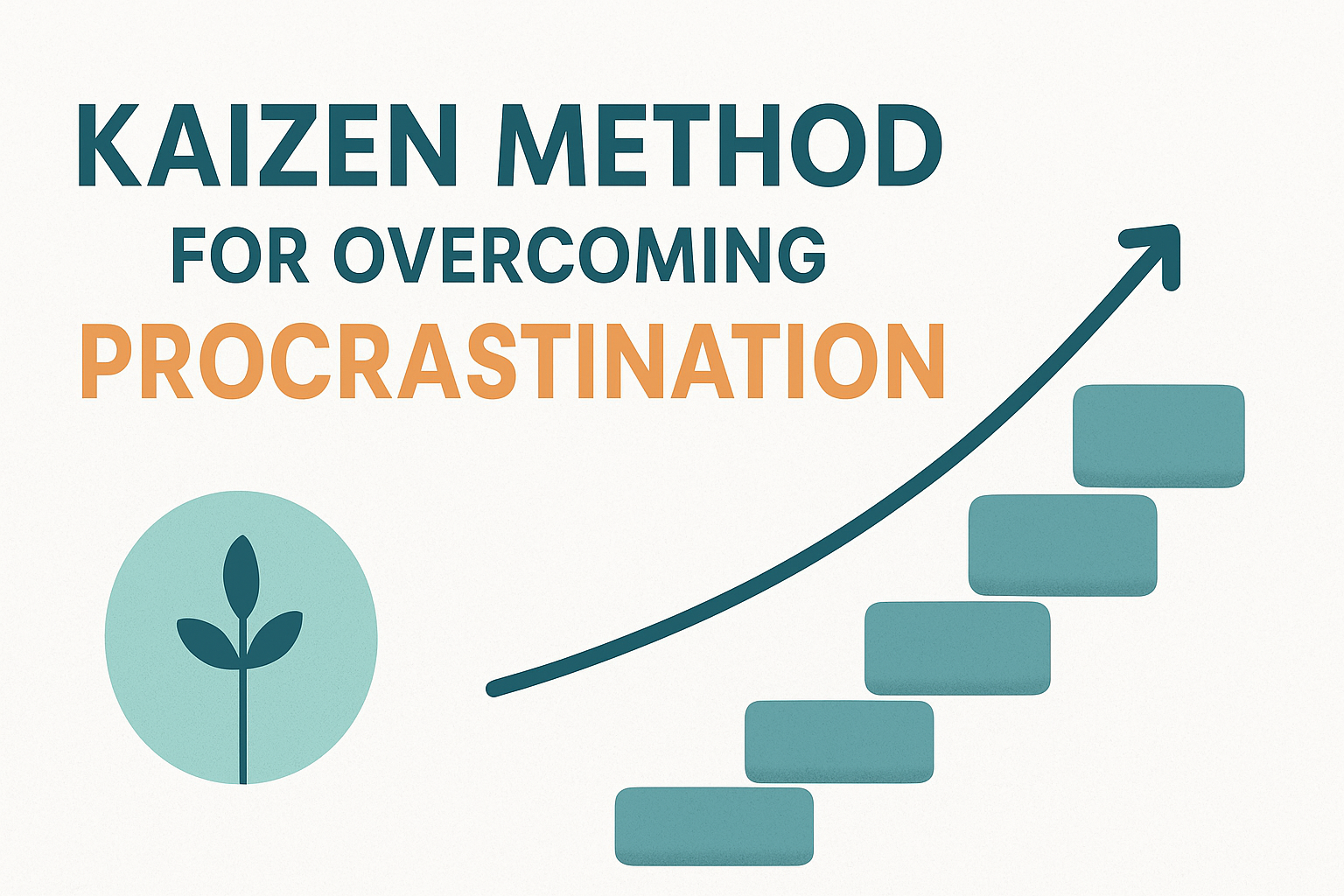
Think of Kaizen as the opposite of the “all-or-nothing” mindset. Instead of making massive changes overnight—which often leads to burnout or failure—Kaizen encourages small, consistent improvements that compound over time. In the context of procrastination, this means tackling tasks in such tiny increments that your brain doesn’t resist them. Before you know it, you’ve built momentum and turned dreaded chores into achievable habits.
What is Procrastination?
Procrastination isn’t simply laziness—it’s often a coping mechanism. When a task feels too big, too stressful, or too boring, our brain seeks comfort in distractions. Instead of writing that report, we scroll social media. Instead of starting an assignment, we clean our room. The problem isn’t that we can’t work; it’s that we feel stuck in a cycle of avoidance.
Procrastination can also be linked to fear of failure, perfectionism, or lack of clarity. For instance, if you’re unsure how to begin a task, your mind defaults to postponement. The longer you delay, the bigger the task feels, creating a snowball effect of anxiety and guilt. Over time, this pattern damages self-confidence and makes us feel like we can’t trust ourselves to follow through.
The Cost of Procrastination in Daily Life
While putting things off might feel harmless in the moment, procrastination comes at a steep cost. Deadlines sneak up, stress levels rise, and opportunities slip away. Think about the job applications you delayed, the health goals you abandoned, or the side project you never finished—each act of procrastination robs you of progress.
On a deeper level, procrastination erodes self-trust. Each time you break a promise to yourself, you reinforce the belief that you’re not reliable. This cycle not only affects productivity but also seeps into relationships, finances, and mental health. Stress, guilt, and regret become companions of chronic procrastinators.
Understanding the Kaizen Philosophy
The word Kaizen translates to “change for better.” Developed in post-World War II Japan, Kaizen became a guiding principle for companies like Toyota, helping them improve quality and efficiency through continuous, incremental changes. Unlike drastic overhauls, Kaizen focuses on small, sustainable improvements that compound over time.
But Kaizen isn’t just for corporations. When applied to personal development, it becomes a gentle yet powerful antidote to procrastination. Instead of fighting your brain’s resistance with willpower alone, you use micro-steps to outsmart it. The task that once felt overwhelming suddenly becomes doable when broken down into the tiniest possible action.
For example, if exercising feels impossible, Kaizen asks you to start with just one minute a day. That one minute may feel laughably small, but it’s enough to trick your brain into starting. Over time, the one minute grows naturally into five, ten, or thirty—without the stress of forcing yourself.
The Psychology Behind Procrastination
To fully appreciate how Kaizen tackles procrastination, we need to understand the psychology behind it. Why do we delay tasks even when we know they’re important? The answer lies in how our brain responds to discomfort, fear, and reward.
Why We Delay Tasks
At its core, procrastination is an avoidance strategy. When a task feels difficult, boring, or uncertain, our brain perceives it as a threat to comfort. Instead of facing it, we avoid it, choosing immediate relief over long-term satisfaction. This avoidance is reinforced because distractions like Netflix, social media, or snacking provide instant pleasure.
The brain is wired to prioritize short-term comfort over long-term goals. That’s why starting an essay feels harder than watching a funny video, even though you’ll regret it later. The key to breaking this cycle is finding a way to start without triggering resistance. That’s exactly what Kaizen does—it lowers the entry barrier so much that your brain doesn’t object.
The Fear of Failure and Perfectionism
Many procrastinators aren’t lazy at all—they’re perfectionists. The thought of not doing something perfectly can be so paralyzing that they avoid starting altogether. This fear of failure creates a mental block where the task feels impossibly large.
Kaizen helps by reframing the goal. Instead of aiming for perfection, you aim for progress, however small. For example, rather than writing a flawless essay in one sitting, you tell yourself to write just one sentence. That single sentence lowers the pressure, making it easier to continue.
The Role of Instant Gratification
Our brains love rewards, and procrastination thrives on instant gratification. Every time you delay a task and indulge in something pleasurable, your brain gets a dopamine hit. Unfortunately, this reward cycle keeps reinforcing procrastination.
Kaizen interrupts this loop by making progress itself rewarding. Completing tiny actions builds confidence and gives you small wins. These micro-successes trigger dopamine too, but in a way that aligns with long-term goals. Over time, your brain starts craving progress instead of avoidance.
Related: What Are the 10 Life Skills That Will Change Your Life?
What is the Kaizen Method?
Kaizen isn’t just about productivity; it’s a way of living that embraces slow, steady growth. Instead of relying on motivation, it leverages consistency. By understanding its roots, you’ll see why it’s so effective for tackling procrastination.
The Origins of Kaizen in Japan
After World War II, Japan faced the monumental task of rebuilding its economy. Instead of chasing radical transformations, Japanese companies embraced Kaizen, a philosophy that emphasized small, continuous improvements at every level. This approach turned Japan into a global leader in manufacturing and quality management.
The Principle of Continuous Improvement
The essence of Kaizen lies in the belief that even the smallest improvements matter. Whether it’s reducing waste in a factory or taking a single step toward a personal goal, Kaizen teaches that progress is more important than perfection. Over time, these small changes compound, leading to massive transformation.
Applying Kaizen Beyond Business
Although Kaizen began in the corporate world, its principles apply beautifully to personal life. Whether you want to improve your health, relationships, or productivity, the Kaizen method teaches you to focus on tiny steps, consistently taken. This makes it particularly effective for overcoming procrastination, where starting is often the hardest part.
How Kaizen Helps in Beating Procrastination
Now that we understand procrastination and Kaizen separately, let’s see how they work together. The beauty of Kaizen lies in its ability to bypass the mental resistance that fuels procrastination.
Small Steps vs. Big Leaps
Most people fail to overcome procrastination because they rely on big, dramatic efforts. They set huge goals—like writing 5,000 words in a day or running 10 miles after months of inactivity—and then burn out quickly. Kaizen flips the script by focusing on small, manageable steps.
When tasks are broken into micro-actions, your brain no longer feels threatened. Instead of “write a whole book,” the task becomes “write one sentence.” Instead of “get in shape,” it’s “stretch for one minute.” These small steps eliminate excuses and make it almost impossible not to start.
Building Momentum Over Time
Kaizen leverages the principle of momentum. Once you take a small step, continuing feels easier. That one sentence can turn into a paragraph, and one minute of exercise can turn into fifteen. By lowering resistance, Kaizen gets you moving, and once you’re moving, progress snowballs.
Psychological Safety in Small Changes
Procrastination often stems from fear—fear of failure, fear of judgment, fear of overwhelm. Kaizen creates psychological safety by making changes so small that they don’t trigger fear. When you focus on one tiny step, failure becomes nearly impossible. This builds confidence and gradually rewires your brain to embrace progress instead of avoiding it.
Practical Kaizen Techniques for Overcoming Procrastination
Understanding the philosophy is one thing, but applying it is where the magic happens. Kaizen offers practical techniques you can use today to break free from procrastination.
The One-Minute Rule
One of the most famous Kaizen techniques is the one-minute rule. It’s simple: commit to doing a task for just one minute. Want to exercise? Do it for one minute. Want to meditate? Sit quietly for sixty seconds. Want to write? Put words on paper for a minute.
This might sound too easy, but that’s the point. By making the task ridiculously small, you remove the resistance. Often, once you start, you naturally continue for longer. Even if you don’t, you’ve still succeeded in showing up, which builds consistency over time.
Micro-Goals and Daily Progress
Instead of focusing on huge goals, Kaizen encourages breaking them into micro-goals. For instance, if your goal is to write a book, your micro-goal might be writing one paragraph a day. If you want to save money, it could be putting aside just one dollar daily. These micro-goals feel achievable and create a sense of daily progress that keeps you motivated.
Habit Stacking with Kaizen
Habit stacking is another powerful Kaizen tool. It involves attaching a new micro-habit to an existing one. For example, after brushing your teeth in the morning, you could spend one minute journaling. By linking new habits to established routines, you make them automatic and easier to sustain.
Building a Kaizen-Based Routine
One of the most effective ways to apply Kaizen in your fight against procrastination is by building a structured routine that grows through incremental changes. Routines aren’t just about discipline—they help conserve mental energy. By relying on habits instead of willpower, you reduce decision fatigue and make progress automatically.
A Kaizen-based routine doesn’t require you to overhaul your entire day. Instead, you begin with micro-changes that fit seamlessly into your life. Over time, these small adjustments create a routine that feels natural, sustainable, and highly effective in reducing procrastination.
Designing a Morning Routine with Kaizen
Mornings set the tone for the day. Yet, many people start their mornings in chaos—scrolling through their phones, rushing to get ready, or skipping breakfast. Kaizen encourages building a calm, intentional morning routine one tiny habit at a time.
For example, instead of trying to wake up two hours earlier and meditate, exercise, and journal all at once (which often leads to burnout), you start with one action. Perhaps it’s drinking a glass of water as soon as you wake up. Once that becomes automatic, you add another step, like stretching for one minute. Gradually, your morning evolves into a productive routine without overwhelming you.
These micro-habits accumulate into powerful results. In time, you may find yourself starting the day energized, focused, and far less likely to procrastinate.
Time Management Through Incremental Adjustments
Poor time management is often a root cause of procrastination. Kaizen addresses this by encouraging small, practical tweaks rather than drastic scheduling overhauls. Instead of forcing yourself into a rigid eight-hour productivity block, you might start by setting aside just ten minutes for focused work.
Another approach is to adjust how you manage breaks. For instance, if you often lose hours to social media, you could begin by reducing your scrolling time by just two minutes a day. These small adjustments don’t feel restrictive but gradually free up more time for meaningful tasks. Over weeks, your sense of control over your schedule improves, making procrastination less likely.
Related: The Ultimate Guide to Time Management
Tracking Progress with Kaizen Journaling
Kaizen thrives on reflection. Keeping a simple journal or tracker allows you to record small wins, recognize progress, and stay consistent. You don’t need elaborate charts—just jot down one improvement or completed micro-task each day.
For example, write “wrote one paragraph” or “studied for five minutes.” Seeing these daily wins builds momentum and reinforces the belief that you’re capable of change. Over time, this journal becomes proof that small steps add up, which motivates you to continue practicing Kaizen even on difficult days.
Case Studies and Real-Life Examples
Sometimes, the best way to understand a concept is by seeing it in action. The Kaizen method has helped countless individuals—from students to professionals—overcome procrastination and build lasting habits. These real-life examples demonstrate how powerful small steps can be.
Students Using Kaizen for Study Habits
Procrastination is a common struggle among students. Assignments pile up, exams loom closer, and the pressure to perform can be paralyzing. One student, for instance, used Kaizen to break free from the cycle of cramming and avoidance. Instead of committing to marathon study sessions, she decided to read just one page of her textbook each day.
At first, one page seemed too small to make a difference, but it helped her overcome the dread of starting. Soon, one page turned into five, then ten, and eventually an entire chapter. By exam season, she was ahead of schedule and far less stressed than her peers. Kaizen had transformed her study habits by making them approachable.
Professionals Applying Kaizen at Work
In professional settings, procrastination often shows up as delaying emails, avoiding tough conversations, or putting off major projects. One corporate employee struggling with missed deadlines adopted Kaizen by applying the two-minute rule: if a task takes less than two minutes, do it immediately.
This tiny shift eliminated small backlogs that previously snowballed into overwhelming workloads. Over time, the habit expanded into tackling slightly larger tasks, leading to improved efficiency and reduced stress. What started as a simple Kaizen practice reshaped his entire approach to work.
Personal Growth Through Small Wins
Beyond academics and careers, Kaizen plays a role in personal growth. A man struggling with fitness avoided workouts for years because he felt intimidated by gyms. Through Kaizen, he began with one push-up a day. At first, it seemed insignificant, but he stuck with it. Soon, he was doing five push-ups, then ten, and eventually full workout sessions.
This story illustrates how Kaizen removes the intimidation factor. By celebrating small wins, individuals build confidence and slowly transform their lives—without the pressure of massive commitments.
Combining Kaizen with Other Productivity Strategies
Kaizen is powerful on its own, but it becomes even more effective when paired with other productivity techniques. The beauty of Kaizen lies in its flexibility—it doesn’t replace your current strategies but enhances them by making them easier to start and sustain.
Kaizen and Pomodoro Technique
The Pomodoro Technique—working in focused 25-minute intervals with short breaks—is a popular productivity tool. For procrastinators, though, even 25 minutes can feel intimidating. That’s where Kaizen comes in. Instead of aiming for a full Pomodoro session, you start with just one minute of focused work.
Often, that single minute grows into a full Pomodoro naturally. Over time, you build the stamina to sustain longer focus periods. Combining these two methods helps ease you into deep work without the mental resistance of diving in headfirst.
Kaizen with Mindfulness Practices
Mindfulness helps reduce stress and improves focus, but many people procrastinate on meditation because they think it requires long sessions. Kaizen reframes mindfulness as something approachable. Instead of meditating for 20 minutes, you start with just one deep breath.
Gradually, this expands into a few minutes of meditation, then longer sessions as it becomes a habit. The Kaizen approach makes mindfulness less intimidating and easier to integrate into daily life, reducing procrastination caused by stress and overwhelm.
Kaizen in Goal-Setting Frameworks
Goal-setting systems like SMART goals or OKRs (Objectives and Key Results) are popular, but they often feel overwhelming. Kaizen complements them by breaking big goals into micro-goals.
For example, instead of “write a 50-page report by next month,” Kaizen reframes it into “write one paragraph today.” These micro-goals align with larger objectives but keep you moving forward without triggering avoidance. Over time, you achieve ambitious goals without ever feeling crushed by their size.
Overcoming Challenges While Practicing Kaizen
While Kaizen is gentle and sustainable, it’s not without challenges. Some people struggle with impatience, setbacks, or maintaining consistency. The good news is that Kaizen has built-in ways to handle these obstacles, making it one of the most forgiving productivity systems out there.
Dealing with Impatience
In a world obsessed with quick results, Kaizen can feel “too slow.” Many people abandon it because they want instant transformation. The key to overcoming impatience is to remind yourself that slow progress is still progress—and it’s more sustainable than burning out after a burst of motivation.
One practical tip is to track your micro-wins. When you see that yesterday you did one push-up and today you did two, impatience transforms into pride. You start appreciating growth instead of chasing speed.
Handling Setbacks and Resistance
Even with small steps, setbacks are inevitable. You might skip a day, forget a micro-goal, or fall back into procrastination. Instead of seeing this as failure, Kaizen encourages viewing setbacks as part of the process. The goal isn’t perfection but persistence.
If you miss a habit, restart the next day with the smallest possible step. For example, if you skipped journaling, simply write one sentence the next day. By keeping the barrier low, you prevent guilt from spiraling into more procrastination.
Staying Consistent with Micro-Changes
Consistency is the backbone of Kaizen. But staying consistent can be tricky when life gets busy. One strategy is to anchor your Kaizen habits to daily routines. For example, do your micro-task right after brushing your teeth or before going to bed. This makes the habit automatic instead of relying on willpower.
Another tip is to celebrate tiny wins, no matter how small. Recognizing that “I showed up today” keeps you motivated to continue. Over time, consistency becomes second nature, and procrastination loses its grip.
The Long-Term Benefits of Kaizen for Procrastinators
The Kaizen method isn’t just about short-term productivity boosts. Its real power lies in the long-term transformation it brings to procrastinators. By focusing on micro-changes, Kaizen reshapes how you approach tasks, challenges, and personal growth. Over time, it rewires your mindset, making procrastination a thing of the past.
Instead of relying on bursts of motivation that fade quickly, Kaizen helps you build lasting discipline and habits that stick. What starts as small wins in daily life expands into a lifestyle of progress and achievement.
Building Discipline Naturally
Discipline is often misunderstood as sheer willpower or strict self-control. In reality, discipline grows when habits become automatic. Kaizen makes this possible by removing the pressure of big leaps and focusing on small, doable actions.
For instance, if you want to become more consistent with exercising, forcing yourself into an intense routine may backfire. With Kaizen, however, you ease into discipline. A one-minute stretch becomes five minutes of yoga, which then grows into regular workouts. Eventually, discipline feels natural because it developed gradually, not forcefully.
This gentle approach turns procrastinators into disciplined individuals without the stress of fighting against their natural tendencies.
Cultivating a Growth Mindset
At its core, Kaizen teaches that progress matters more than perfection. This aligns perfectly with the concept of a growth mindset, where challenges are seen as opportunities to learn rather than threats to success.
When you take small steps every day, you realize that failure isn’t the end—it’s simply part of the process. Missing one habit doesn’t erase your progress; it just means you pick up where you left off. Over time, this perspective reduces fear of failure and builds confidence.
Instead of avoiding tasks because they seem overwhelming, you begin to embrace them as chances to improve. This shift in mindset is one of the greatest long-term benefits of Kaizen.
Achieving Sustainable Productivity
Quick-fix productivity hacks may work temporarily, but they often fizzle out. Kaizen, on the other hand, creates sustainable productivity. Because the changes are small and consistent, they’re easier to maintain for years, not just weeks.
For example, someone using Kaizen to write a book might only write one page a day. That may not sound like much, but over the course of a year, it adds up to a full manuscript. The slow, steady approach ensures steady progress without burnout.
This sustainability is what makes Kaizen one of the most reliable methods for overcoming procrastination.
Kaizen in Personal Life
Kaizen isn’t limited to productivity or work-related tasks—it applies to every aspect of life. By using small, consistent improvements, you can enhance relationships, health, and even finances.
Relationships and Communication
Procrastination often sneaks into relationships too. Maybe you delay tough conversations with a partner or avoid reaching out to friends because it feels awkward. With Kaizen, you can approach communication in micro-steps.
For example, if expressing emotions feels difficult, you might start by simply sharing one positive thought with your partner each day. If reconnecting with friends feels overwhelming, begin with a short message like, “Thinking of you.” These small acts build trust, closeness, and consistency in relationships.
Over time, Kaizen helps you communicate more openly without the stress of big, daunting conversations.
Health and Fitness with Small Steps
Many people procrastinate on health goals because they see them as massive commitments—strict diets, intense workouts, or big lifestyle changes. Kaizen takes the pressure off by encouraging you to start with the tiniest step.
For example, if you struggle with fitness, start with a one-minute walk after lunch. If you want to eat healthier, add just one vegetable to your meal. These micro-changes may seem small, but they’re easier to sustain. Before long, they naturally grow into healthier routines.
This approach works because it avoids the all-or-nothing trap that causes so many people to give up. With Kaizen, progress feels manageable, and procrastination loses its power.
Financial Habits with Incremental Changes
Procrastination also affects money management. People delay budgeting, saving, or paying off debt because the tasks feel overwhelming. Kaizen provides a simple solution: start small.
For instance, you could begin by saving just one dollar a day. Or you could track only one spending category at first, like groceries. Over time, these small steps build financial awareness and stability.
By applying Kaizen to money habits, you gradually take control of your finances without the stress of radical lifestyle shifts.
Kaizen in Professional Life
Work is one of the areas where procrastination does the most damage. Missed deadlines, last-minute rushes, and unfinished projects not only hurt productivity but also create unnecessary stress. Kaizen can transform professional habits by making progress approachable and consistent.
Workplace Efficiency Through Kaizen
Kaizen is famous in the corporate world for improving efficiency. At an individual level, this means finding small ways to make your work smoother. For example, you might begin by organizing your desk for five minutes at the start of the day. Or you could simplify your email process by replying to quick messages immediately.
Over time, these small changes add up, reducing clutter and boosting efficiency. This not only helps you get more done but also reduces procrastination caused by disorganization.
Career Advancement with Continuous Learning
Procrastination often holds people back from professional growth. You may put off learning new skills or applying for promotions because it feels overwhelming. Kaizen solves this by encouraging micro-learning.
For instance, instead of committing to a full online course, you could start with a five-minute daily reading habit. Over weeks and months, these short learning sessions compound into valuable knowledge and skills.
This steady improvement opens doors to new career opportunities while making professional growth feel achievable.
Stress Reduction Through Small Improvements
Workplace stress is another trigger for procrastination. When you feel overwhelmed, it’s natural to delay tasks. Kaizen addresses this by introducing small improvements that reduce stress gradually.
For example, you might start by taking one mindful breath before meetings. Or you could spend two minutes organizing your to-do list before diving into work. These small actions lower stress, making it easier to stay focused and proactive.
Tools and Resources to Practice Kaizen
While Kaizen is simple, using the right tools and resources can make it even more effective. Whether you prefer traditional methods like journaling or modern apps, there are plenty of ways to track and support your Kaizen journey.
Journals and Trackers
A basic notebook can serve as a Kaizen journal. Each day, write down the tiny step you completed—no matter how small. Over time, these records show how much progress you’ve made, reinforcing the belief that small actions add up.
You can also use habit trackers that let you mark off daily wins. Seeing the streak of progress grow is motivating and helps you stay consistent.
Apps for Habit Formation
There are countless apps designed to help build habits, many of which align perfectly with Kaizen. Tools like Habitica, Loop Habit Tracker, or Streaks let you set micro-goals, track progress, and celebrate consistency.
The advantage of apps is that they provide reminders, visuals, and even gamification, making the process fun and engaging. For procrastinators, this little boost of motivation can be the push needed to stay on track.
Books and Courses on Kaizen
If you want to dive deeper into Kaizen, there are several excellent books and courses available. Titles like One Small Step Can Change Your Life by Robert Maurer explore how Kaizen applies to personal growth. Online courses and workshops also offer structured ways to apply the philosophy in daily life.
These resources not only deepen your understanding but also provide practical strategies for applying Kaizen consistently.
Common Myths About Kaizen and Procrastination
Despite its effectiveness, Kaizen is often misunderstood. Some people dismiss it as too slow or believe it only applies in corporate settings. Let’s clear up these myths so you can fully appreciate its power.
Kaizen is Too Slow to Be Effective
One common misconception is that Kaizen takes too long to deliver results. In reality, progress begins immediately. Even the first tiny step builds momentum and creates a sense of accomplishment. The beauty of Kaizen is that it delivers both quick wins and long-term transformation.
Kaizen Works Only in Business
Because Kaizen originated in Japanese companies, some believe it’s only relevant to business. Nothing could be further from the truth. The philosophy of continuous improvement applies just as well to personal habits, relationships, health, and productivity. Countless individuals worldwide have transformed their lives through Kaizen.
You Need Motivation Before Starting Kaizen
Another myth is that you must feel motivated to practice Kaizen. In fact, Kaizen works precisely because it doesn’t rely on motivation. The steps are so small that you can do them even when you don’t feel like it. This consistency eventually creates motivation, not the other way around.
Conclusion
Procrastination is a universal struggle. It steals time, opportunities, and peace of mind, leaving us with guilt and unfinished goals. Many people try to overcome it with sheer willpower or drastic changes, but those approaches often fail. The Kaizen method offers a refreshing alternative—one that is gentle, sustainable, and deeply effective.
By focusing on small, incremental steps, Kaizen removes the mental resistance that fuels procrastination. It teaches us that progress doesn’t have to be massive to be meaningful. Whether it’s writing one sentence, taking one deep breath, or saving one dollar, every small action creates momentum. Over time, these micro-changes compound into remarkable transformations.
Kaizen also helps cultivate a growth mindset, build natural discipline, and achieve sustainable productivity. Unlike quick fixes, it becomes a way of living—helping you improve in personal life, professional work, relationships, health, and finances.
If procrastination has been holding you back, the Kaizen method invites you to take the smallest possible step today. It doesn’t matter how tiny it seems; what matters is that you start. That one step can be the spark that ignites lasting change.
So, ask yourself: What’s one small thing I can do right now? Then do it. Because with Kaizen, every step forward—no matter how small—brings you closer to the life you want.

Final Note
The Kaizen method proves that overcoming procrastination doesn’t require radical transformations or superhuman discipline. It simply asks you to begin—right here, right now—with one small step.
Start small, stay consistent, and trust the process. Over time, you’ll look back and realize how far those tiny steps have taken you.
FAQ’s on Kaizen Method for Overcoming Procrastination
What is the Kaizen method in simple terms?
Kaizen is a Japanese philosophy that means “change for the better.” It focuses on making small, continuous improvements instead of trying to achieve big changes all at once. In daily life, this could mean starting with one-minute tasks or tiny actions that grow into long-term habits.
How does Kaizen help fight procrastination?
Procrastination often happens because tasks feel too overwhelming. Kaizen solves this by breaking tasks into micro-steps. When the first step is so small it feels effortless, resistance disappears. This makes starting easier, and once you start, momentum builds naturally.
Can Kaizen work for students and professionals alike?
Yes! Students can use Kaizen to improve study habits—like reading one page a day—while professionals can apply it to work tasks, communication, and career development. The beauty of Kaizen is that it adapts to any situation where procrastination shows up.
How long does it take to see results with Kaizen?
Results vary depending on the person and the goal, but many people notice progress within days. The first small steps build immediate confidence. Over weeks and months, these micro-habits compound into significant improvements.
Is Kaizen only about productivity, or can it help in life overall?
Kaizen goes far beyond productivity. It can improve relationships, health, fitness, finances, and even mental well-being. Anywhere procrastination or resistance exists, Kaizen can help by making progress approachable and sustainable.
Can Kaizen work if I have a very busy schedule?
Absolutely. Kaizen is designed for busy people because it focuses on micro-actions that take very little time—sometimes just one minute. Instead of carving out large chunks of your day, you weave in small improvements that fit naturally into your existing routine.
What if I lose motivation while practicing Kaizen?
The beauty of Kaizen is that it doesn’t depend on motivation. The steps are intentionally so small that you can do them even when motivation is low. Over time, the consistency of small wins creates its own motivation, making it easier to stay on track.
How do I know if my Kaizen steps are too small or too big?
If you feel resistance to starting, your step is probably too big. For example, instead of aiming to “run for 20 minutes,” you might reduce it to “put on running shoes.” If you find the step laughably easy, you’re on the right track—it’s better to start small and grow naturally than to risk burnout.
Can Kaizen be combined with long-term goals?
Yes, in fact, Kaizen is one of the best ways to achieve big goals. You simply break the larger objective into tiny, manageable pieces. For example, writing a book becomes writing one page a day. Over time, those micro-steps add up to significant achievements.
How do I stay consistent with Kaizen during stressful times?
During stressful periods, scale your Kaizen steps down even further. Instead of skipping the habit altogether, do the smallest version possible—like writing one sentence instead of a page, or meditating for one breath instead of five minutes. This keeps the habit alive without adding pressure, and it’s easier to bounce back when stress passes.