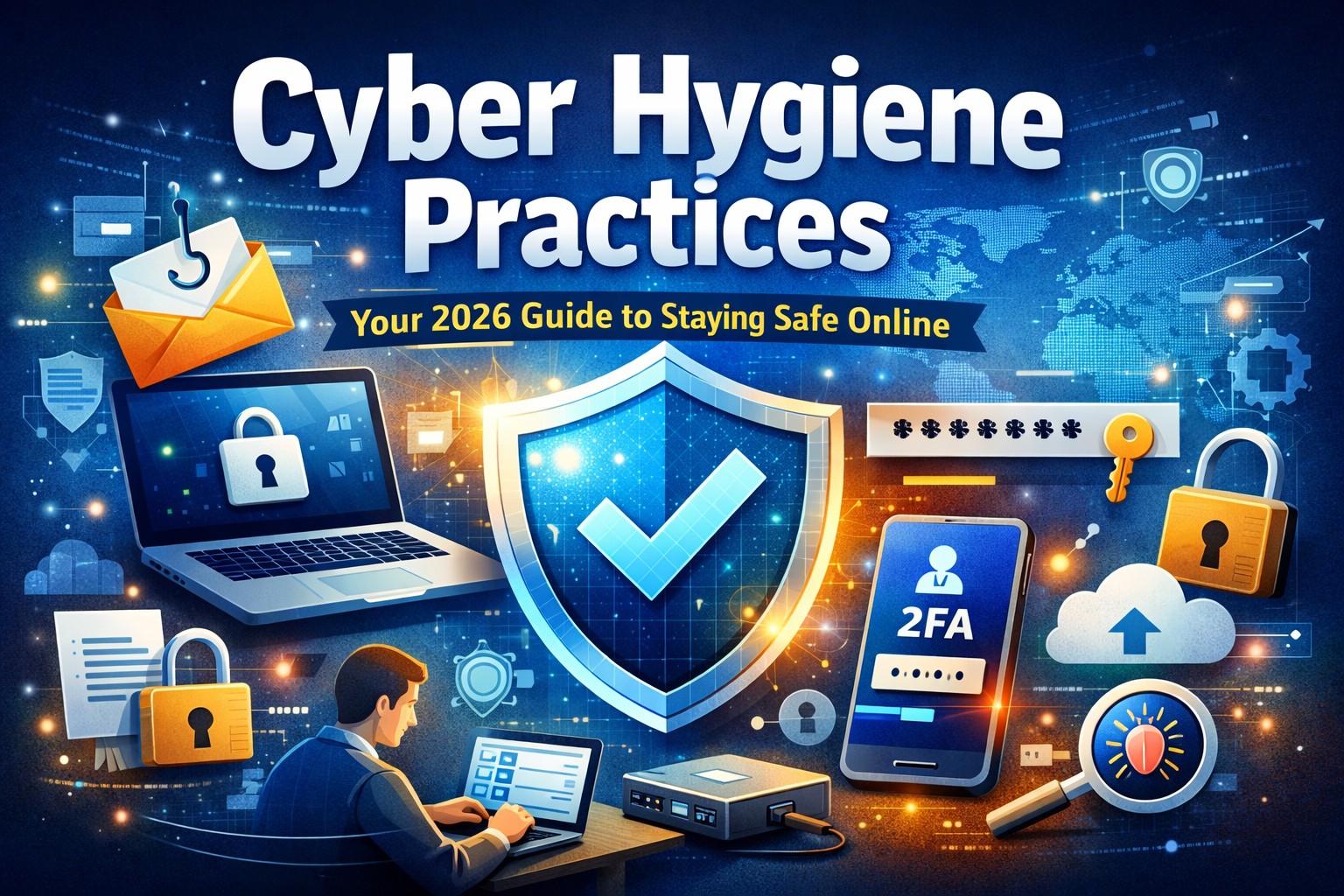
Cyber Hygiene Practices: Your Safety Guide

🌍 Why Cyber Hygiene Is No Longer Optional

A few months ago, during one of my training sessions with rural entrepreneurs, a participant shared something that stayed with me.

“Sir, I didn’t even know my phone could be hacked… I just clicked a link.”

That one click cost her access to her WhatsApp business account, customer trust, and weeks of stress due to non following Best Cyber Hygiene Practices.

This is the reality of 2026.

Cyber threats are no longer targeting just big corporations. They are targeting people like you and me—trainers, students, small business owners, homemakers.

And the truth is:
👉 You don’t need to be a tech expert to stay safe.
👉 You just need Cyber Hygiene.


🧠 What Is Cyber Hygiene? (Simple Explanation)

Cyber hygiene refers to daily habits and practices that keep your digital devices, data, and identity safe from cyber threats.

Think of it like brushing your teeth:

  • You don’t wait for a cavity
  • You prevent it daily

Similarly:

  • Cyber hygiene prevents hacking, fraud, and data theft before it happens

🧠 Understanding Cyber Hygiene in a Deeper Way

When people first hear the term cyber hygiene, a few natural questions come to mind:

  • What exactly does it include?
  • How many practices should I follow?
  • Is it really similar to personal hygiene?

Let’s break this down in a simple, practical way.


🔐 What Are Cyber Hygiene Practices?

Cyber hygiene practices are daily digital habits that protect your devices, data, and identity from cyber threats.

Just like brushing your teeth prevents cavities, these practices prevent:

  • Data theft
  • Hacking
  • Financial fraud
  • Privacy breaches

From my experience as a trainer, I’ve noticed one pattern:

“People don’t get hacked because they lack knowledge…
They get hacked because they ignore small daily precautions.”


🛡️ The 5 Most Important Cyber Hygiene Practices

If you feel overwhelmed, start with these 5 powerful habits:

1. Use Strong and Unique Passwords

Avoid using the same password everywhere. One breach can expose everything.

2. Enable Two-Factor Authentication (2FA)

This simple step blocks most unauthorized access.

3. Keep Your Devices Updated

Updates fix hidden security weaknesses.

4. Stay Alert to Phishing

Think before you click—especially emails and unknown links.

5. Backup Your Data Regularly

Because prevention is good—but recovery is essential.

Useful: Back up or restore data on your Android device

👉 In real-life training sessions, I’ve seen that people who follow just these 5 habits are already 80–90% safer than others.


📜 The 11 Rules of Cyber Hygiene (Your Complete Safety Framework)

If you want to go beyond basics, follow these 11 rules that create a strong digital defense system:

  1. Use strong, unique passwords
  2. Enable two-factor authentication
  3. Keep systems and apps updated
  4. Install trusted security software
  5. Avoid suspicious links and downloads
  6. Use secure Wi-Fi networks
  7. Backup data regularly
  8. Limit sharing personal information online
  9. Log out from shared devices
  10. Monitor account activity
  11. Stay informed about new cyber threats

👉 Think of these as your daily digital discipline checklist.


🔄 Cyber Hygiene vs Personal Hygiene: A Powerful Analogy

To truly understand cyber hygiene, let’s connect it with something we already practice daily—personal hygiene.

🚿 7 Essential Personal Hygiene Practices:

  • Washing hands regularly
  • Daily bathing
  • Brushing and flossing teeth
  • Wearing clean clothes
  • Maintaining nail hygiene
  • Keeping hair clean
  • Practicing safe food hygiene

Now here’s the insight most people miss:

👉 You don’t wait to fall sick to start hygiene
👉 Similarly, you shouldn’t wait to get hacked to start cyber hygiene


⚠️ My Biggest Mistake (And What It Taught Me)

Early in my career, I reused the same password across multiple platforms.

One day, I received a login alert from an unknown location.
Turns out, a small website I had signed up for got breached—and my password leaked.

Because I reused it:
➡️ My email was compromised
➡️ My Youtube Channel was hacked
➡️ My social accounts were at risk

That day, I realized:

“Convenience is the biggest enemy of digital safety.”


🛡️ Top Cyber Hygiene Practices You MUST Follow (2026)

1. 🔑 Use Strong & Unique Passwords

✅ Best Practices:

  • Minimum 12–16 characters
  • Mix of letters, numbers, symbols
  • Avoid names, birthdays, or “123456”

💡 Pro Tip:

Use a password manager instead of remembering everything.


2. 🔐 Enable Two-Factor Authentication (2FA)

Even if your password is stolen, 2FA acts as a second lock.

Examples:

  • OTP on phone
  • Authentication apps

👉 This single step can block 90% of attacks


3. 📩 Be Alert to Phishing Scams

🚨 Warning Signs:

  • “Urgent action required”
  • Unknown sender
  • Suspicious links

Real Example:

A trainee clicked a “bank update” email link—lost money within minutes.

👉 Always verify before clicking.


4. 🔄 Keep Software & Apps Updated

Updates are not just for features—they fix security vulnerabilities.

✔️ Turn on auto-updates
✔️ Update mobile apps, operating systems, and antivirus


5. 🌐 Use Secure Networks Only

Avoid:
❌ Public Wi-Fi for banking or payments

If necessary:
✔️ Use VPN
✔️ Avoid logging into sensitive accounts


6. 📂 Backup Your Data Regularly

✔️ Follow 3-2-1 Rule:

  • 3 copies of data
  • 2 different storage types
  • 1 offsite/cloud backup

7. 📱 Lock Your Devices

  • Use PIN / fingerprint / face lock
  • Enable auto-lock

👉 Most data theft happens from unlocked devices


📊 Quick Cyber Hygiene Checklist

PracticeFrequencyImpact
Change passwordsEvery 3–6 monthsHigh
Update softwareWeekly / AutoHigh
Backup dataWeeklyVery High
Scan for threatsMonthlyMedium
Review accountsMonthlyHigh

🧩 Cyber Hygiene in Daily Life (Practical Example)

Morning:

  • Unlock phone with biometric security
  • Check emails carefully

Afternoon:

  • Use secure network for transactions

Evening:

  • Backup important files

👉 Cyber hygiene is not extra work—it’s a daily mindset


🧠 Expert Insight

“Cybersecurity is much more than a matter of IT.”
— Stephane Nappo, Global Chief Information Security Officer

👉 It’s about behavior, awareness, and habits—not just technology.


💡 Final Thought: Your Digital Life Deserves Protection

Cyber hygiene is not about fear.

It’s about control, awareness, and responsibility.

Every click you make…
Every password you set…
Every link you open…

👉 Shapes your digital safety.

“The safest people online are not the smartest…
They are the most disciplined.”


👨‍🏫 About the Author

Sharad Pawar
Freelance Trainer | Life Skills Expert | Founder of www.lifeskills2you.com

With years of experience training individuals and communities—including rural entrepreneurs and SHG groups—Sharad simplifies complex topics like digital safety, communication, and personal development into practical, real-life skills.

Mission: Empower people with knowledge that protects and transforms lives.


📚 References & Credible Sources

  • National Cyber Security Centre (NCSC)
  • Cybersecurity & Infrastructure Security Agency (CISA)
  • IBM Cyber Security Intelligence Reports
  • Norton Cyber Safety Insights Report

❤️ One Line to Remember

“Cyber hygiene is not a one-time action—it’s a daily habit that protects your future.”


FAQ’s on Cyber Hygiene Practices

1. Why is cyber hygiene important in daily life?

Cyber hygiene is important because it protects your personal data, financial information, and digital identity from cyber threats like hacking, phishing, and fraud. In today’s digital world, even small mistakes can lead to serious consequences.

2. What happens if you ignore cyber hygiene?

Ignoring cyber hygiene can result in:
Data breaches
Identity theft
Financial loss
Loss of personal or business reputation
👉 One weak password or careless click can compromise multiple accounts.

3. How can beginners start practicing cyber hygiene?

Beginners can start with simple steps:
Create strong passwords
Enable two-factor authentication
Avoid suspicious links
Keep devices updated
👉 Start small, but stay consistent.

4. What is the difference between cybersecurity and cyber hygiene?

Cybersecurity refers to tools and technologies used to protect systems
Cyber hygiene refers to daily habits and practices followed by users
👉 Cyber hygiene is the human side of cybersecurity.

5. Are cyber hygiene practices different for individuals and businesses?

The basic practices are similar, but businesses require:
1. Employee training
2. Data access control
3. Advanced security systems
👉 Individuals focus on personal safety, while businesses focus on organizational protection.

6. How often should I update my passwords and software?

1. Passwords: Every 3–6 months
2. Software: Enable automatic updates or check weekly
👉 Regular updates fix security vulnerabilities.

7. Can cyber hygiene prevent all cyber attacks?

No, but it can prevent most common attacks (up to 80–90%).
👉 Good habits significantly reduce risk.

8. What are common examples of poor cyber hygiene?

Using the same password everywhere,
Clicking unknown links,
Ignoring software updates,
Using public Wi-Fi for sensitive transactions.
👉 These small mistakes are the biggest causes of cyber incidents.

9. Is cyber hygiene important for mobile users?

Yes, mobile devices are highly vulnerable because they store personal data and are always connected to the internet.
👉 Always:
1. Lock your phone
2. Update apps
3. Avoid installing unknown apps

10. How can I teach cyber hygiene to others?

You can:
1. Conduct awareness sessions
2. Share real-life examples
3. Demonstrate simple practices
4. Encourage habit-building
👉 Education is the strongest defense against cyber threats.

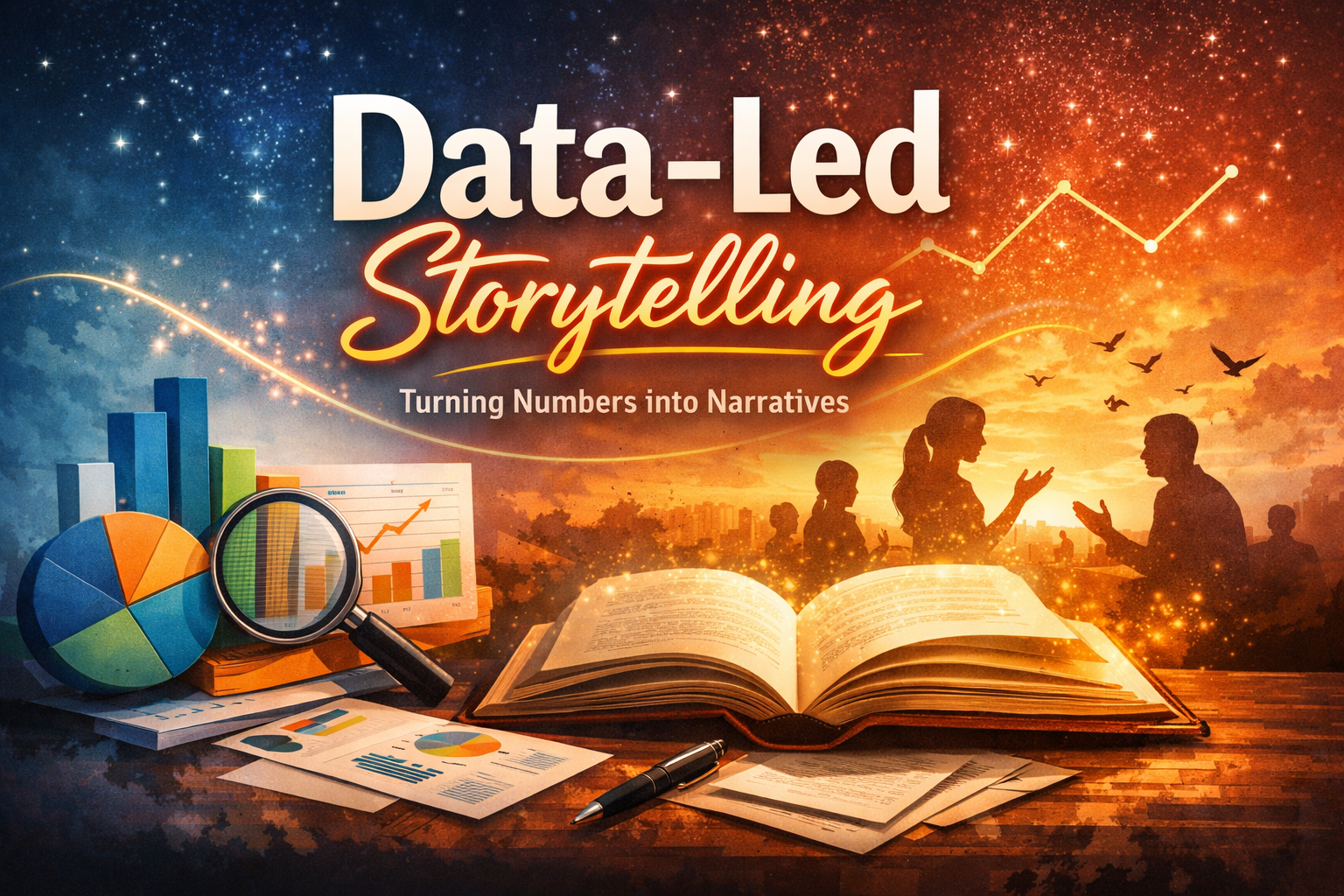
Data-Led Storytelling: Turn Numbers Into Narratives (2026 Guide)

🌱 A Story Before Strategy…

A few years ago, during a training session with rural women entrepreneurs, I showed a simple chart: “Income growth over 6 months.”

No reaction.

Then I asked one participant, Sunita, to share her journey. She spoke about how she went from earning ₹2,000 to ₹8,000 per month. Her voice trembled with pride.

I displayed the same chart again.

This time, the room felt different.

The data hadn’t changed. The story had.

That’s when I realized:
👉 Data informs… but storytelling transforms.

Welcome to the world of Data-Led Storytelling—where logic meets emotion, and insights become impact.


🚀 What is Data-Led Storytelling?

Data-led storytelling is the art of combining data, narrative, and visuals to communicate insights in a way that is meaningful, memorable, and actionable.

🔑 The 3 Core Elements:

ElementRoleExample
DataProvides credibilitySales increased by 35%
NarrativeCreates emotional connection“This growth came after months of struggle…”
VisualizationEnhances clarityGraphs, charts, dashboards

💡 “Without data, you’re just another person with an opinion.” — W. Edwards Deming
But without storytelling, your data is just noise.


❤️ Why Data Alone Fails (And Stories Win)

Let’s be honest.

Have you ever seen a presentation full of charts… and still felt confused or bored?

That’s because:

  • Data appeals to the brain
  • Stories appeal to the heart

And decision-making happens when both align.

🔍 Real Insight from Experience:

In my training programs, participants remember:

  • ❌ Numbers → forgotten in hours
  • ✅ Stories backed by numbers → remembered for months

🧠 The Psychology Behind Data-led storytelling

Humans are wired for stories.

  • Stories activate multiple brain regions
  • Data alone activates only analytical processing

What happens when you combine both?

👉 You create understanding + retention + action


🛠️ How to Create Powerful Data-Led Stories (Step-by-Step)

1. Start With a Clear Question

Before touching data, ask:

  • What problem am I solving?
  • What decision should this influence?

👉 Example:
Instead of “Sales data analysis”
Say: “Why are our sales dropping in rural areas?”


2. Find the Insight (Not Just Data)

Data is raw. Insight is refined.

DataInsight
Sales dropped by 20%Drop is highest among first-time customers

👉 Insight answers “So what?”


3. Build a Narrative Arc

Use this simple storytelling structure:

  • Beginning → Context
  • Middle → Conflict or challenge
  • End → Resolution with data insight

Example:

  • Beginning: “We launched a new product…”
  • Middle: “But adoption was low in rural markets…”
  • End: “Data revealed pricing was the barrier.”

4. Humanize the Data

Numbers become powerful when they represent people.

👉 Instead of:

  • “35% dropout rate”

Say:

  • “1 in 3 students are leaving school before completing education.”

5. Use Visuals Strategically

Don’t overload slides.

✔ Use:

  • Simple charts
  • Highlight key numbers
  • Focus attention

❌ Avoid:

  • Complex dashboards
  • Too many colors
  • Data dumps

⚡ The “Before vs After” Transformation

Without StorytellingWith Data Storytelling
“Revenue increased by 25%”“After months of losses, this 25% growth saved the business.”
“Customer churn is 15%”“1 out of every 7 customers is silently leaving us.”

📊 Real-Life Case Study (From Training Experience) of Data-led storytelling

During an SHG (Self-Help Group) audit training:

❌ Initial Approach:

  • Explained financial ratios
  • Showed tables

👉 Result: Low engagement

✅ Data Storytelling Approach:

  • Introduced a fictional SHG “Sakhi Group”
  • Showed their financial journey using real data
  • Connected numbers with decisions

👉 Result:

Lesson:
👉 People don’t learn from data.
👉 They learn from stories about data.


🧩 Common Mistakes to Avoid

  • ❌ Starting with data instead of purpose
  • ❌ Overloading with numbers
  • ❌ Ignoring audience context
  • ❌ No clear takeaway
  • ❌ Using complex jargon


🔍 Expert Insights & References

  • Harvard Business Review emphasizes that storytelling makes data more persuasive in leadership communication
  • Stanford Research shows stories are 22x more memorable than facts alone
  • Google’s People-First Content Guidelines (2026) prioritize content that demonstrates real experience and usefulness

❓ FAQs on Data-Led Storytelling

1. What is data storytelling?

Data storytelling is the process of combining data, narrative, and visuals to communicate insights in a clear, engaging, and actionable way.

2. What are the 4 types of storytelling?

The four key types are:
1. Personal storytelling
2. Data storytelling
3. Vision storytelling
4. Customer/impact storytelling

3. What does it mean to be data-led?

Being data-led means making decisions based on data insights and evidence, rather than assumptions or intuition.

4. What is purpose-led storytelling?

Purpose-led storytelling focuses on communicating a clear mission or meaningful impact, answering the question: “Why does this matter?”

5. What are some data-led storytelling examples?

Example include:
1. Business reports combining sales data with strategy insights
2. NGO impact reports linking statistics with real-life stories
3. Training sessions using data to explain real outcomes

6. What are data storytelling examples?

Examples include:
1. Marketing campaigns explained through customer data
2. Employee feedback data shared with narratives
3. Educational progress shown through student success stories

7. What is a data storytelling PPT?

A data storytelling PPT is a presentation that uses charts, visuals, and a narrative flow (problem → insight → solution) to communicate data effectively.

8. What are data visualization storytelling examples?

Examples include:
1. Line graphs showing trends with key highlights
2. Bar charts explaining comparisons with context
3. Infographics combining visuals and insights

9. Are there courses for data storytelling?

Yes, courses are available on platforms like Coursera, Udemy, and LinkedIn Learning, focusing on storytelling, visualization, and data communication skills.

💡 Final Thought: Data + Emotion = Impact

Data tells you what is happening.
Stories tell you why it matters.

And in a world full of information…

👉 The people who succeed are not those who have data
👉 But those who can move people with it


✍️ Author Bio

Sharad Pawar
Freelance Trainer | Life Skills Coach | Founder of lifeskills2you.com

Sharad specializes in communication, leadership, and personal development training. With years of on-ground experience working with communities, professionals, and organizations, Brings a unique blend of real-life insights and practical frameworks into his writing and training sessions.

AI-Empathy Integration: The Ultimate Human Edge

Table of Contents


Introduction

While reading the Dnyaneshwari, a simple but powerful thought stood out: Don’t stay mad at anyone for too long.

It sounds so human, right? So emotional. So real.

Now pause for a moment and ask yourself…
Can a machine ever understand this?

Can a machine feel your anger, your silence, your hurt… and gently tell you, “Let it go, it will bring you peace”?

This is where the idea of AI-Empathy Integration enters our lives.

We are living in a time where machines are not just calculating numbers—they are trying to understand emotions. From chatbots that comfort people during stress to AI therapists that listen without judgment, something unusual is happening. Technology is trying to act… human.

But here’s the real question:
👉 Is it real empathy… or just a smart illusion?

In my training sessions, I often ask participants, “Do you want someone who understands you, or someone who just says the right words?”
Most people pause. Because deep down, we all crave real connection, not just correct responses.

AI-Empathy Integration is powerful. It is growing fast. It is helping millions.
But it also raises an uncomfortable truth…

👉 Can something without feelings truly understand your feelings?

In this article, we will explore this deeply—through psychology, real-life examples, behavioural science, and practical insights.

Not just theory.
Not just technology.
But the real impact on your life, your emotions, and your relationships.


What Is AI-Empathy Integration in Simple Words?

Let’s not complicate this.

AI-Empathy Integration simply means teaching machines to understand and respond to human emotions.

Not feel them… but respond as if they understand.

Imagine this:

You message a chatbot:
“I feel very lonely today.”

A basic machine might say:
👉 “I am sorry. Try to stay positive.”

But a system using AI-Empathy Integration might respond:
👉 “I’m really sorry you’re feeling this way. Do you want to talk about what’s making you feel lonely?”

See the difference?

One gives an answer.
The other creates a connection.


The Psychology Behind It

Human empathy has two parts:

  • Cognitive empathy – understanding what someone feels
  • Emotional empathy – actually feeling it

Machines can only do the first one.

This is where Emotional Intelligence in AI becomes interesting.

Researchers from Harvard and Stanford suggest that machines can simulate empathy by analyzing:

  • Words
  • Tone
  • Facial expressions
  • Behaviour patterns

But simulation is not sensation.

👉 A machine can detect sadness… but it doesn’t feel sad.


Can AI Really Feel Emotions? (The Honest Answer)

Let’s be very clear.

👉 No, AI cannot feel emotions.

It doesn’t have:

  • A heart
  • A nervous system
  • Personal experiences
  • Conscious awareness

It works on algorithms, not emotions.

But here’s the twist…

👉 It can behave like it understands emotions so well that we start believing it does.

This is called Artificial Emotional Intelligence.


A Real-Life Training Example

In one of my workshops, a participant shared something surprising.

She said:
“I talk to an AI chatbot at night because it listens better than people.”

That hit me hard.

Not because AI is powerful…
But because humans are becoming emotionally unavailable.

AI-Empathy Integration is not just about machines becoming human.
It’s also about humans becoming… less human.


Why Is AI-Empathy Integration Growing So Fast?

Because it solves real problems.

Let’s look at them honestly.

1. People feel unheard

  • Many don’t have someone to talk to
  • AI is always available

2. No judgment

  • Machines don’t criticize
  • They don’t interrupt

3. Instant response

  • No waiting
  • No emotional baggage

4. Mental health support

Organizations like WHO highlight the growing mental health crisis. AI tools are helping bridge the gap.

👉 AI-Empathy Integration is filling an emotional gap in society.


Is AI Empathy Better Than Human Empathy?

Let’s be honest again.

Sometimes… yes.

And that’s uncomfortable.

AI is better at:

  • Listening without bias
  • Staying calm
  • Giving structured responses

Humans are better at:

  • Feeling
  • Connecting deeply
  • Understanding context beyond words

A Simple Truth

“A machine can respond perfectly… but only a human can truly care.”


The Danger You Must Not Ignore

This is where things get serious.

1. Emotional Dependency

People may start relying on AI instead of real relationships.

2. Illusion of Connection

You feel understood… but you’re actually interacting with code.

3. Reduced Human Skills

If AI does all emotional conversations, we may lose our own empathy skills.

4. Privacy Risks

Your deepest emotions become data.


A Coaching Insight

In counselling sessions, I’ve seen people struggle not because they lack support…
But because they avoid difficult human conversations.

AI-Empathy Integration can help…
But it should not replace real relationships.


How AI-Empathy Integration Works (Behind the Scenes)

Let’s simplify this.

AI uses:

1. Natural Language Processing (NLP)

Understands what you say

2. Sentiment Analysis

Detects emotion (happy, sad, angry)

3. Machine Learning

Learns from past conversations

4. Behavioural Patterns

Predicts your emotional needs


Example Table

InputAI InterpretationResponse
“I feel tired”Emotional fatigueSuggest rest
“Nobody cares”LonelinessOffer support
“I am angry”FrustrationEncourage expression

Real-World Applications of AI-Empathy Integration

Let’s see where it is already used.

1. Mental Health Apps

  • AI therapists
  • Emotional chatbots

2. Customer Service

  • Understanding frustrated customers

3. Education

  • Personalized emotional support

4. Workplace Coaching

  • Employee wellbeing tracking

Case Study: AI in Mental Health

A study published by Stanford showed that people opened up more to AI than humans in early conversations.

Why?

👉 No fear of judgment.

But long-term healing still required human therapists.


Can AI Teach Us to Be More Human?

This is the most interesting part.

Yes… it can.

When we see machines trying to:

  • Listen patiently
  • Respond kindly
  • Validate emotions

We realize something.

👉 These are the same skills we often forget to use.


A Powerful Reflection

Instead of asking:
👉 “Can AI feel?”

Ask this:
👉 “Why are humans not feeling enough?”


How to Use AI-Empathy Integration Wisely

Here’s a simple guide.

Use AI for:

Do NOT use AI for:

  • Replacing real relationships
  • Avoiding difficult conversations
  • Making emotional decisions

Golden Rule

“Use AI as a tool… not as a replacement for human connection.”


Step-by-Step: Building Healthy Emotional Balance

Step 1: Acknowledge your feelings

Don’t suppress them.

Step 2: Express safely

Talk to someone… or even AI initially.

Step 3: Move to real conversations

Don’t stay in digital comfort.

Step 4: Build emotional courage

Face difficult talks.

Step 5: Let go of ego

Just like Dnyaneshwari teaches.


Future of AI-Empathy Integration

The future is powerful… and uncertain.

We may see:

  • AI companions
  • Emotion-aware workplaces
  • Personalized therapy systems

But one thing will remain true:

👉 Machines may evolve… but human connection will always be irreplaceable.


Conclusion

So… can a machine feel?

No.

But it can make you feel understood.

And sometimes, that is enough… for a moment.

But not for life.

AI-Empathy Integration is a beautiful tool.
It can support, guide, and comfort.

But it cannot replace:

  • A friend’s silence
  • A mother’s concern
  • A partner’s understanding

In the end, happiness still comes from human connection.

Just like Dnyaneshwari says:

“The one who lets go first… finds peace first.”

Maybe the real lesson is not about machines learning empathy.

👉 It’s about humans remembering it.


References


Thank you for exploring this insightful article.
If you’re hungry for more knowledge, don’t miss out on our other engaging articles waiting for you. Dive into our treasure trove of wisdom and discover new perspectives on related topics.
Click ‘Our Blog’ and ‘How to Guide’ to embark on your next adventure.
Happy reading!

FAQs: AI-Empathy Integration

1. What is AI-Empathy Integration?

It is the ability to combine AI tools with human empathy. It helps in creating meaningful communication while using technology efficiently.

2. Why is AI-Empathy Integration important?

Because AI lacks emotional understanding. Integrating empathy ensures better relationships, trust, and communication.

3. Can AI develop empathy?

No, AI can simulate empathy but cannot genuinely feel emotions like humans.

4. How can professionals use AI-Empathy Integration?

By using AI for tasks and adding a human touch to communication and decision-making.

5. Is AI-Empathy Integration useful for leaders?

Yes, it helps leaders build trust, motivate teams, and improve workplace culture.

6. How does it improve communication?

It makes communication more human, relatable, and emotionally connected.

7. What industries need AI-Empathy Integration?

Almost all—especially healthcare, education, customer service, and leadership roles.

8. Can students learn AI-Empathy Integration?

Absolutely. It’s a future-ready skill that enhances both academic and career success.

9. What are the risks of ignoring empathy in AI use?

Loss of trust, poor relationships, and ineffective communication.

10. How can I start practicing AI-Empathy Integration today?

Start by reviewing your AI-generated content and adding emotional understanding and personalization.

Meeting Equity Leadership: The Ultimate Guide

Introduction: Why Some Voices Still Stay Muted

Have you ever sat in a meeting where a few people dominate while others quietly disappear into the background?

Maybe you’ve seen it in online calls—cameras off, mics muted, ideas unspoken. Or in physical rooms where hierarchy silently decides who gets heard. You nod along, but deep inside, you wonder—Is this really collaboration?

This is exactly where Meeting Equity Leadership comes in.

In today’s rapid fire age, hybrid work culture, meetings are everywhere. Yet, most of them fail to create equal participation, psychological safety, and shared ownership. According to research from Harvard Business School, up to 70% of meeting time is dominated by a few individuals. That means the majority of voices remain unheard.

As a trainer working with teams across corporate and community sectors, I’ve personally seen how small changes in meeting culture can completely transform team energy. One rural women’s group I worked with went from silent participation to active decision-making—simply by restructuring how meetings were facilitated.

That’s the power of Meeting Equity Leadership.

This guide is not just theory. It’s a deep, practical roadmap backed by behavioral science, real-life experiences, and actionable tools you can start using today.

Let’s move beyond the mute button—and create meetings where every voice counts.


What Is Meeting Equity Leadership?

Meeting Equity Leadership is the practice of designing and facilitating meetings where every participant has a fair opportunity to contribute, influence, and be heard.

It combines principles from:

Key Elements of Meeting Equity Leadership

  • Equal speaking opportunities
  • Respect for diverse perspectives
  • Psychological safety
  • Structured participation
  • Conscious facilitation

👉 In simple words:
“It’s not about who speaks the loudest, but who gets the space to speak.”


Why Do Most Meetings Fail to Be Inclusive?

Let’s be honest—most meetings are not designed for equity.

Common Problems

  • Dominant personalities take over
  • Introverts remain silent
  • Hierarchy blocks honest input
  • Virtual fatigue reduces engagement
  • No clear facilitation structure

Real Example from Training

During a leadership workshop, I asked a team:

“Who speaks the most in your meetings?”

Everyone laughed—and pointed at the same two people.

When I asked, “Who has ideas but doesn’t speak?”
Almost half the room raised their hands.

That’s the hidden cost of poor Meeting Equity Leadership—lost innovation.


What Are the Benefits of Meeting Equity Leadership?

When you implement Meeting Equity Leadership, everything changes.

1. Better Decision-Making

Diverse perspectives lead to smarter decisions.

2. Increased Engagement

People feel valued—and they show up fully.

3. Stronger Team Trust

Psychological safety builds deeper connections.

4. Innovation Boost

New ideas come from unheard voices.

5. Reduced Conflict

Everyone feels included, reducing resentment.

👉 According to research from Google’s Project Aristotle, psychological safety is the #1 factor for high-performing teams.


How to Practice Meeting Equity Leadership (Step-by-Step)

Let’s get practical.

Step 1: Set Clear Meeting Intentions

Before the meeting, ask:

  • What is the goal?
  • Who needs to speak?
  • What decisions are expected?

👉 Without clarity, meetings become chaotic.


Step 2: Design Participation, Don’t Leave It to Chance

Use structured methods:

  • Round-robin sharing
  • Breakout discussions
  • Anonymous input tools

Pro Tip:
Use digital tools like
👉 Mentimeter
👉 Mural

These encourage equal participation.


Step 3: Create Psychological Safety

People speak when they feel safe.

How to build it:

  • Acknowledge all ideas
  • Avoid interrupting
  • Encourage dissent
  • Appreciate contributions

👉 “No idea is a bad idea” is not just a phrase—it’s a culture.


Step 4: Manage Dominant Voices

As a leader, you must gently balance participation.

Techniques:

  • “Let’s hear from someone who hasn’t spoken yet.”
  • Time limits for responses
  • Redirecting conversation

Step 5: Use Inclusive Language

Replace:

  • “Does anyone have anything?” ❌
    With
  • “Let’s hear from each person briefly.” ✅

Language shapes behavior.


Step 6: Rotate Facilitation Roles

Don’t always lead yourself.

Let others:

  • Facilitate
  • Take notes
  • Summarize

👉 This builds ownership and confidence.


Step 7: Close with Reflection

End meetings with:

  • What worked?
  • What can improve?

This creates continuous improvement in Meeting Equity Leadership.


What Are the Best Tools for Meeting Equity Leadership?

Here are some powerful tools:

ToolPurpose
MentimeterAnonymous input
Zoom PollsQuick engagement
MiroVisual collaboration
Google DocsShared note-taking

👉 Explore more tools at Atlassian Team Playbook


Real-Life Case Study: Transformation Through Meeting Equity Leadership

Case: Rural Women SHG Group

I worked with a Self-Help Group where:

  • Only leaders spoke
  • Others stayed silent
  • Decisions were one-sided

Intervention:

  • Introduced round-robin sharing
  • Used visual voting
  • Encouraged storytelling

Result:

  • 80% participation increase
  • Better financial decisions
  • Stronger group trust

This is the real impact of Meeting Equity Leadership.


What Psychological Theories Support Meeting Equity Leadership?

1. Social Loafing Theory

People disengage when they feel invisible.

2. Psychological Safety (Amy Edmondson)

Teams perform better when people feel safe to speak.

3. Equity Theory

Fairness drives motivation and satisfaction.

👉 Read more at Harvard Business Review


How Does Meeting Equity Leadership Work in Virtual Meetings?

Virtual meetings need extra care.

Challenges:

  • Camera fatigue
  • Silent participants
  • Multitasking

Solutions:

  • Use chat actively
  • Polls and reactions
  • Smaller breakout rooms

👉 Always ask:
“Who hasn’t had a chance to speak?”


Common Mistakes in Meeting Equity Leadership

Avoid these:

  • Assuming silence means agreement
  • Ignoring introverts
  • Over-structuring meetings
  • Not following up

Meeting Equity Leadership vs Traditional Leadership

TraditionalMeeting Equity Leadership
Leader speaks mostEveryone participates
Hierarchy-drivenInclusion-driven
Passive attendeesActive contributors
Fixed rolesShared ownership

Powerful Quotes to Remember

“Inclusion is not bringing people into what already exists—it’s creating something new.”

“A meeting is successful when everyone feels heard—not just when decisions are made.”


Practical Exercises to Build Meeting Equity Leadership

Exercise 1: 1-Minute Voice Round

Everyone speaks for 1 minute.

Exercise 2: Silent Brainstorming

Write ideas before speaking.

Exercise 3: Rotate Leader

New facilitator every meeting.


How Leaders Can Build Meeting Equity Culture

  • Model inclusive behavior
  • Reward participation
  • Train teams regularly
  • Use feedback loops

Conclusion: The Future of Meetings Is Equitable

Meetings are not just about agendas—they are about people.

When you practice Meeting Equity Leadership, you unlock:

  • Hidden ideas
  • Untapped potential
  • Stronger teams

You move from control → collaboration
From silence → expression
From hierarchy → humanity

👉 And that’s where real transformation begins.


Thank you for exploring this insightful article.
If you’re hungry for more knowledge, don’t miss out on our other engaging articles waiting for you. Dive into our treasure trove of wisdom and discover new perspectives on related topics.
Click Our Blog and How to Guide to embark on your next adventure.
Happy reading!


FAQs: Meeting Equity Leadership

1. What is Meeting Equity Leadership in simple terms?

It means creating meetings where everyone gets a fair chance to speak, share ideas, and influence decisions. It focuses on inclusion, fairness, and participation rather than hierarchy or dominance.

2. Why is Meeting Equity Leadership important?

Because many meetings silence valuable voices. When everyone participates, decisions improve, engagement increases, and teams become more innovative and collaborative.

3. How can I implement Meeting Equity Leadership quickly?

Start with simple steps—use round-robin speaking, encourage quieter members, and set clear rules for participation. Small changes create big impact.

4. What are the biggest barriers to Meeting Equity Leadership?

Hierarchy, dominant personalities, lack of facilitation skills, and poor meeting design are the main barriers that prevent equitable participation.

5. Is Meeting Equity Leadership only for corporate teams?

No. It works in community groups, NGOs, classrooms, and even family discussions—anywhere people come together to make decisions.

6. How does Meeting Equity Leadership improve productivity?

By reducing wasted time, increasing engagement, and ensuring better decisions, meetings become more efficient and outcome-focused.

7. Can introverts benefit from Meeting Equity Leadership?

Absolutely. It creates structured opportunities for introverts to share ideas without pressure or interruption.

8. What tools support Meeting Equity Leadership?

Tools like Mentimeter, Miro, Zoom polls, and shared documents help ensure equal participation and engagement.

9. How can leaders measure Meeting Equity Leadership success?

By tracking participation levels, feedback scores, and quality of decisions made during meetings.

10. What is the future of Meeting Equity Leadership?

With hybrid work rising, equitable meetings will become essential for effective collaboration and team success.

A Non-Violent Communication Guide for Couples: Conflict Resolution

Introduction: When Love Meets Conflict

Every relationship, no matter how strong, faces conflict. It’s inevitable. Two individuals, shaped by different experiences, beliefs, and emotional patterns, will not always see eye to eye. But here’s the truth most couples miss:

Conflict is not the problem. The way we communicate during conflict is.

Have you ever found yourself saying things you didn’t mean? Or shutting down instead of expressing what you truly feel? Maybe you’ve experienced arguments that spiral out of control, leaving both partners hurt, misunderstood, and emotionally distant.

This is where A Non-Violent Communication Guide for Couples becomes a life-changing approach.

Developed by psychologist Marshall Rosenberg, Non-Violent Communication (NVC) is a powerful framework rooted in empathy, emotional awareness, and conscious expression. It shifts conversations from blame and criticism to understanding and connection.

In my years as a trainer working with couples and individuals, I’ve seen one simple truth repeatedly:

Couples don’t break because of problems—they break because of poor communication patterns.

This article is not just theory. It combines behavioral science, real-life coaching insights, and practical tools that you can apply immediately.

By the end, you’ll learn how to:

  • Turn arguments into meaningful conversations
  • Express needs without hurting your partner
  • Listen deeply and build emotional safety
  • Strengthen your bond—even during disagreements

Let’s dive into A Non-Violent Communication Guide for Couples and transform the way you connect.


Understanding Non-Violent Communication (NVC)

At its core, A Non-Violent Communication Guide for Couples is based on four key components:

1. Observation (Without Judgment)

Instead of blaming:

  • ❌ “You never listen to me!”
  • ✅ “When I was talking, I noticed you were on your phone.”

👉 This removes defensiveness and creates clarity.

2. Feelings (Not Accusations)

  • ❌ “You make me angry.”
  • ✅ “I feel hurt and ignored.”

👉 You own your emotions instead of projecting them.

3. Needs (The Root Cause)

Every feeling is connected to a need.

  • Need for respect
  • Need for attention
  • Need for appreciation

👉 Most conflicts are unmet needs in disguise.

4. Requests (Not Demands)

  • ❌ “You should care more!”
  • ✅ “Can we spend 15 minutes daily talking without distractions?”

👉 Clear, actionable, and respectful.


Why Couples Struggle with Communication

Even intelligent, loving couples struggle. Why?

1. Emotional Triggers

Your reactions are often rooted in past experiences.

2. Ego Defense Mechanisms

Blame, criticism, and withdrawal protect the ego—but damage the relationship.

3. Lack of Emotional Vocabulary

Many people simply don’t know how to express feelings clearly.

4. Assumptions & Mind Reading

“If they loved me, they would understand.”

This belief destroys clarity.


The Psychology Behind Non-Violent Communication

Research from Harvard Medical School and Gottman Institute shows:

  • Criticism triggers defensiveness
  • Defensiveness blocks connection
  • Emotional safety increases relationship satisfaction

👉 A Non-Violent Communication Guide for Couples aligns with Emotional Intelligence (EQ) and Attachment Theory.

Key Insight:

“Behind every angry reaction is an unmet need.”


Step-by-Step: Applying A Non-Violent Communication Guide for Couples

Step 1: Pause Before Reacting

In training sessions, I always teach:

“Respond. Don’t react.”

Take 10 seconds. Breathe. Reset.


Step 2: Use the NVC Formula

Observation + Feeling + Need + Request

Example:

“When you cancel our plans (observation), I feel disappointed (feeling) because I value quality time (need). Can we reschedule for tomorrow? (request)”


Step 3: Practice Active Listening

Listening is not waiting to speak.

It means:

  • Maintaining eye contact
  • Not interrupting
  • Reflecting back

👉 “What I hear you saying is…”


Step 4: Validate Before Responding

You don’t have to agree—but you must acknowledge.

“I understand why you feel that way.”

This builds emotional safety.


Step 5: Avoid Toxic Communication Patterns

❌ Criticism
❌ Contempt
❌ Defensiveness
❌ Stonewalling

(These are called Gottman’s Four Horsemen)


Real-Life Case Study (From Training Experience)

A couple I coached had constant arguments over “time.”

  • Wife felt neglected
  • Husband felt pressured

Using A Non-Violent Communication Guide for Couples, we reframed:

Before:
“You never spend time with me!”

After:
“I feel lonely because I need connection. Can we plan one evening together weekly?”

👉 Result:

  • Reduced arguments by 70%
  • Increased emotional intimacy
  • Improved mutual understanding

Powerful Communication Scripts for Couples

When You Feel Ignored

“I feel unseen when I’m talking and don’t get a response. Can we talk without distractions?”

When You Feel Angry

“I’m feeling frustrated because I need clarity. Can we discuss this calmly?”

When You Need Support

“I feel overwhelmed. I need support right now—can you help me?”


Common Mistakes Couples Make (And Fixes)

MistakeWhy It FailsBetter Approach
BlamingTriggers defenseUse “I feel…”
GeneralizingCreates conflictBe specific
SilenceBuilds resentmentExpress needs
DemandingCauses resistanceMake requests

Benefits of A Non-Violent Communication Guide for Couples

  • 💛 Deeper emotional intimacy
  • 💛 Reduced conflicts
  • 💛 Better understanding
  • 💛 Stronger trust
  • 💛 Long-term relationship satisfaction

Motivational Insight

“In every argument, there are two sides—and one opportunity for growth.”


Advanced Techniques for Deeper Connection

1. Emotional Check-Ins

Ask daily:

  • “How are you feeling today?”

2. Weekly Relationship Meetings

Discuss:

  • What worked
  • What didn’t
  • What can improve

3. Empathy Practice

Try to feel what your partner feels.


Scientific Backing & References

  • Marshall Rosenberg – Nonviolent Communication Model
  • Gottman Institute – Relationship Research
  • Harvard Health Publishing – Emotional Intelligence
  • WHO – Mental health and relationships
  • UNICEF – Communication frameworks

Conclusion: Transform Conflict into Connection

Conflict is not the enemy. Silence, misunderstanding, and ego are.

A Non-Violent Communication Guide for Couples teaches us something powerful:

“When we change the way we communicate, we change the quality of our relationships.”

Start small:

  • Listen more
  • Blame less
  • Express clearly
  • Connect deeply

Your relationship doesn’t need perfection—it needs understanding.

Thank you for exploring this insightful article.
If you’re hungry for more knowledge, don’t miss out on our other engaging articles waiting for you. Dive into our treasure trove of wisdom and discover new perspectives on related topics.
Click Our Blog and How to Guide to embark on your next adventure.
Happy reading!


FAQs: A Non-Violent Communication Guide for Couples

1. What is Non-Violent Communication in relationships?

It’s a communication approach that focuses on empathy, understanding, and expressing needs without blame or criticism. It helps couples resolve conflicts peacefully.

2. Can NVC really reduce conflicts?

Yes. Studies show that empathetic communication reduces defensiveness and increases connection, leading to fewer and healthier conflicts.

3. How long does it take to see results?

With consistent practice, couples often notice improvements within a few weeks.

4. Is NVC difficult to learn?

Initially, it requires awareness and practice, but it becomes natural over time.

5. What if my partner doesn’t cooperate?

Start with yourself. Communication patterns often shift when one partner changes.

6. Can NVC help in long-distance relationships?

Absolutely. Clear and empathetic communication is even more important in distance-based relationships.

7. Does NVC mean avoiding conflict?

No. It means handling conflict constructively.

8. Is NVC backed by science?

Yes. It aligns with emotional intelligence, psychology, and behavioral research.

9. Can NVC improve emotional intimacy?

Yes. It builds trust, openness, and deeper connection.

10. How can I practice daily?

Use the 4-step formula: Observation, Feeling, Need, Request.

Exit mobile version